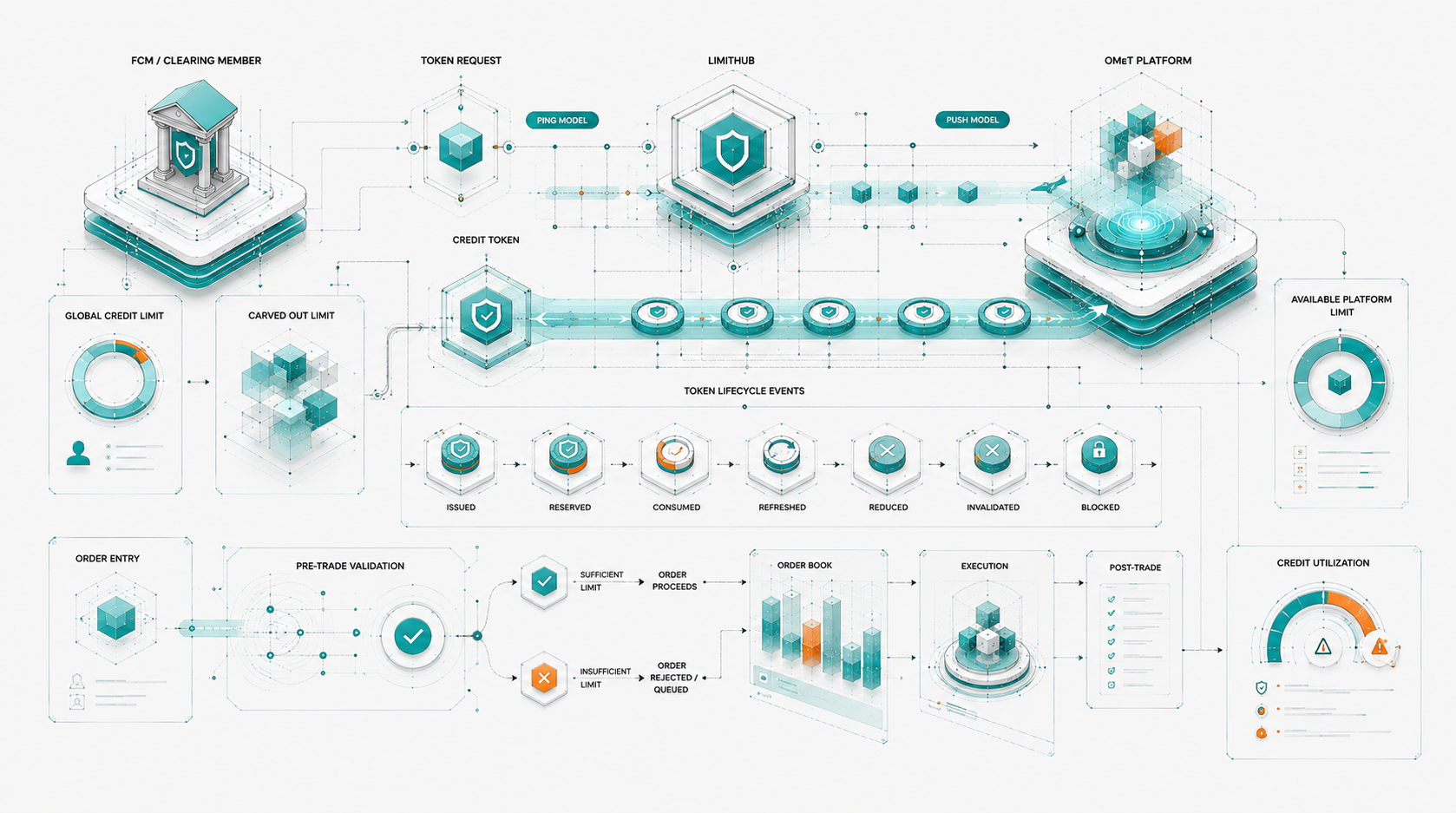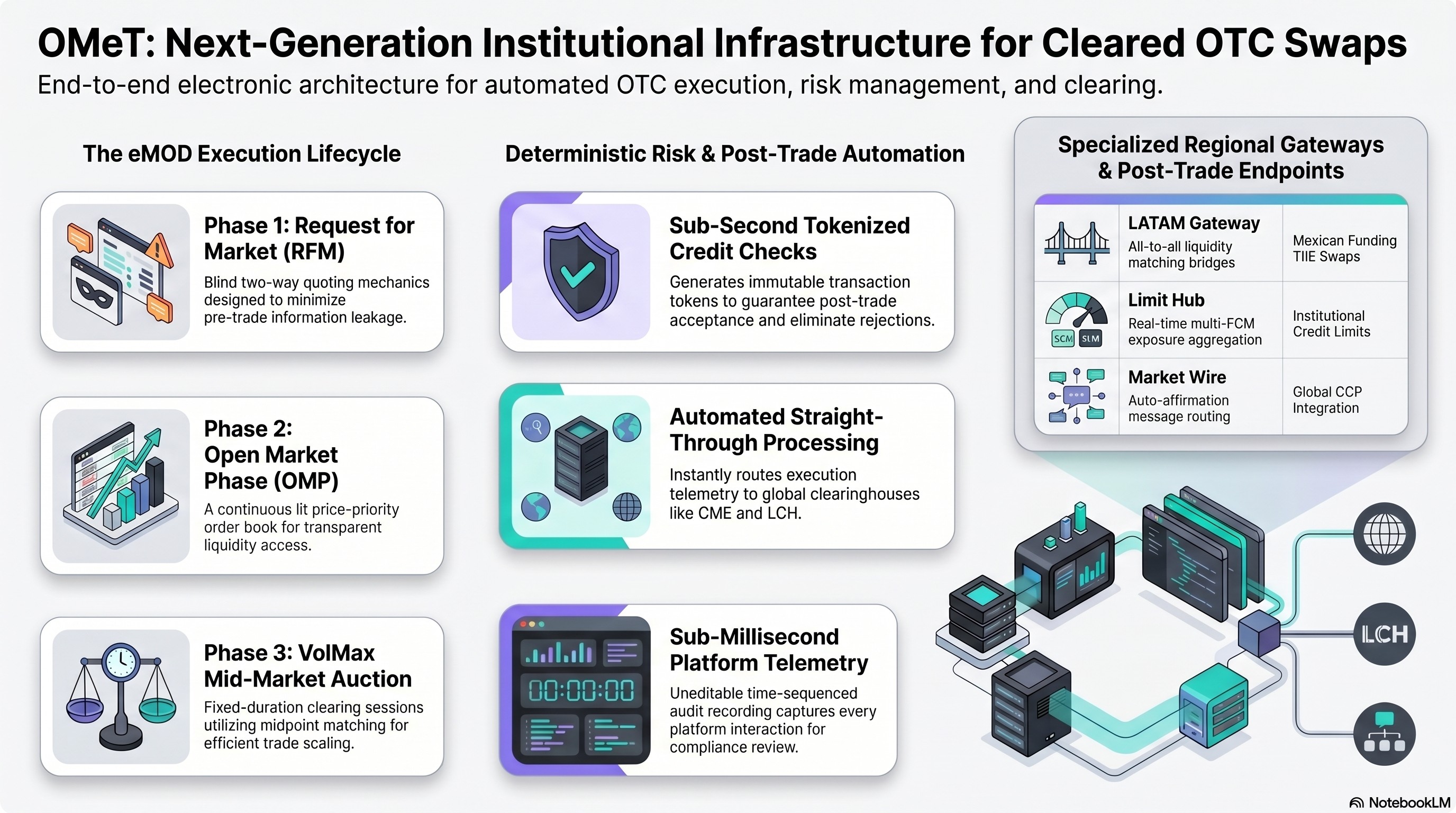
At the connectivity layer, OMeT’s infrastructure is built to accommodate standard institutional rails. Internal IP and platform materials reference FIX 4.4 and FIX 5.0 connectivity rails as part of the technical infrastructure linking market participants to the centralized matching engine. In practice, these endpoints give banks, asset managers, hedge funds, and execution teams a familiar protocol path for submitting orders, receiving execution messages, and integrating OMeT activity into internal order-management and risk systems.
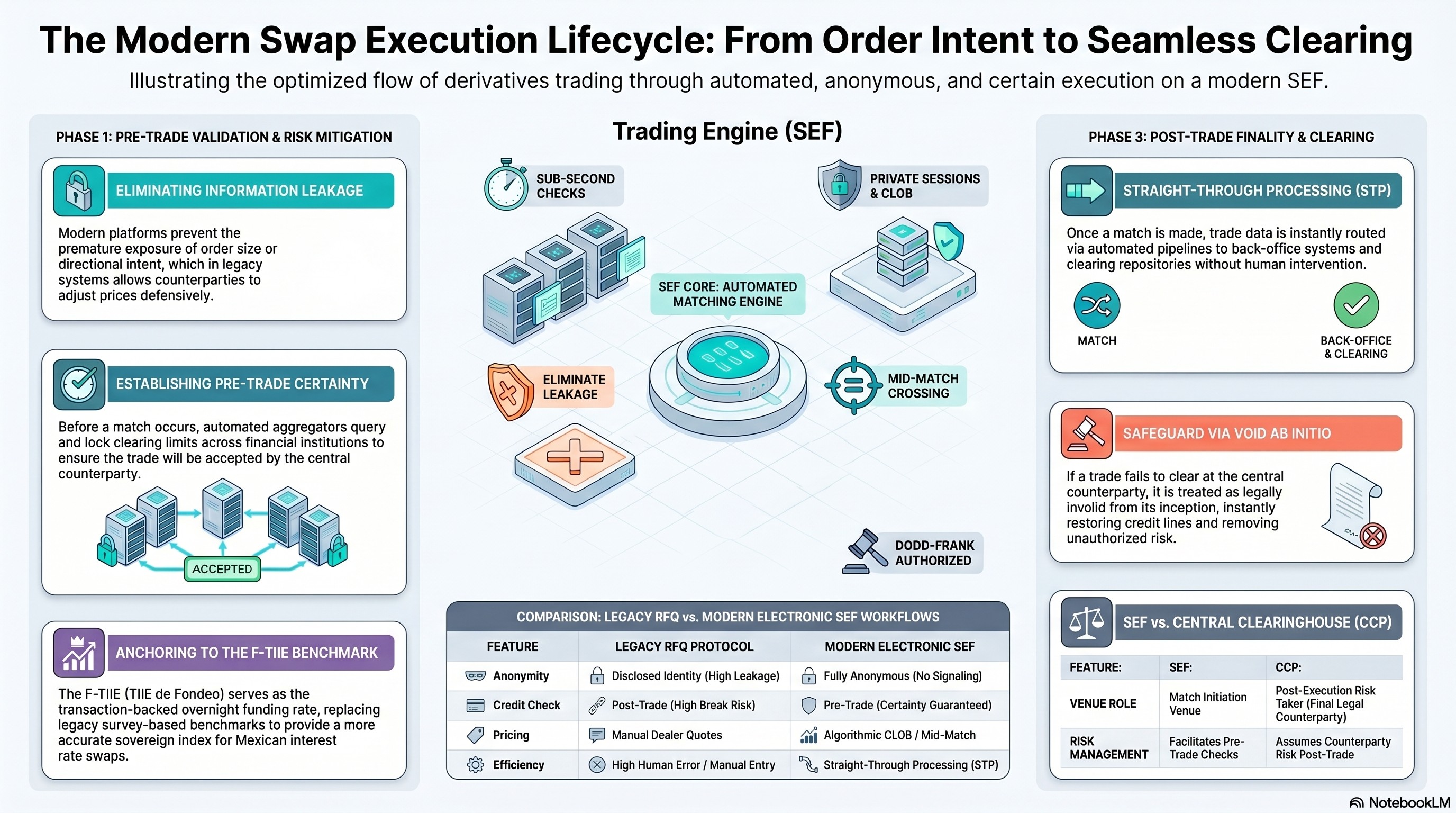
Drop-copy feeds sit alongside execution connectivity as the supervision and reconciliation channel. Where FIX order-entry messages support live interaction with the matching engine, drop-copy-style outputs provide a parallel record of order events, fills, amendments, cancellations, and state transitions for middle office, compliance, and risk systems. This aligns with OMeT’s broader intelligence and audit architecture: the platform captures workflow events, timing, and state changes, then turns execution activity into structured data that can support benchmarking, monitoring, and institutional decision-making.
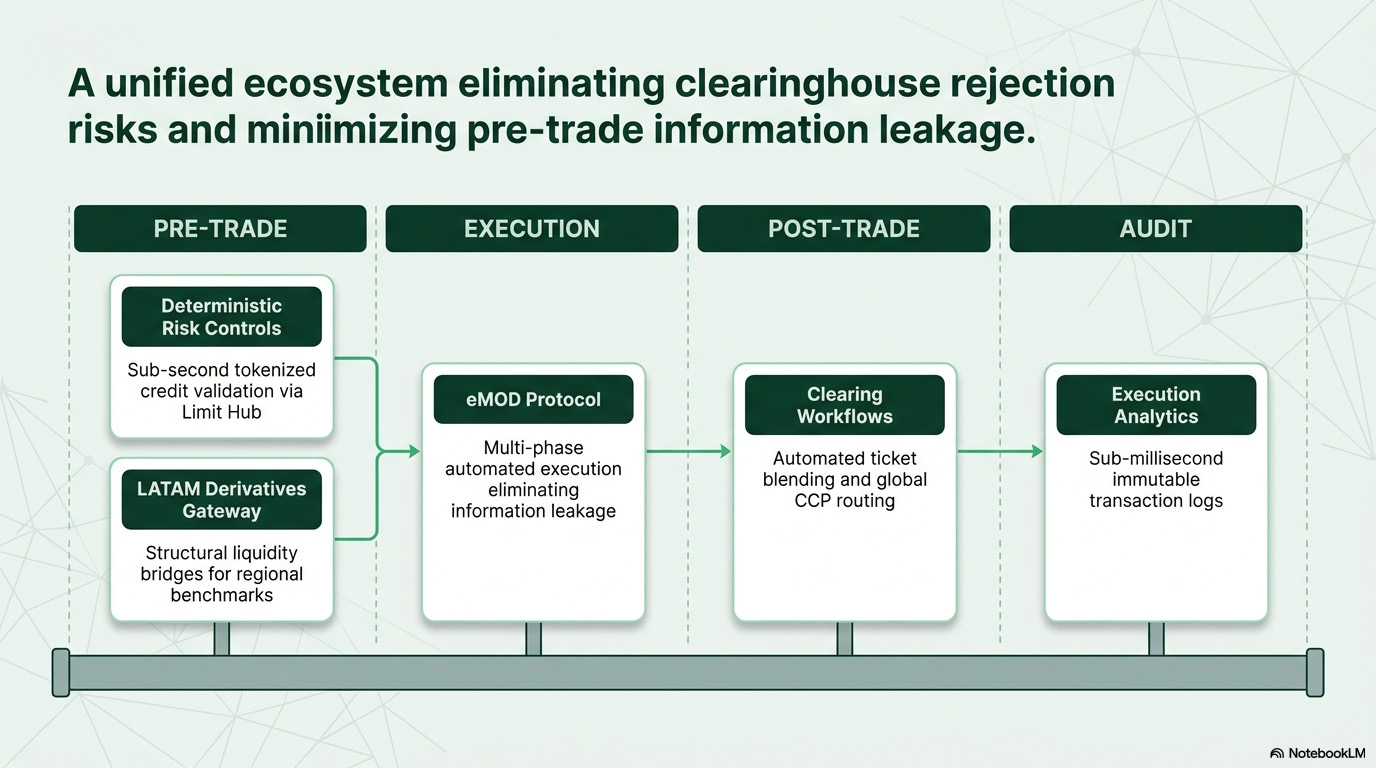
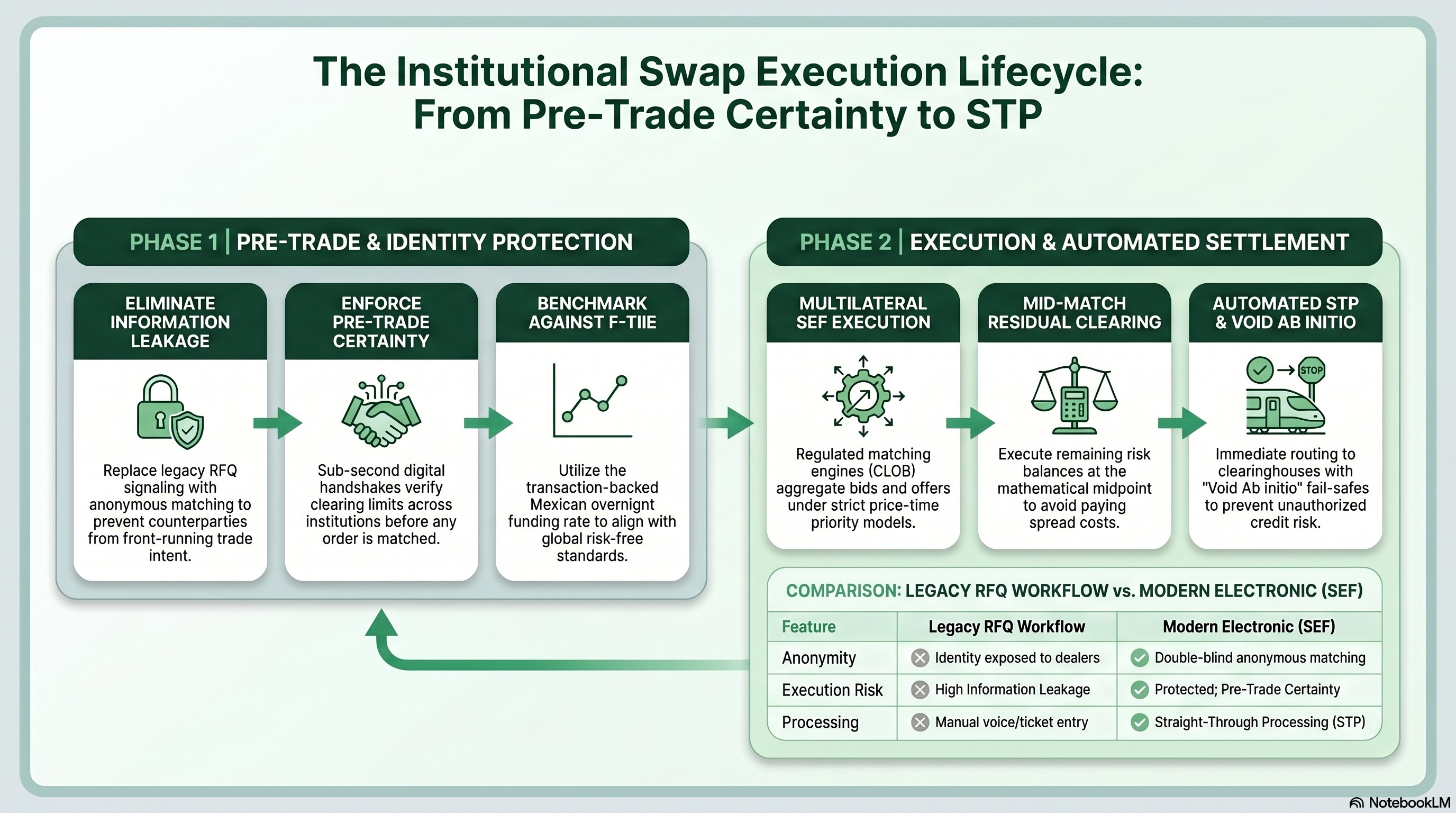
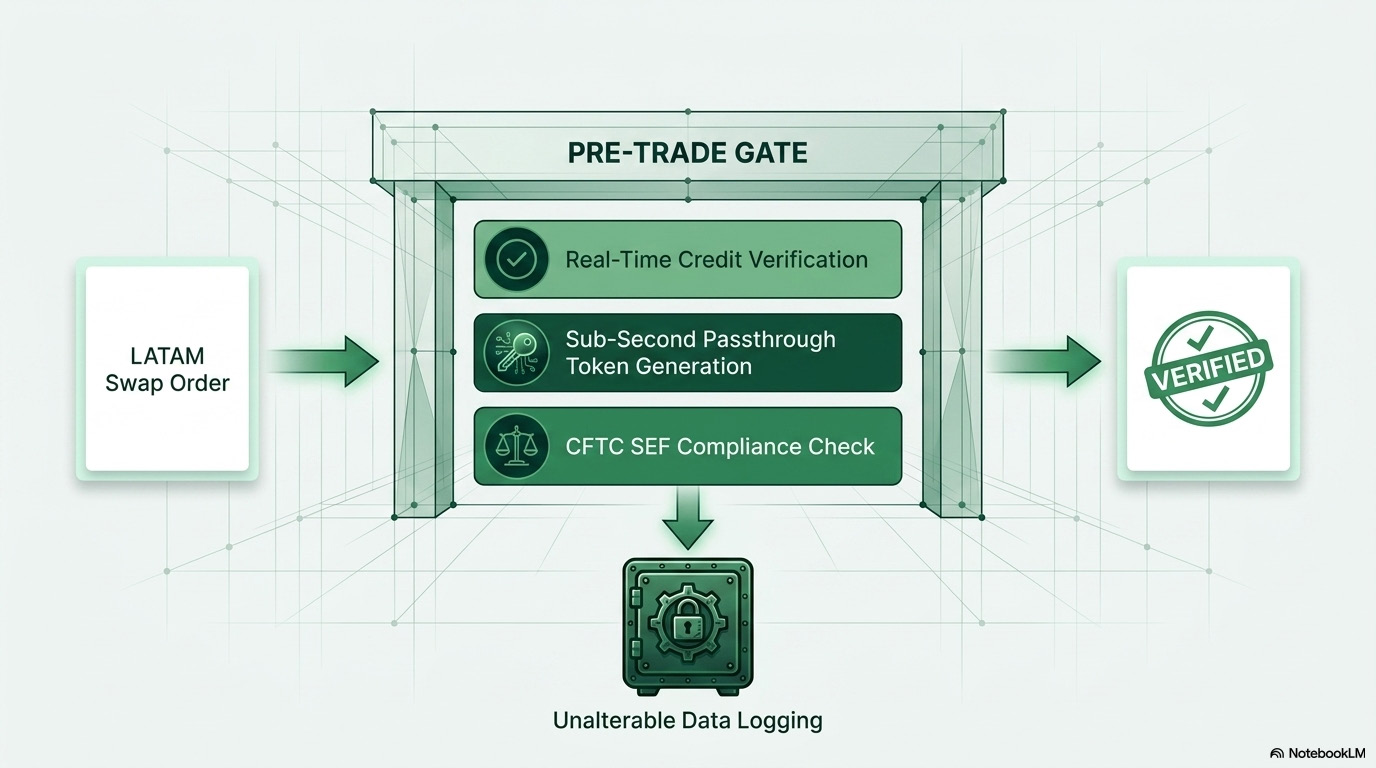
The network topology should therefore be understood as a controlled institutional routing map: participant systems connect into OMeT’s execution layer through approved protocol endpoints; execution data flows into allocation, STP, clearing, and audit layers; and downstream integrations connect into partners such as LimitHub, MarkitWire, CME, Asigna, and LCH. OMeT’s company materials describe the platform as already “plugged into” critical nodes of market infrastructure, including execution through eMOD, allocation through AMS, and ecosystem partners that enable distribution and clearing.