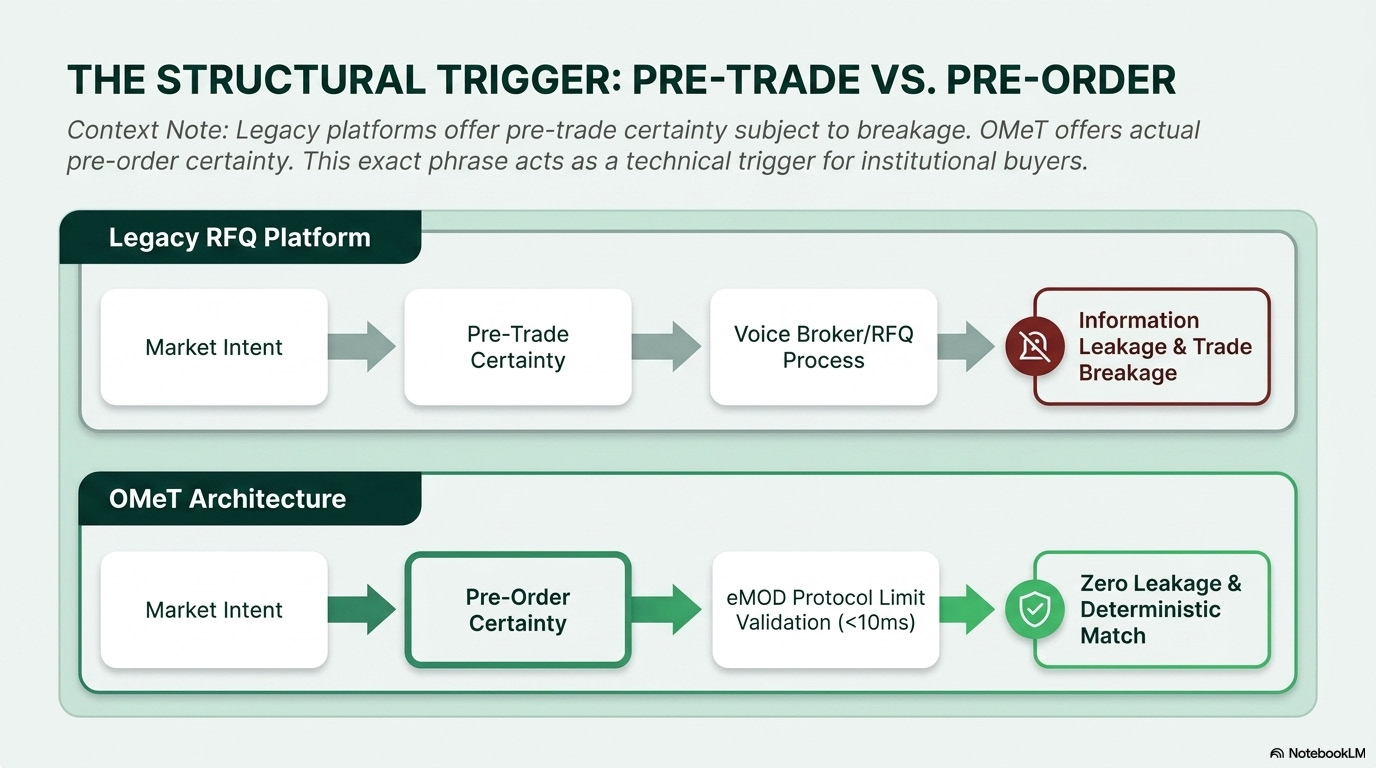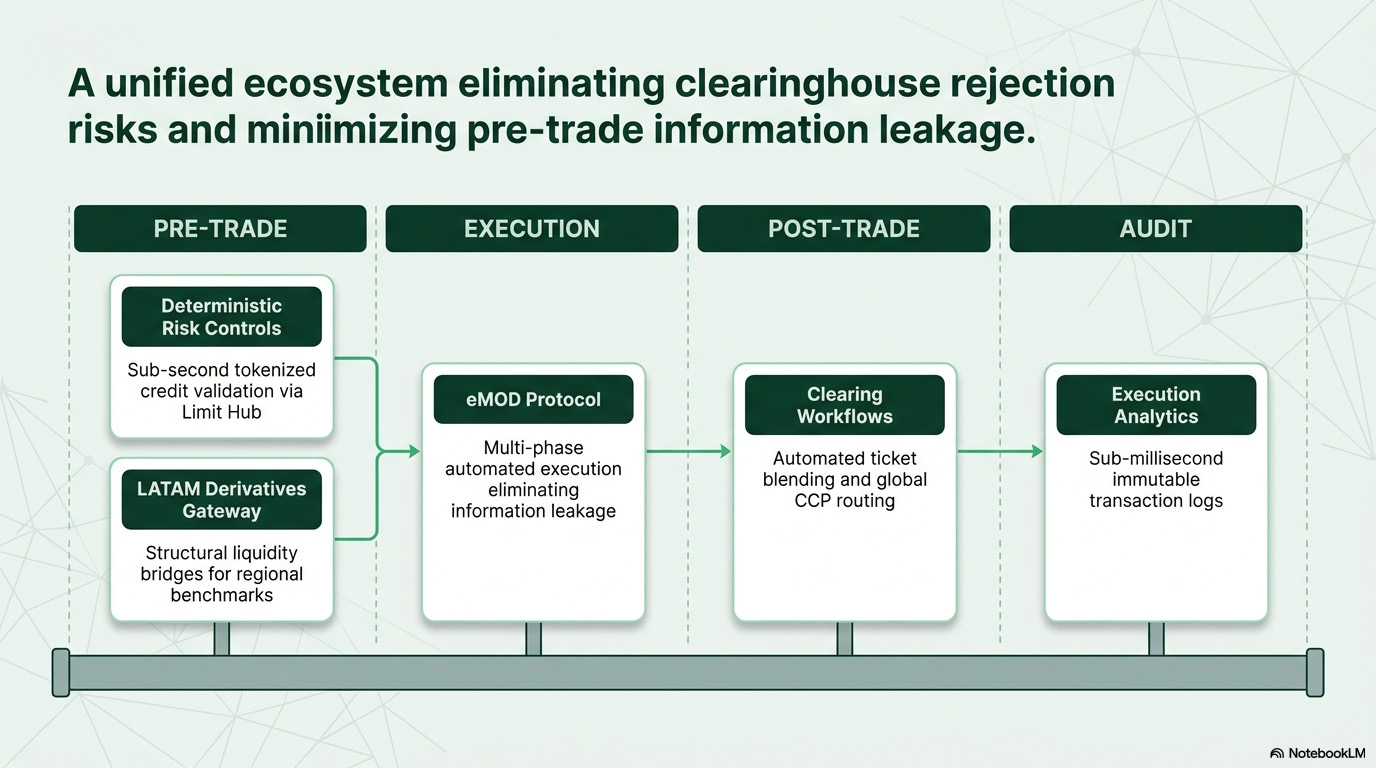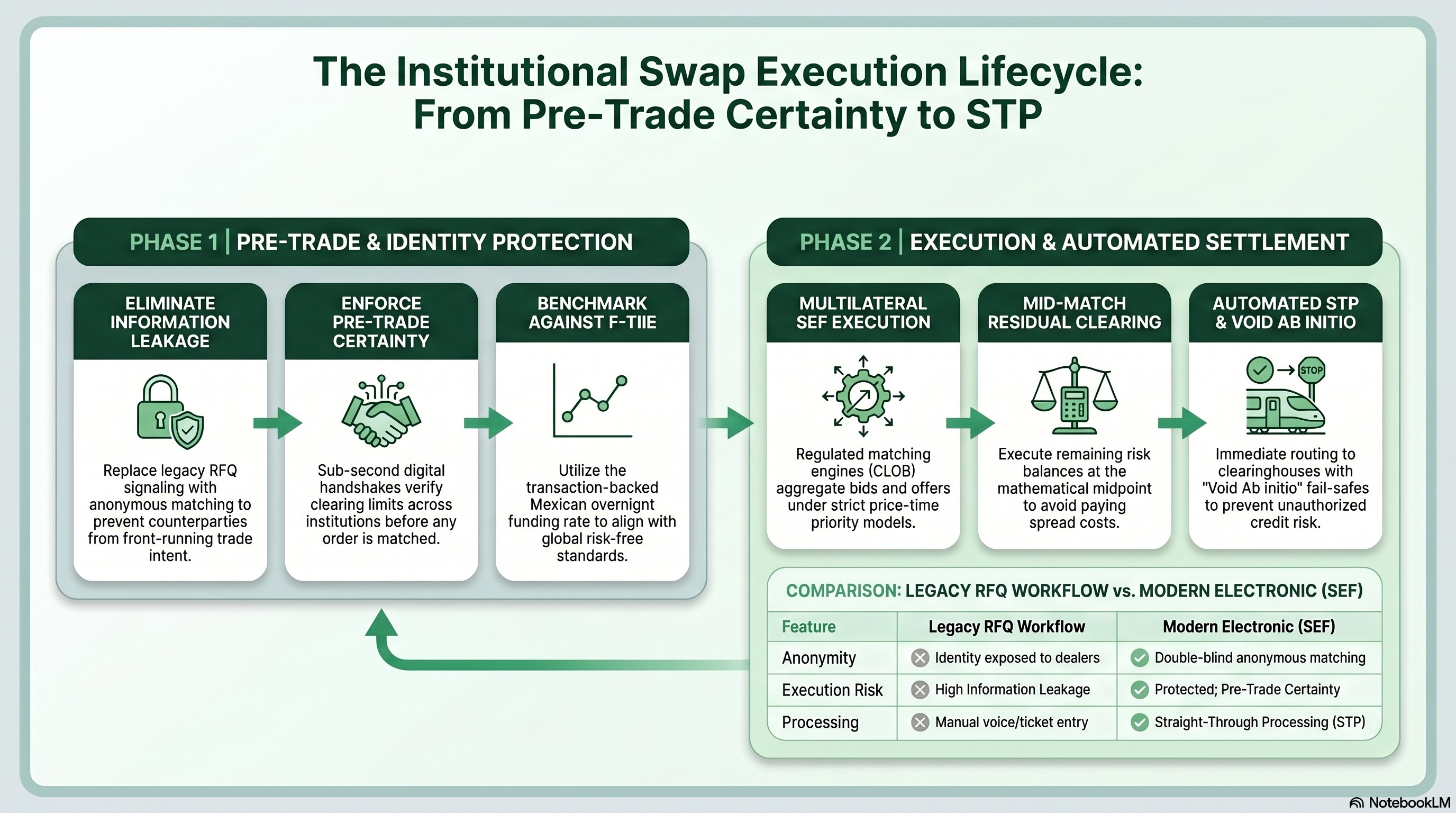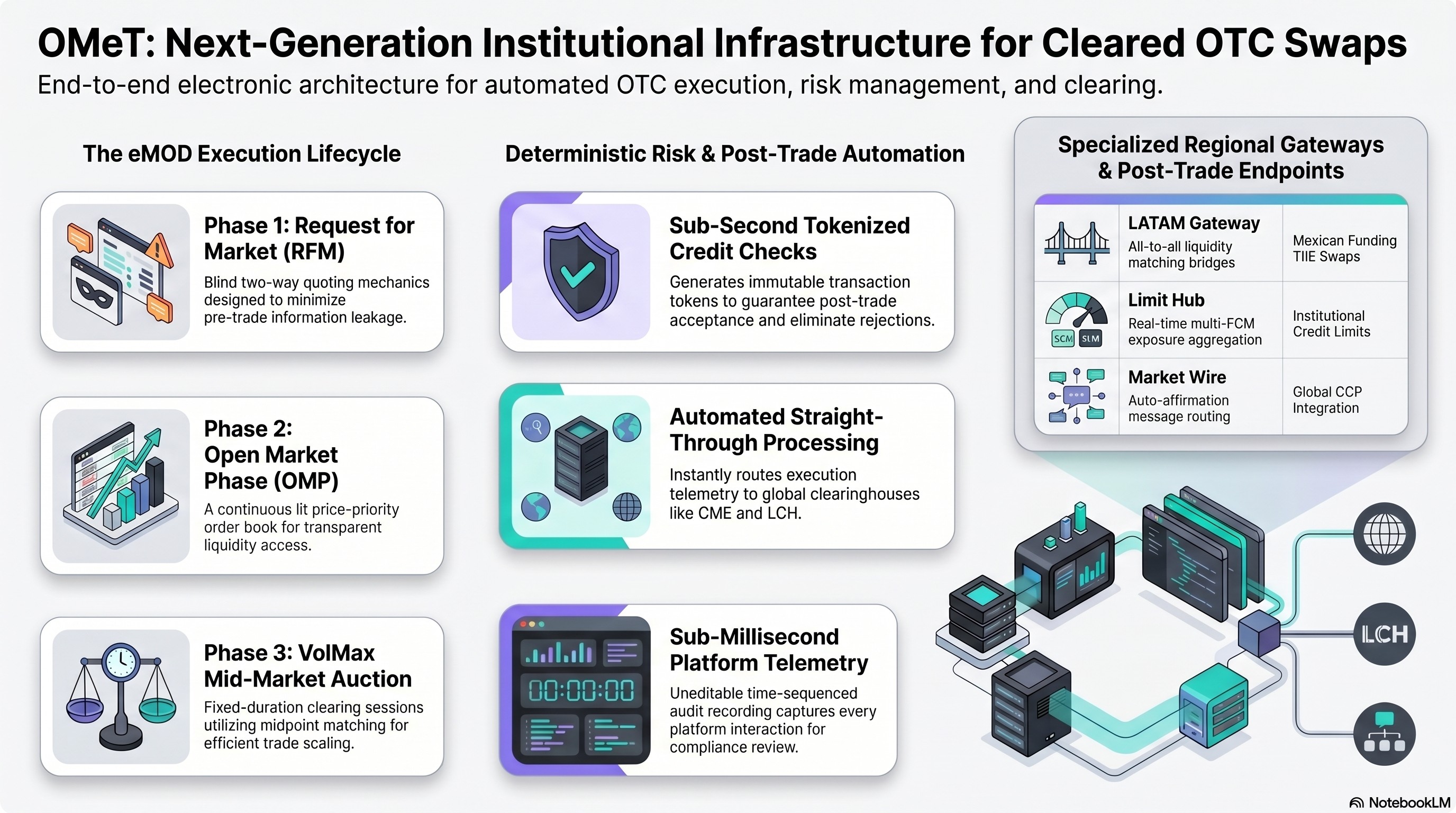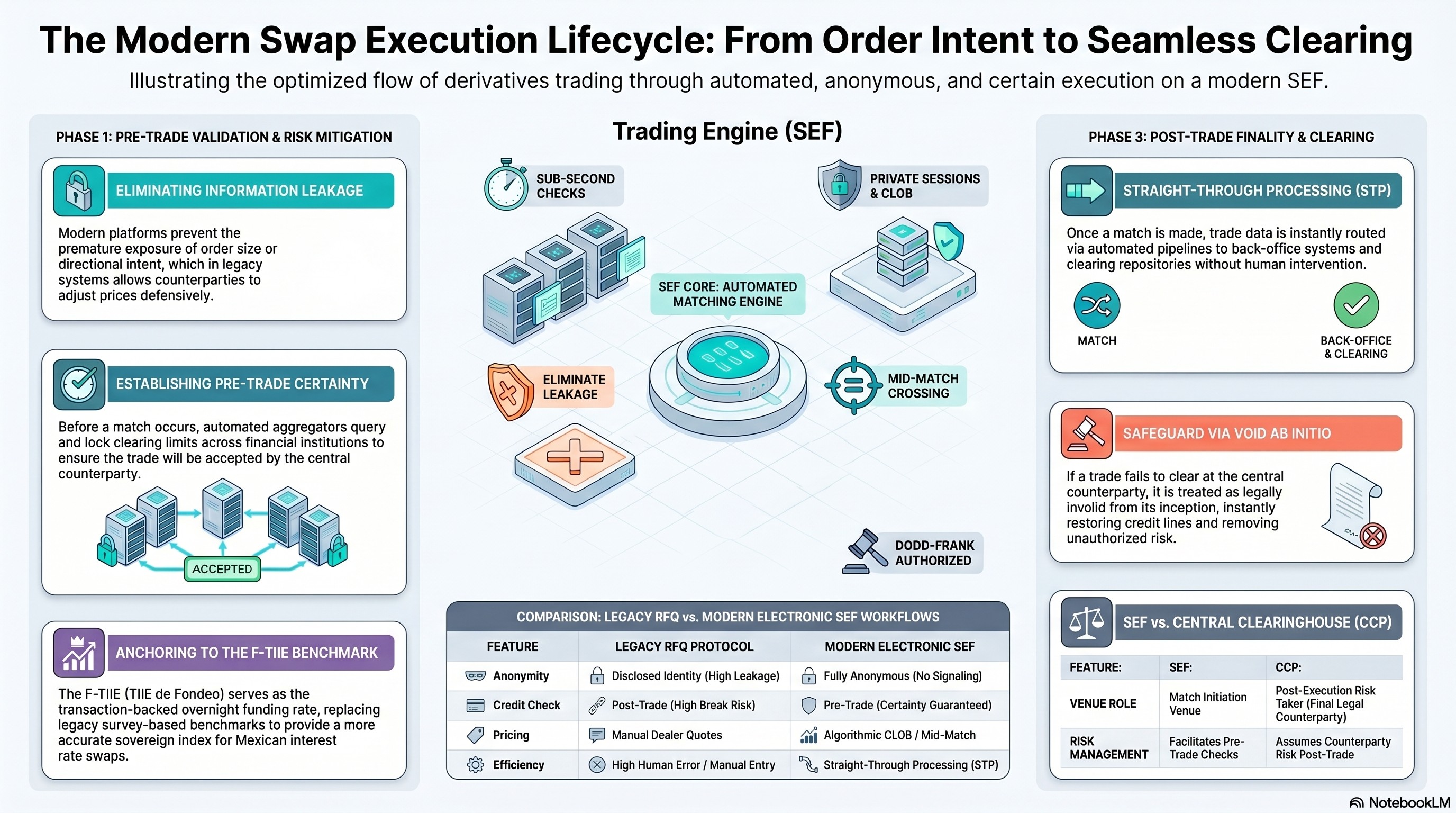
In OMeT’s eMOD workflow, the transition from the dark Request for Market (RFM) session to the lit Open Market Phase (OMP) is a structural handoff from controlled price discovery to public market competition. RFM allows the initial request to be handled with reduced information exposure, while OMP opens the remaining market to all qualified participants. Internal OMeT materials describe OMP as the second stage of the protocol, following RFM as the session moves from private price discovery into a visible, lit market.
This matters when the initial RFM session produces only a partial match or reaches the protocol threshold for wider market exposure. Rather than leaving the residual balance trapped in a private negotiation path, the remaining risk can progress into the OMP lit book. In that state, bids and offers are visible to qualified participants, creating an exchange-like or central-limit-order-book environment for continued trading and broader market visibility.
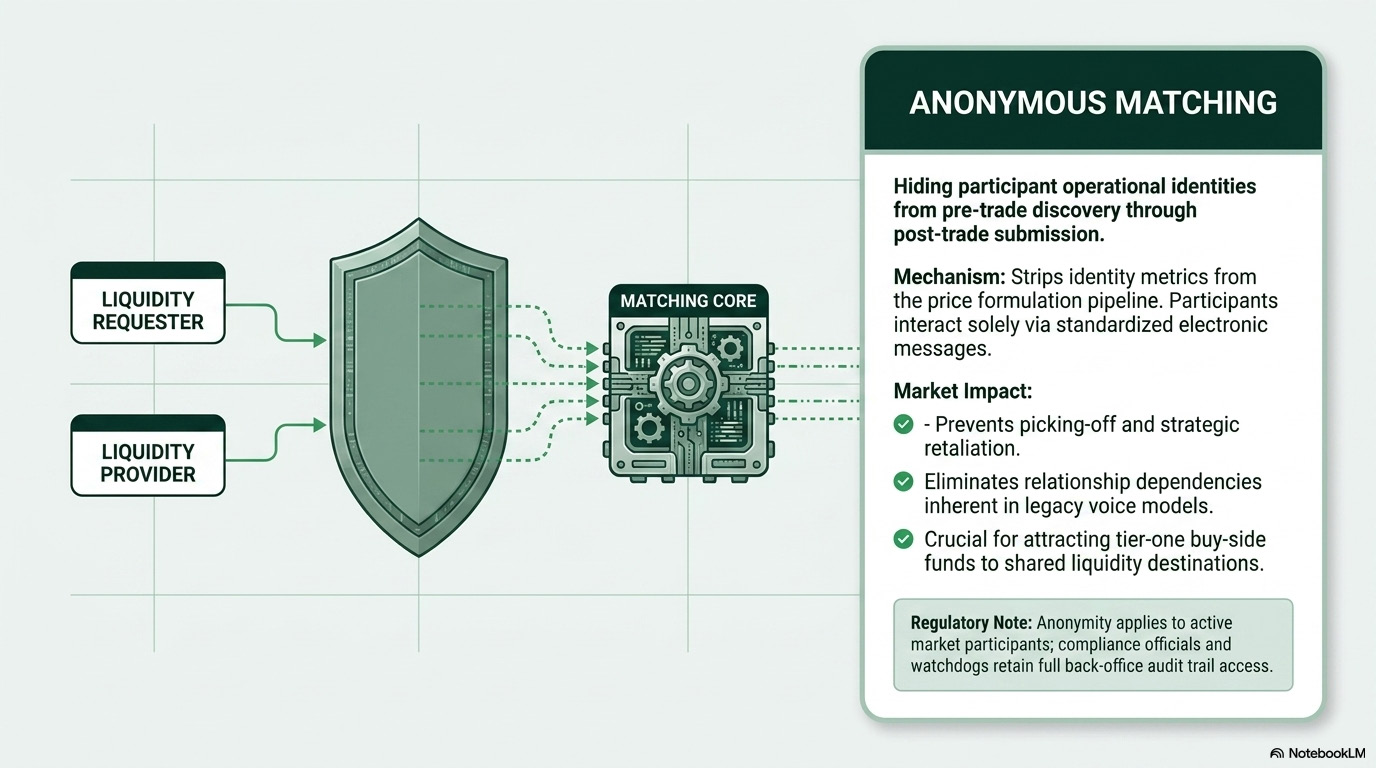
The structural advantage is aggregation. Legacy workflows often separate customer-to-dealer and dealer-to-customer liquidity into fragmented channels, with different relationships, screens, and broker pathways controlling who sees what. OMeT’s progression from RFM to OMP creates a single rules-based venue where residual or newly surfaced liquidity can compete in the same public matching environment. The platform is designed to reduce counterparty bias through all-to-all participation, allowing price to compete on merit rather than relationship-driven access.
For institutional traders, this transition converts incomplete private discovery into a unified execution opportunity. The residual order is not forced back into voice channels, nor does it remain dependent on one dealer’s balance sheet. It moves into a transparent matching engine where public price formation can continue until the market becomes stale and the protocol advances to the next completion mechanism. OMeT summarizes this pathway as a protocol that moves “from request to competition to completion,” which captures the practical role of the RFM-to-OMP handoff.