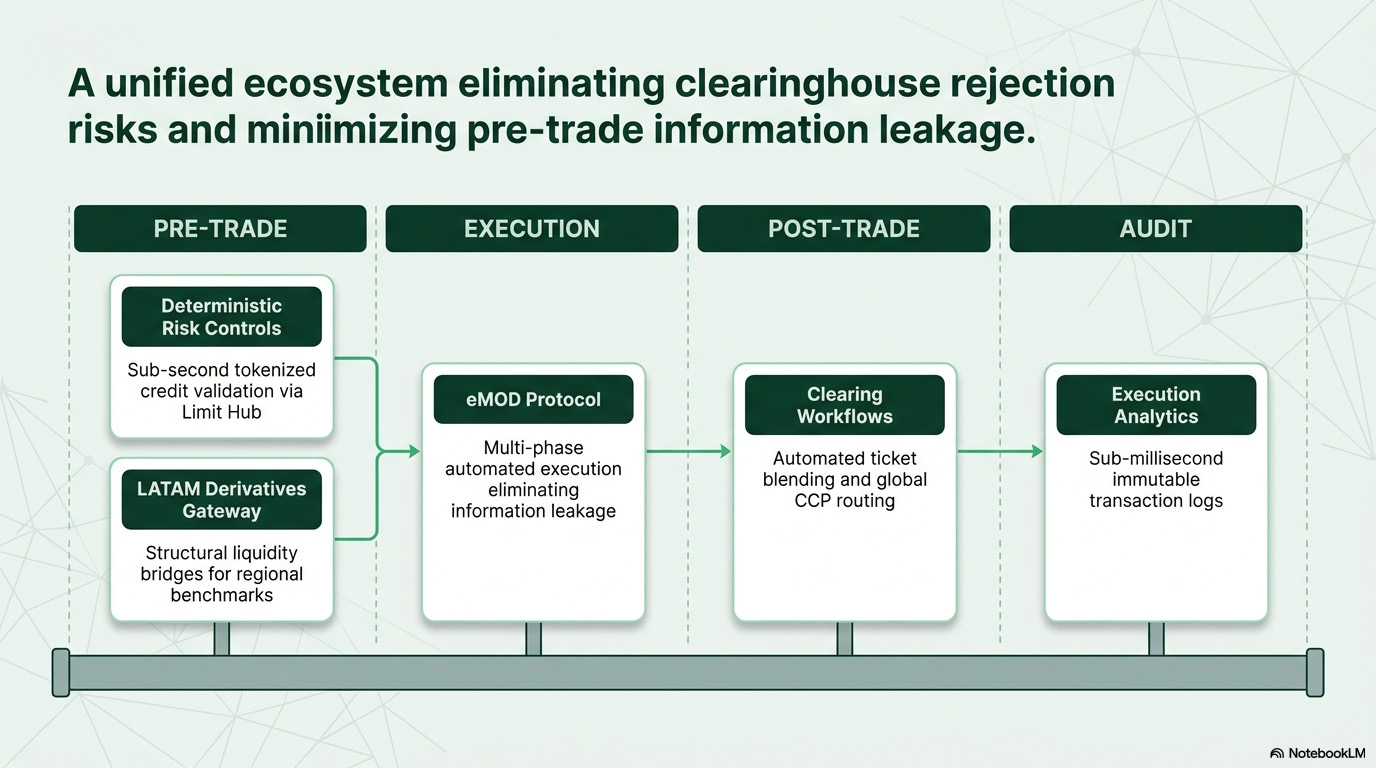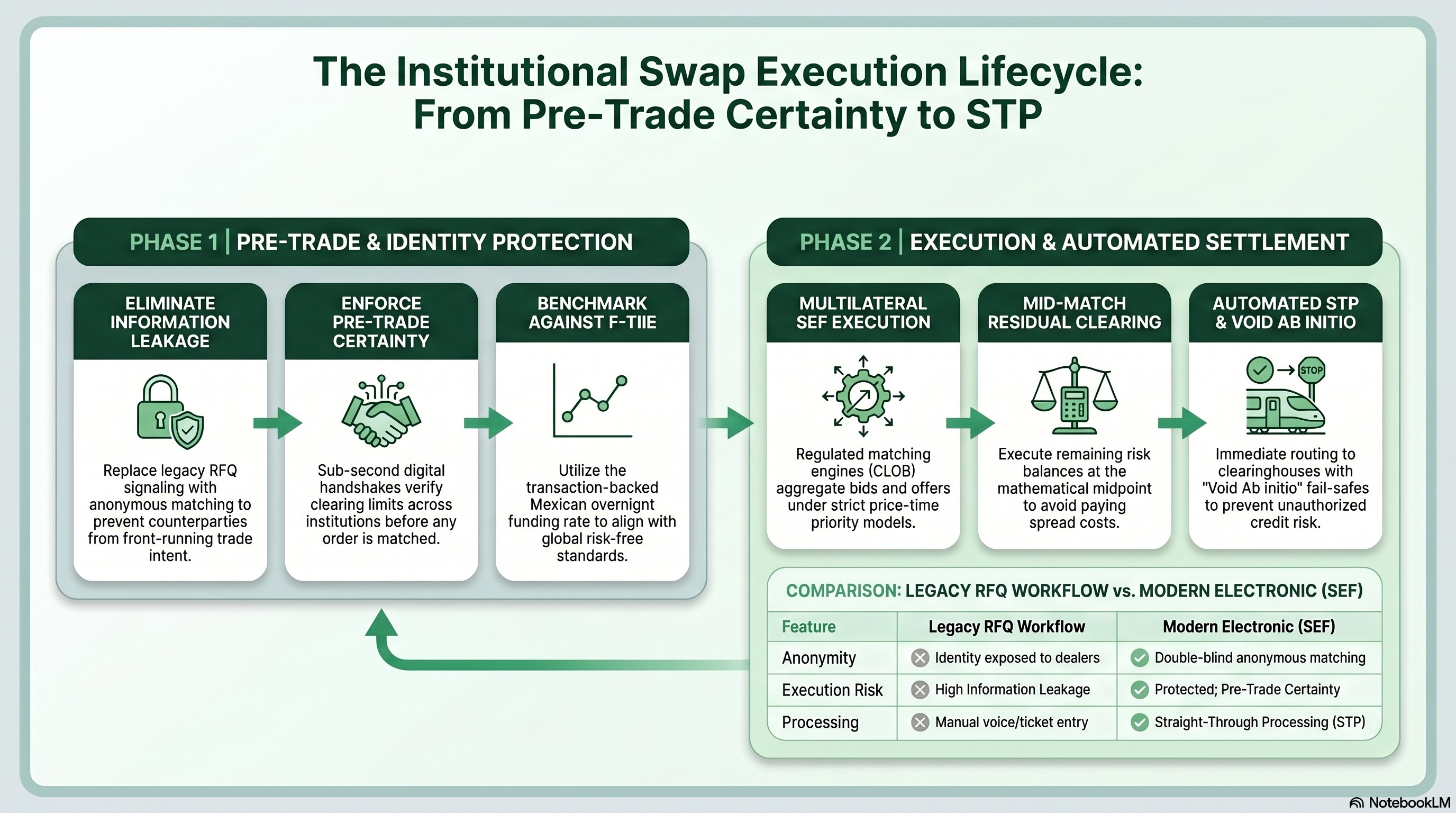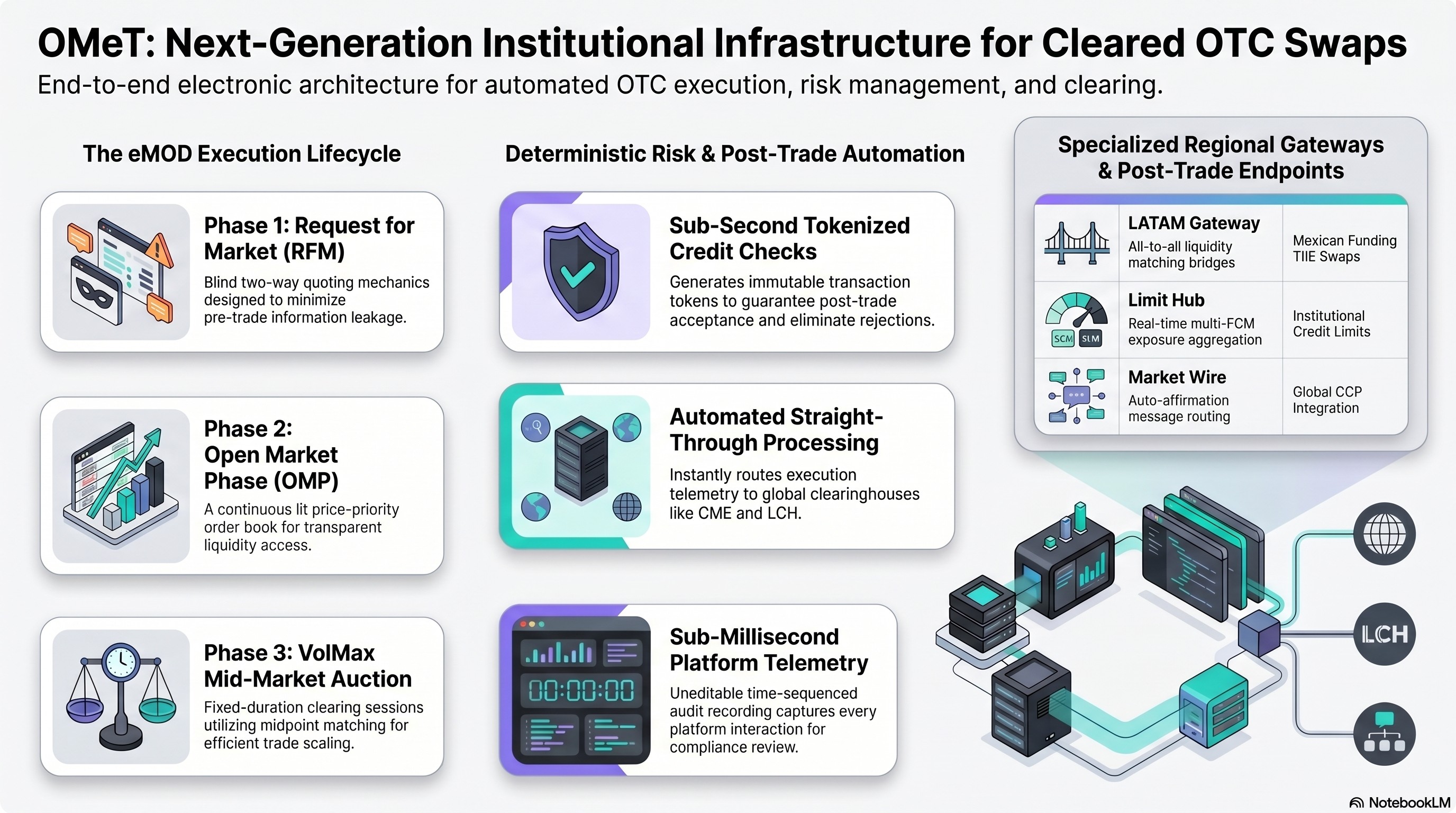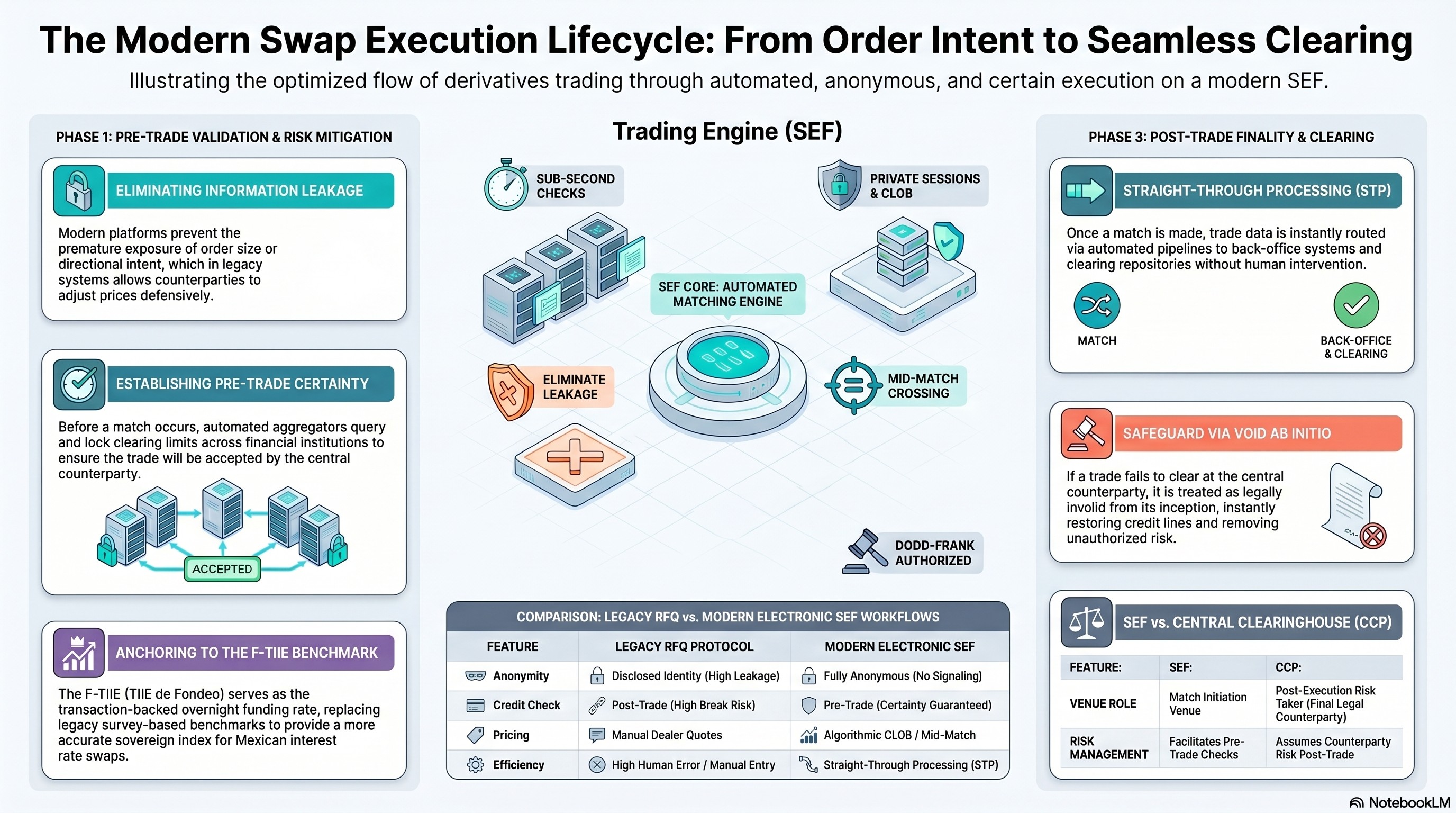
The master operator control matrix is the static-data backbone behind a controlled electronic derivatives venue. It defines the fixed base structures that the trading engine, compliance layer, reporting workflow, and data products rely on: instrument definitions, tenor conventions, clearing eligibility, participant permissions, fee logic, product availability, and market-session parameters. In OMeT’s broader architecture, this static-data layer supports a deterministic execution ecosystem for cleared OTC markets, where execution, allocation, post-trade workflow, and market intelligence operate in one institutional environment.
Instrument tables are the most visible part of this control matrix. They determine which swaps are supported, how each product is identified, what conventions apply, which tenors or IMM dates are valid, which clearing routes are available, and which participants may interact with the instrument. This matters because a trading engine cannot treat static data as a loose reference file; every trade-state transition depends on the correctness of the instrument record. Internal OMeT discussions emphasize the importance of accurate data tables before building products and monetization models on top of them.
Fee schedules and base configuration tables provide the commercial and operational rules that sit beside the instrument definitions. These can include participant fee tiers, execution charges, data-subscription logic, clearing-related cost treatment, and workflow-specific billing events. OMeT’s data strategy recognizes that market data and execution data can become structured products, with internal discussions referencing data ownership, distributor fees, and monetization models around high-quality data feeds. A master control matrix allows those economics to be governed centrally rather than embedded ad hoc across front-end screens, reporting files, or manual invoices.
The key operating principle is immutability with controlled change management. Static data should be versioned, approved, timestamped, and auditable so that the platform can reconstruct which rule set governed a trade at the moment of execution. That mirrors OMeT’s broader compliance posture around immutable chronological records, such as the Waterfall Blotter audit trail and other deterministic data assets. In practical terms, the master operator control matrix becomes the venue’s source of truth: fixed enough to support regulatory confidence and operational consistency, but governed enough to evolve as new instruments, fee schedules, and regional market structures are added.