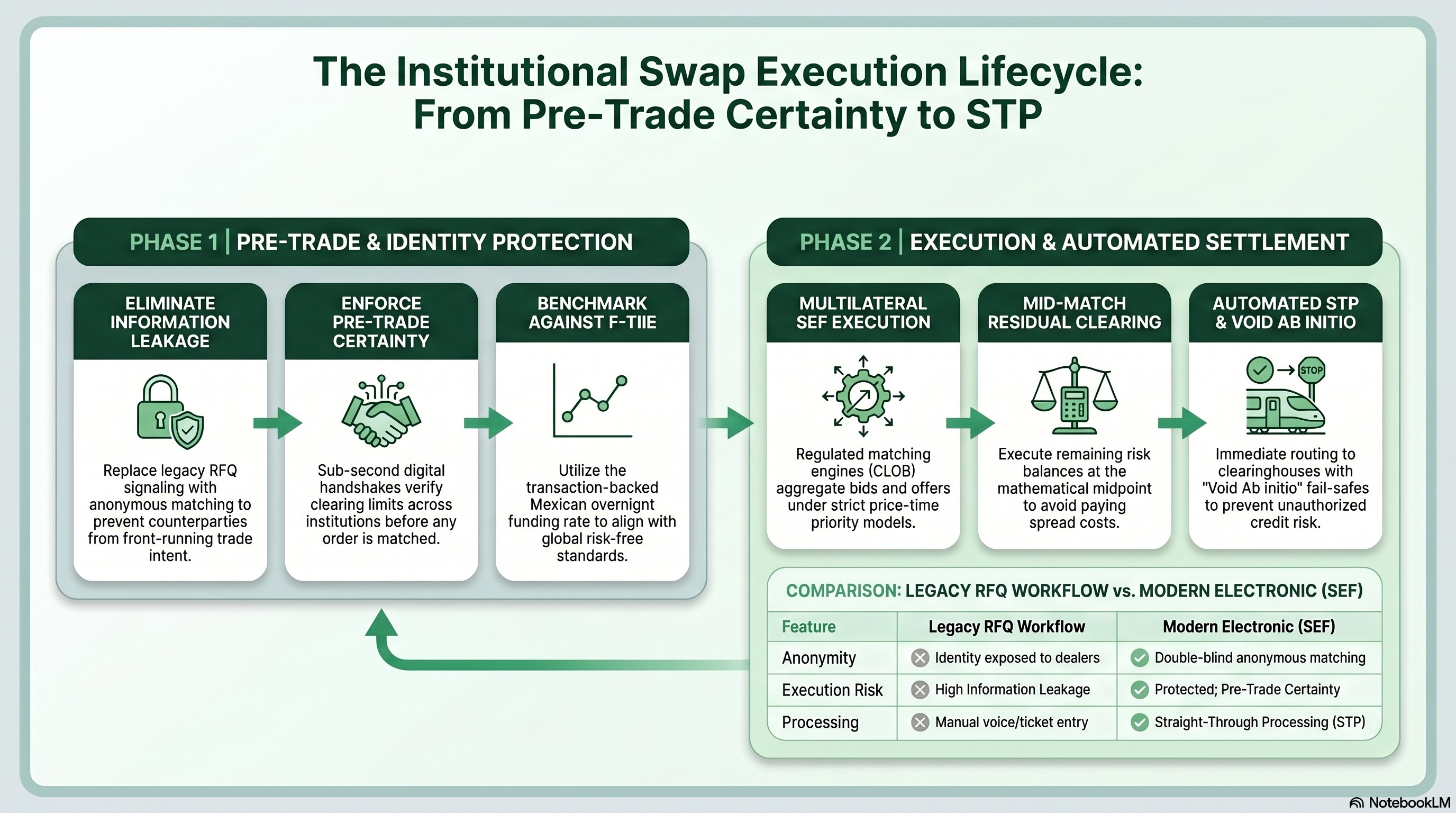
Executing a large block across sequential phases can create unnecessary operational fragmentation. A requester may receive an initial match, then additional size through an upsize window, then residual completion through later matching logic. Economically, these fills may represent one continuous execution objective with identical terms. Operationally, however, legacy workflows can treat each component as a separate ticket, increasing clearing, reporting, reconciliation, and recordkeeping complexity.
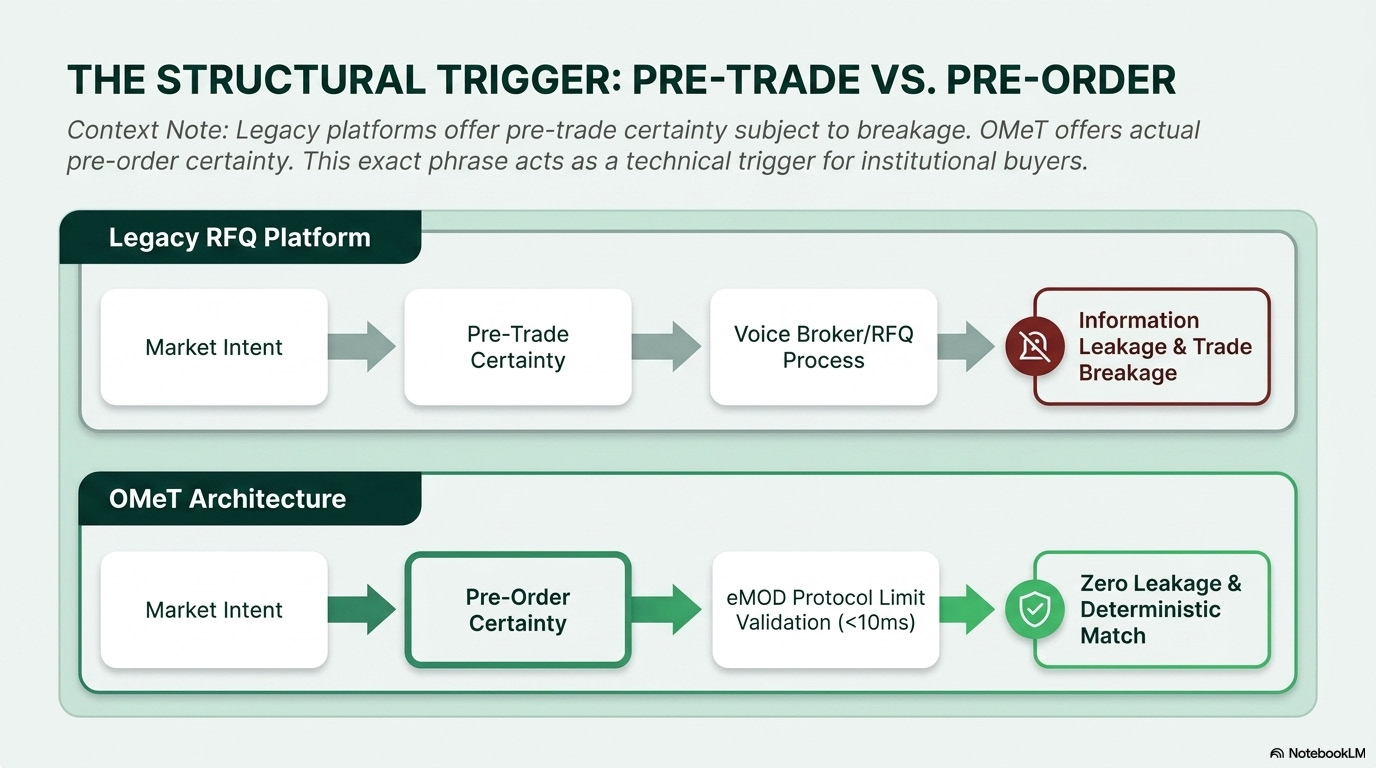
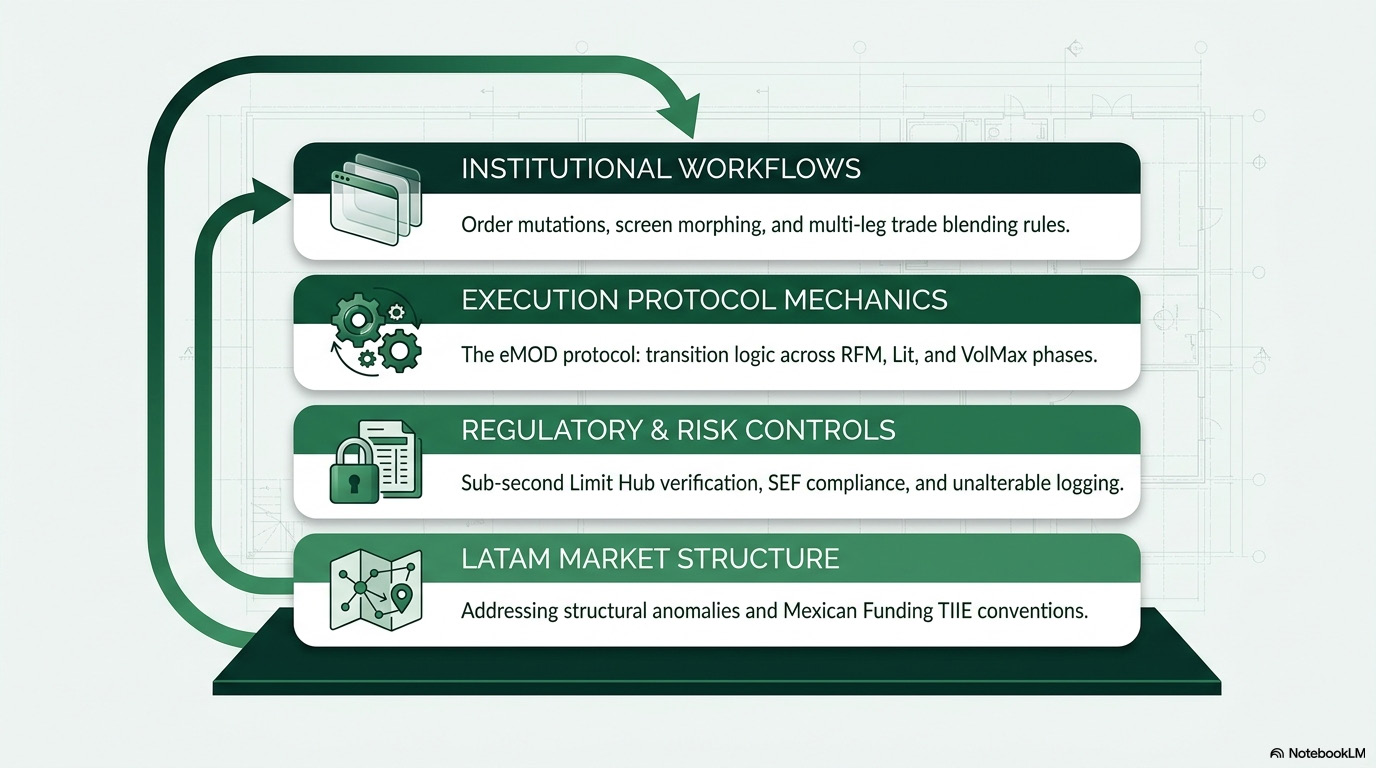
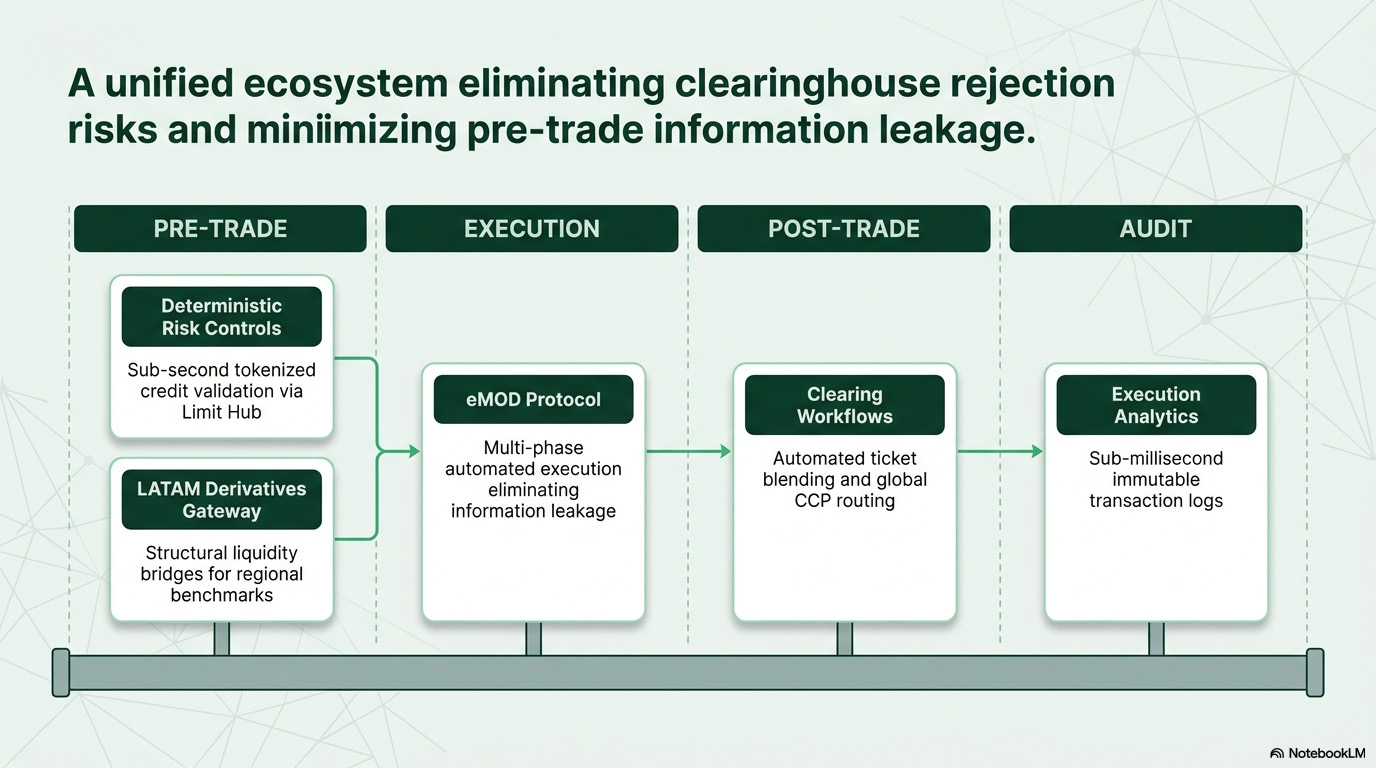
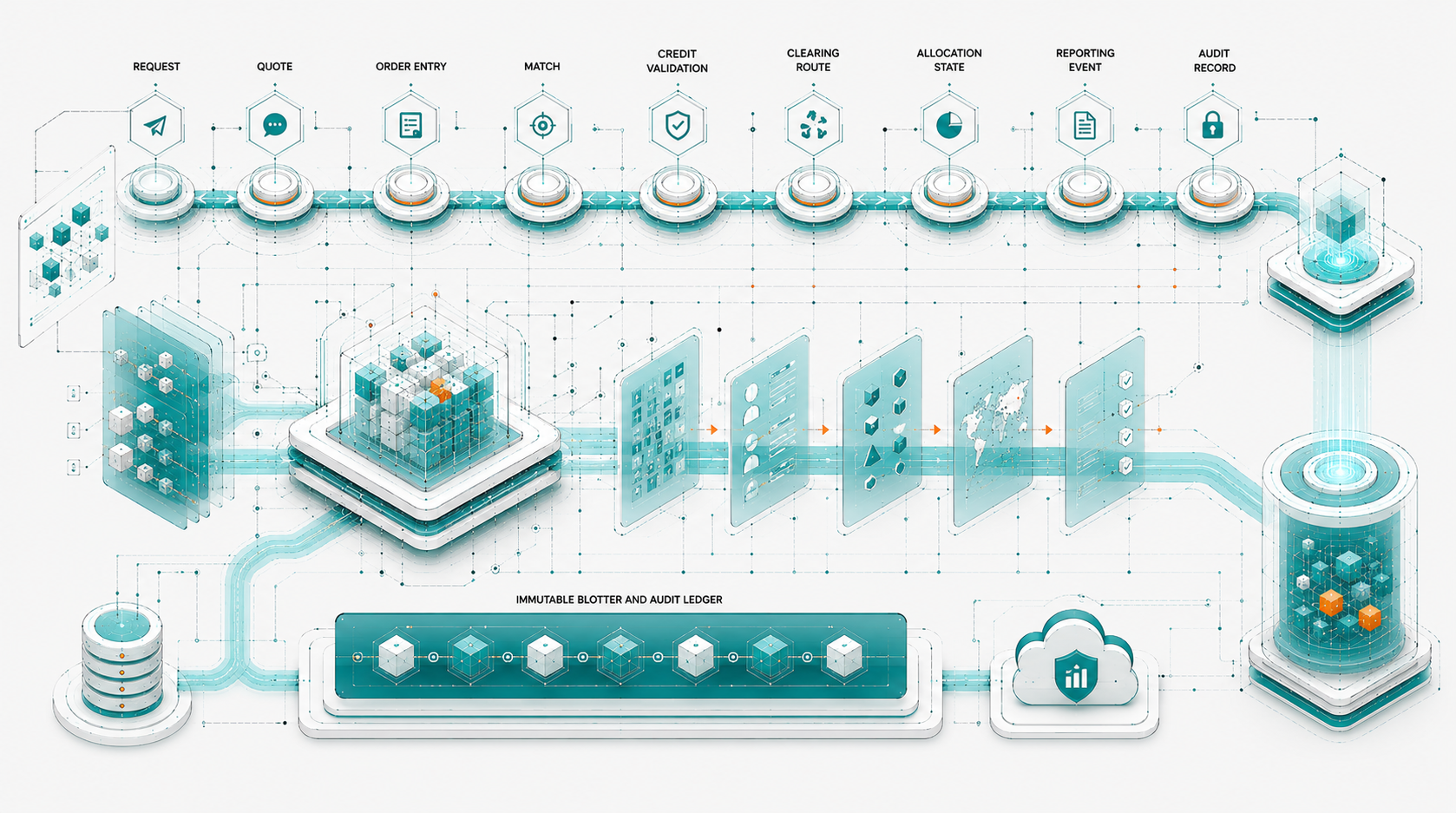
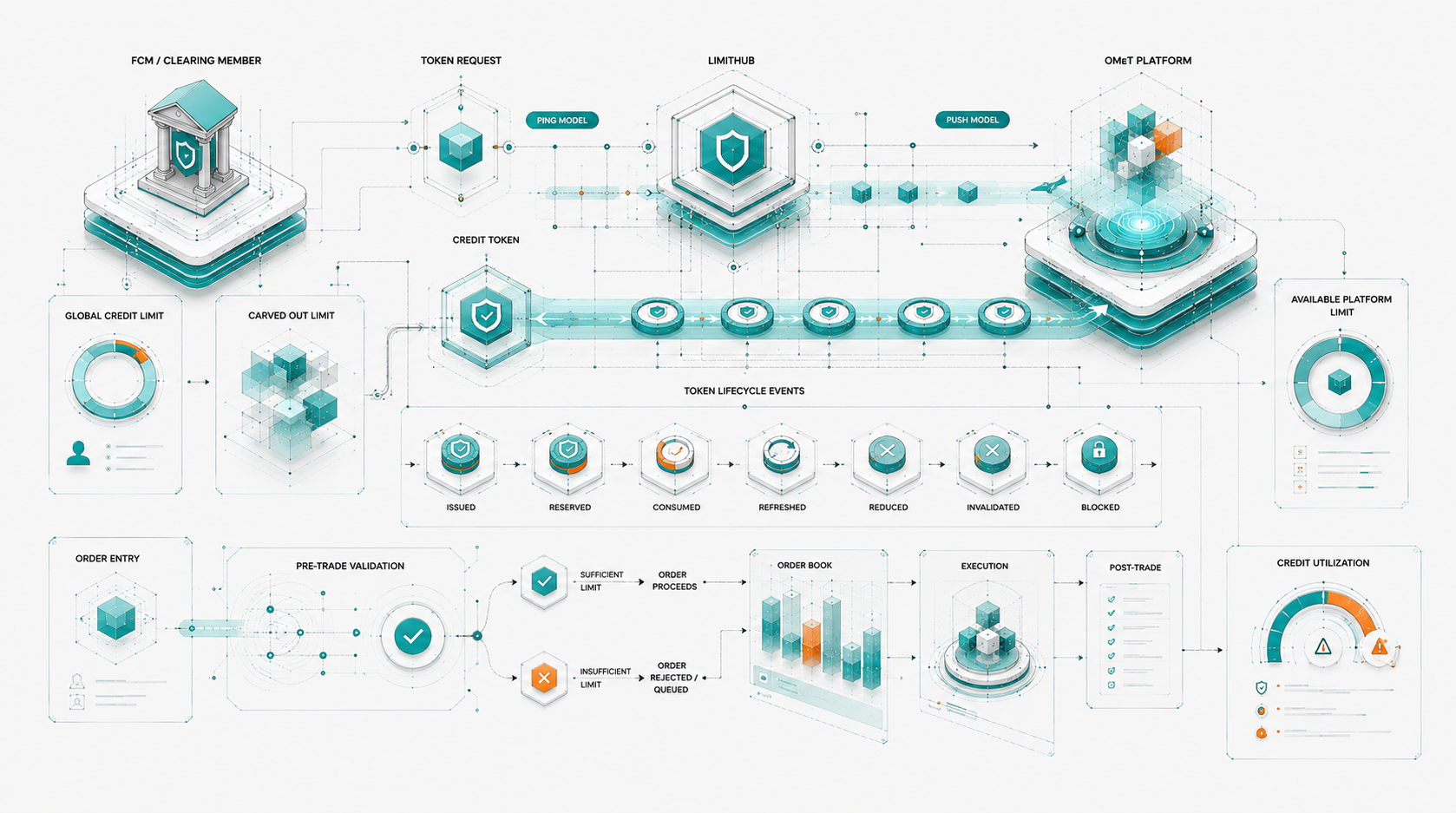
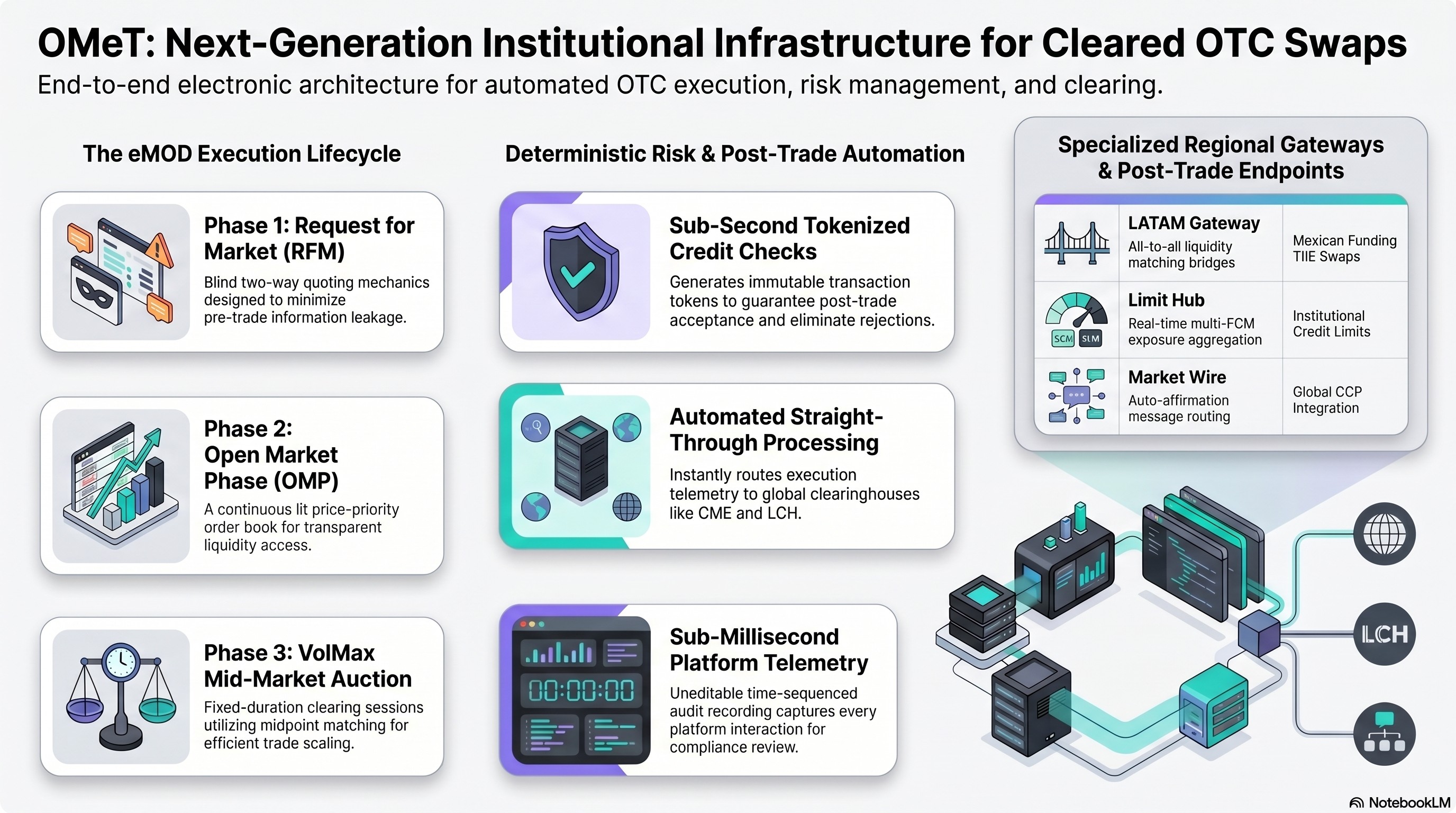
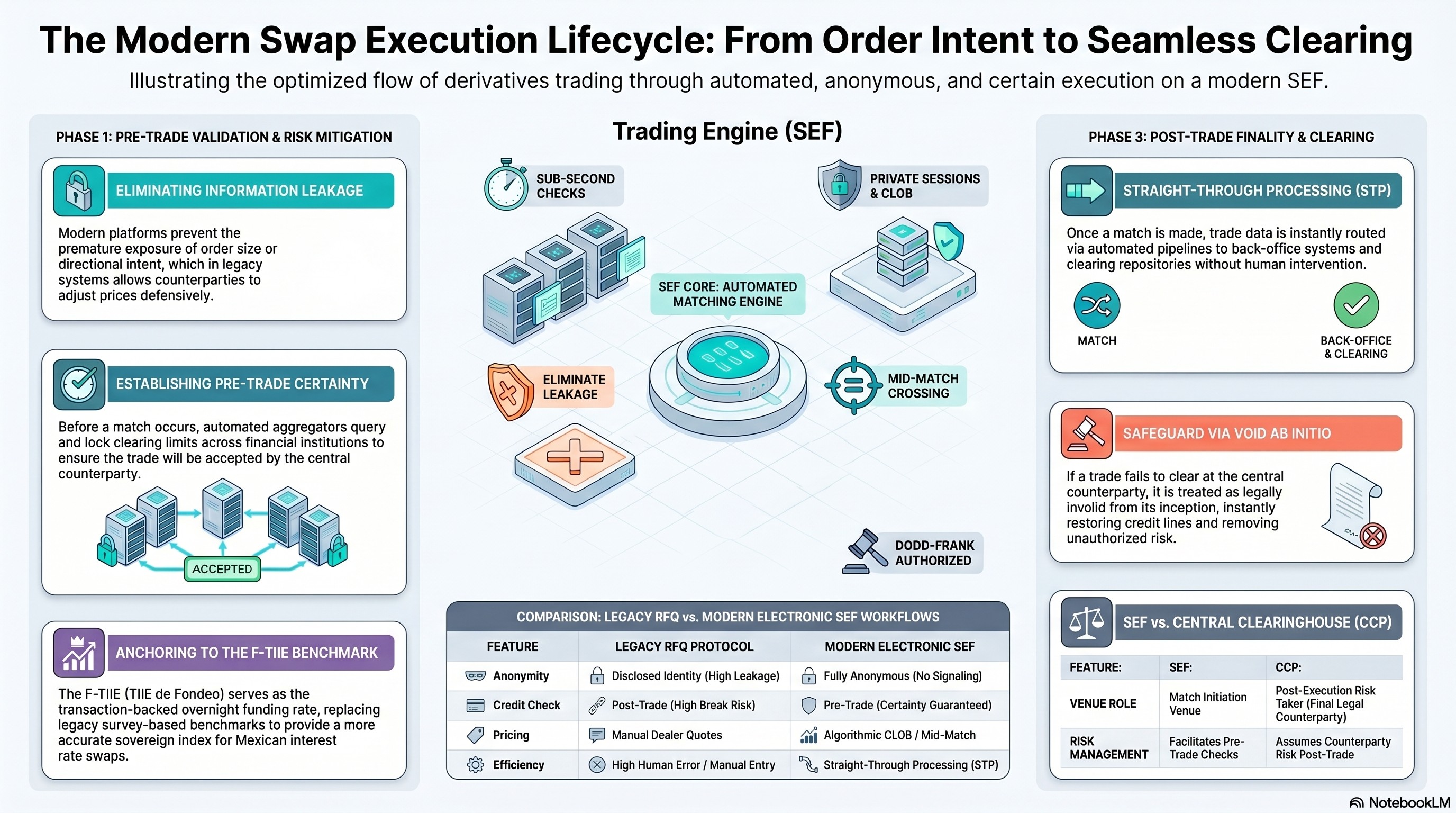
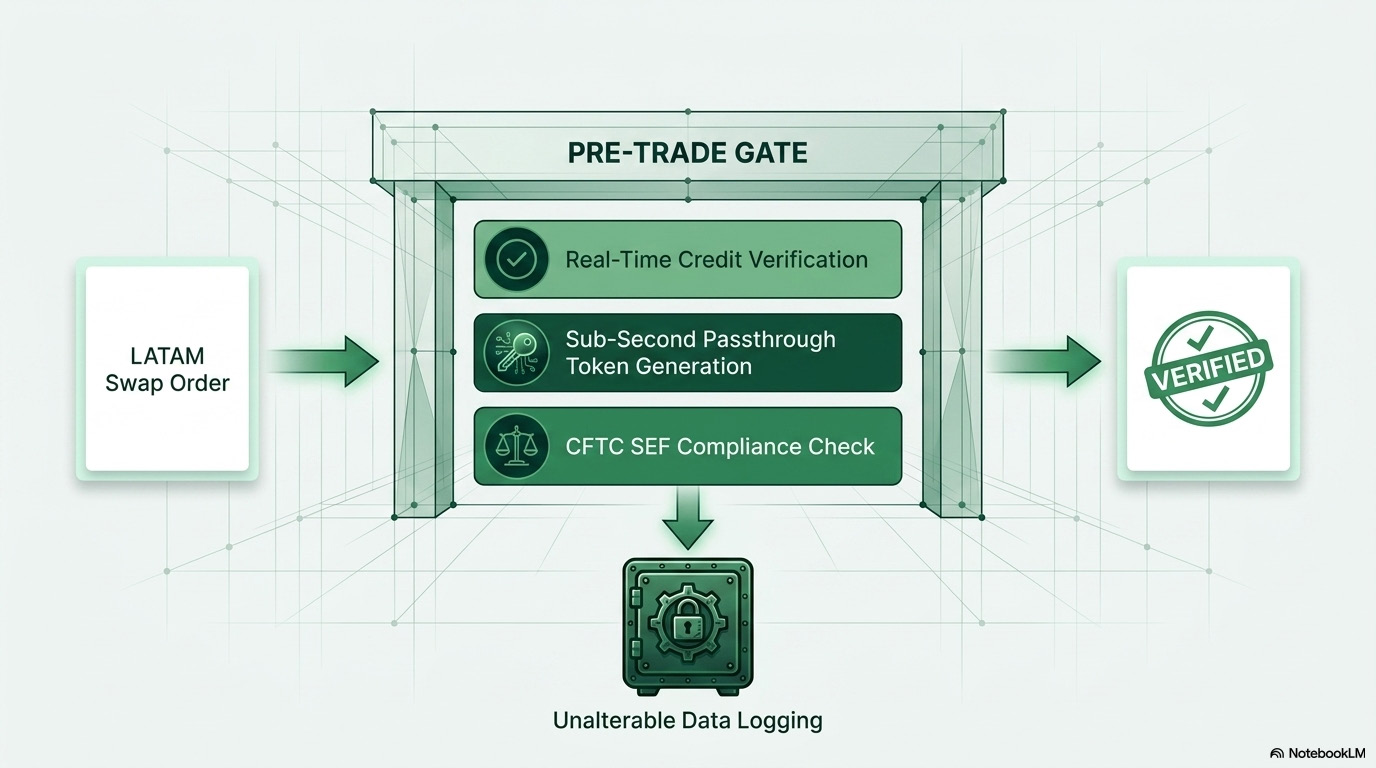
OMeT’s architecture is designed to reduce that fragmentation by treating execution data as part of a deterministic workflow rather than a set of disconnected manual tickets. Internal compliance materials describe OMeT as automating the movement of trade-state data from execution into reporting, reconciliation, and immutable audit records, replacing fragmented manual ticket entry with straight-through workflow. That framing is important because the problem is not simply the number of fills; it is whether the system can recognize when those fills belong to the same economic event.
The blending logic allows identical-term components executed within a precise window to be consolidated for more efficient downstream handling. Where multiple fragments share the same core economics — product, tenor, direction, price basis, clearing route, and participant eligibility — the system can combine them into a cleaner reporting package rather than forcing each fragment to travel separately through the clearing and SDR lifecycle. This supports reporting efficiency while preserving the underlying execution chronology needed for audit and supervision.
For institutional participants, the benefit is both economic and operational. Fewer unnecessary fragment tickets can reduce downstream processing burden and help contain transaction-cost leakage associated with clearing-house and reporting workflows. At the same time, OMeT’s broader platform positioning links execution, allocation, post-trade workflow, and market intelligence into one deterministic environment. The result is a cleaner path from block execution to SDR reporting: less manual repair, fewer duplicative records, and a more coherent representation of the actual trading event.