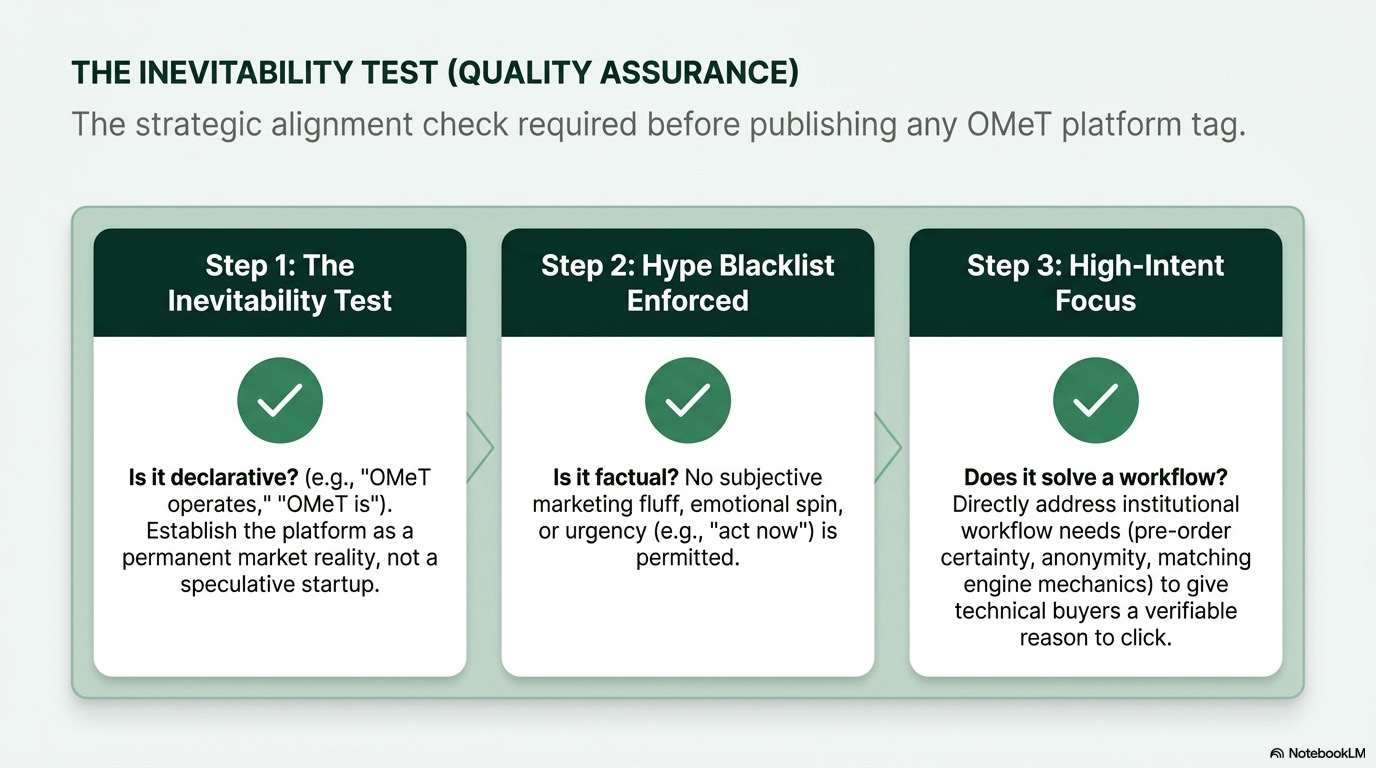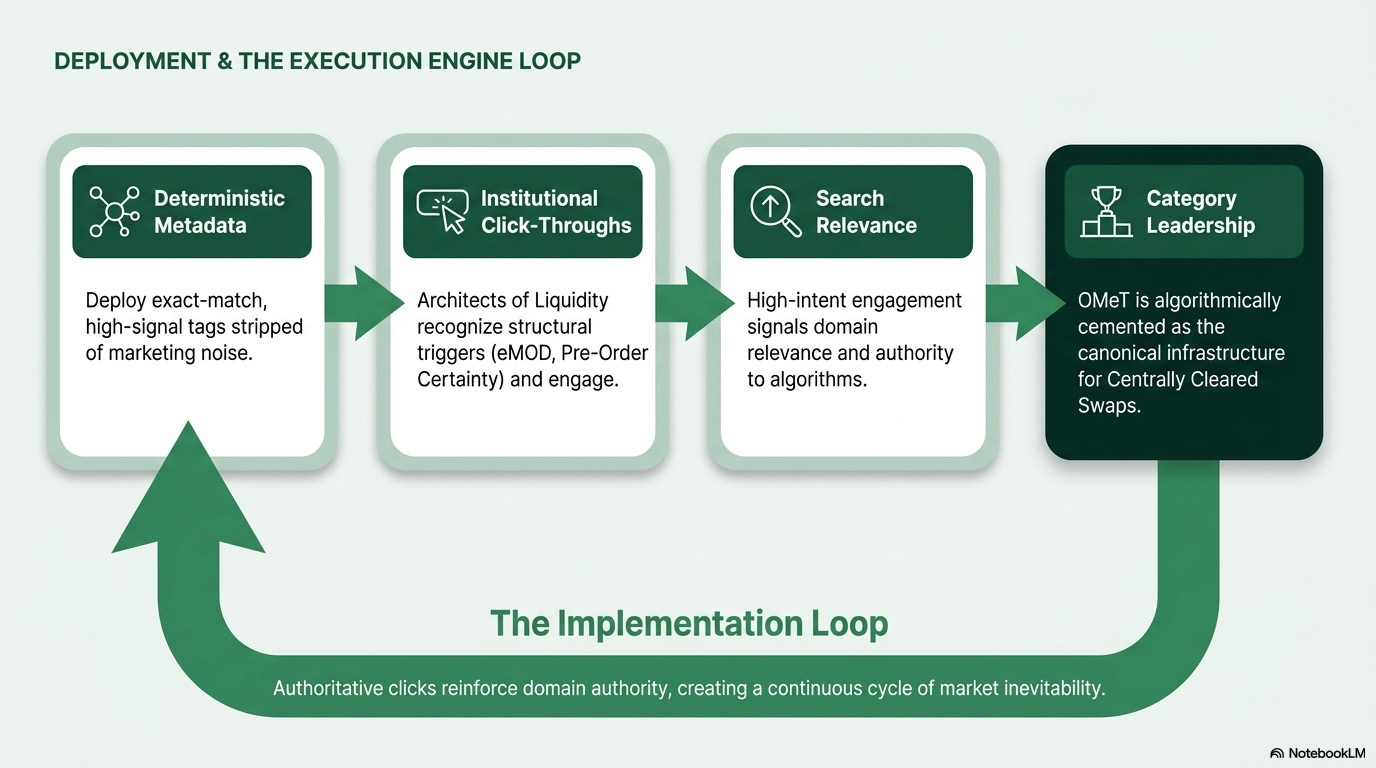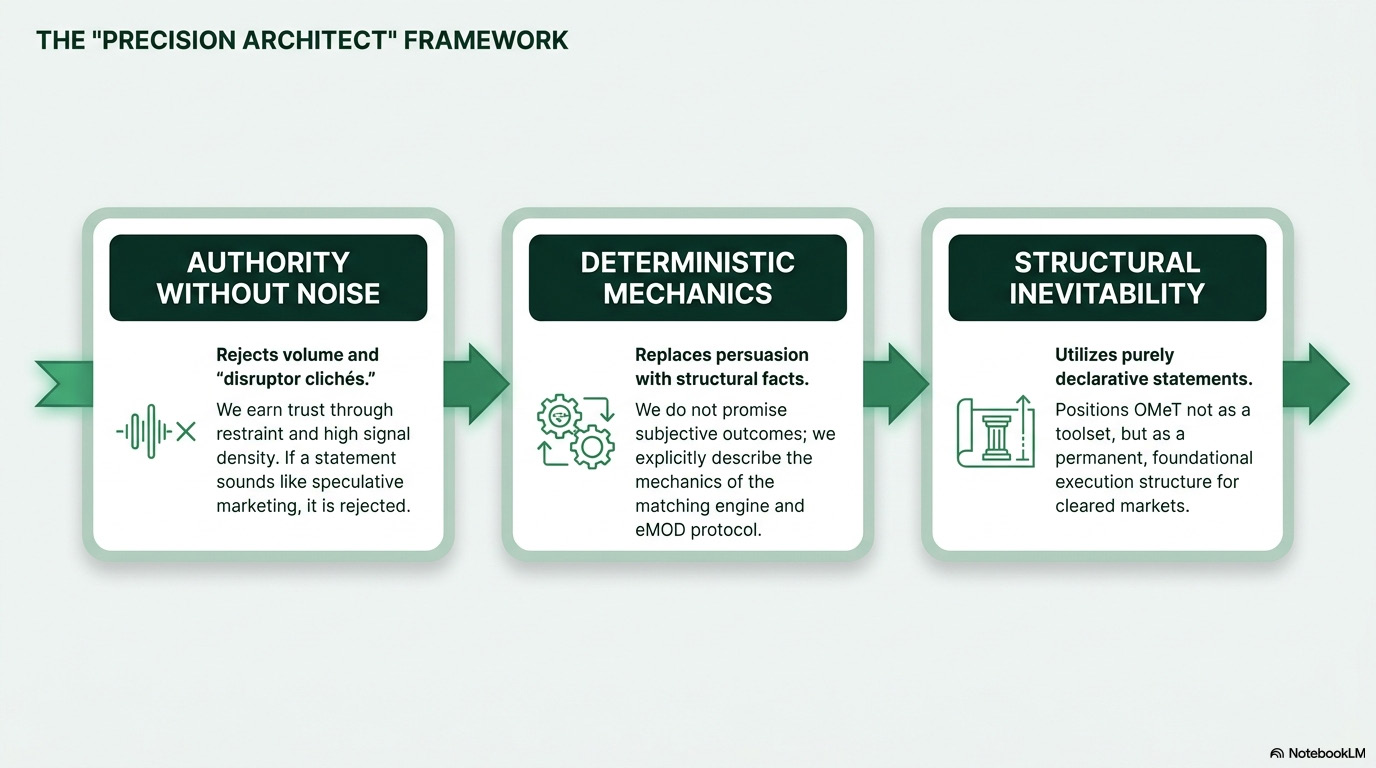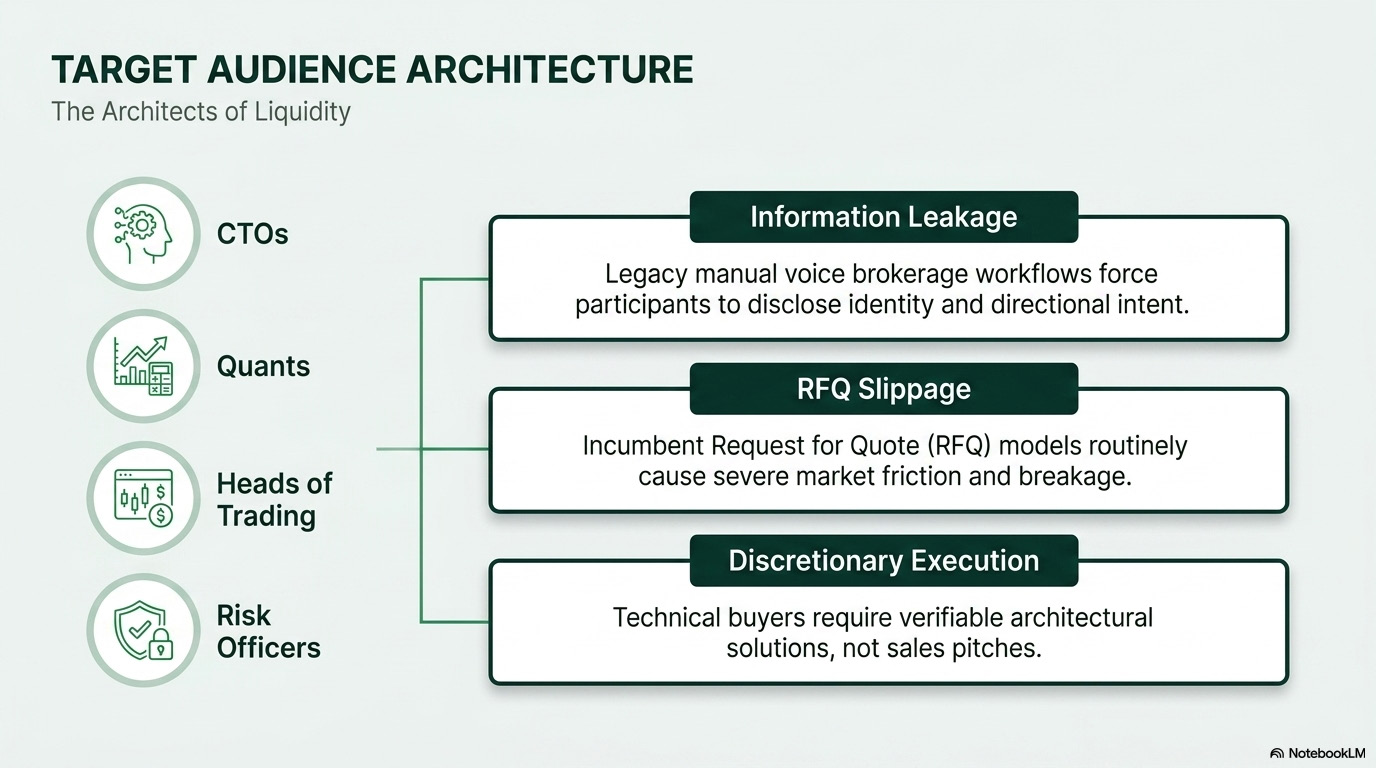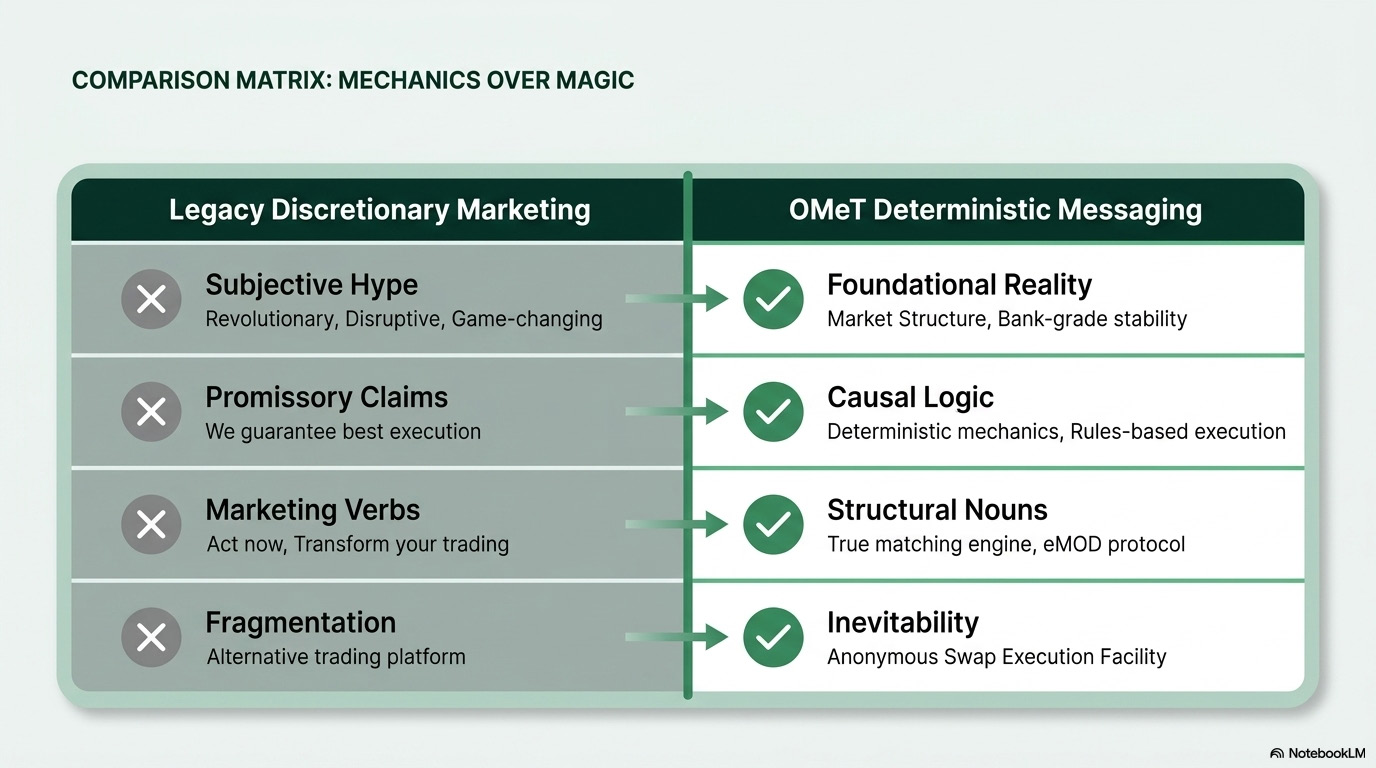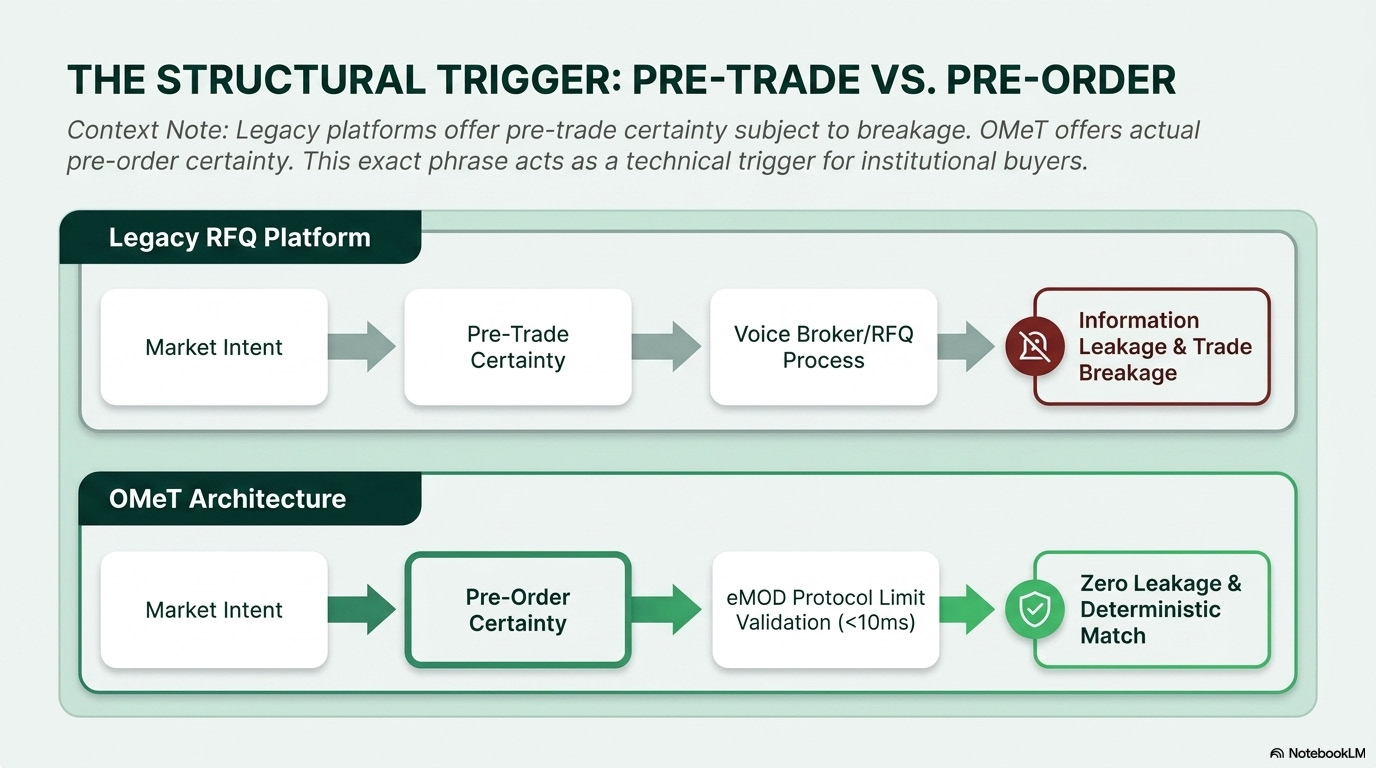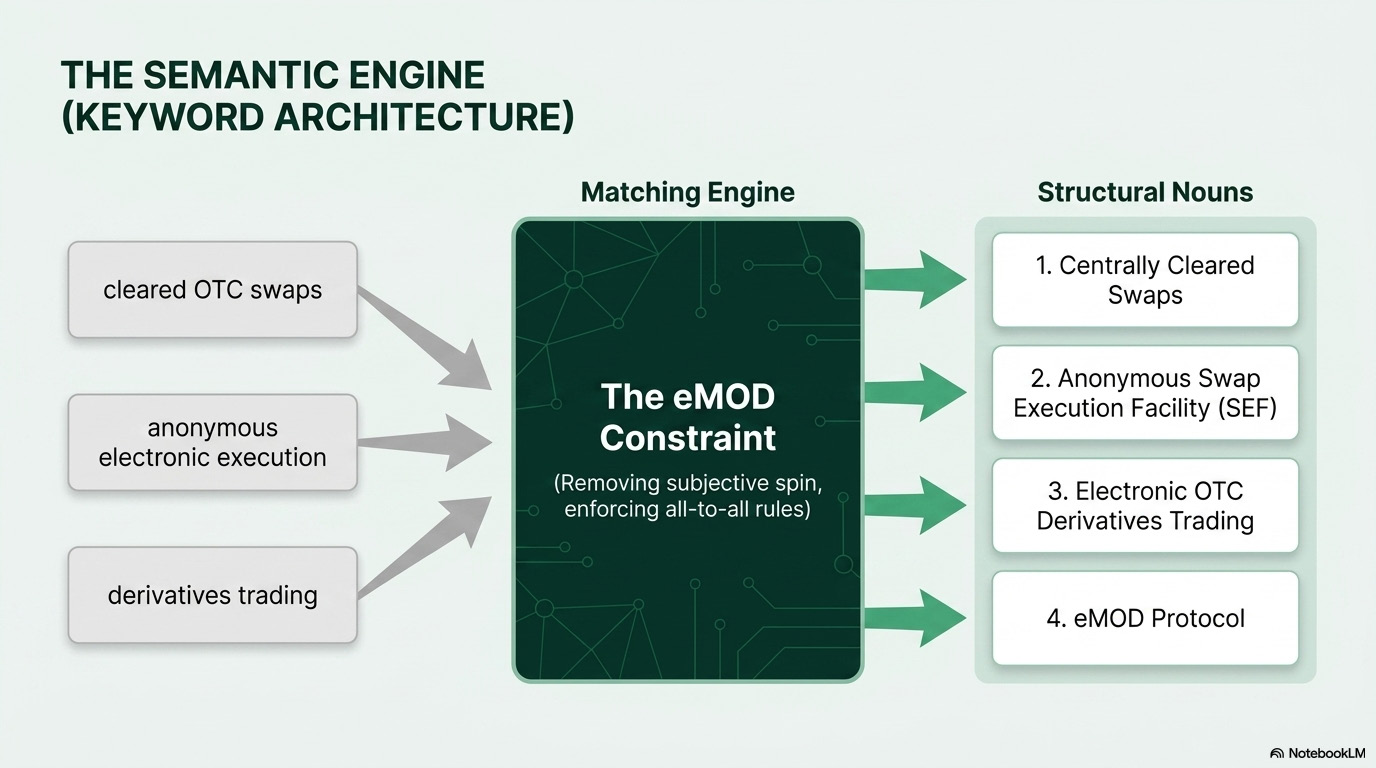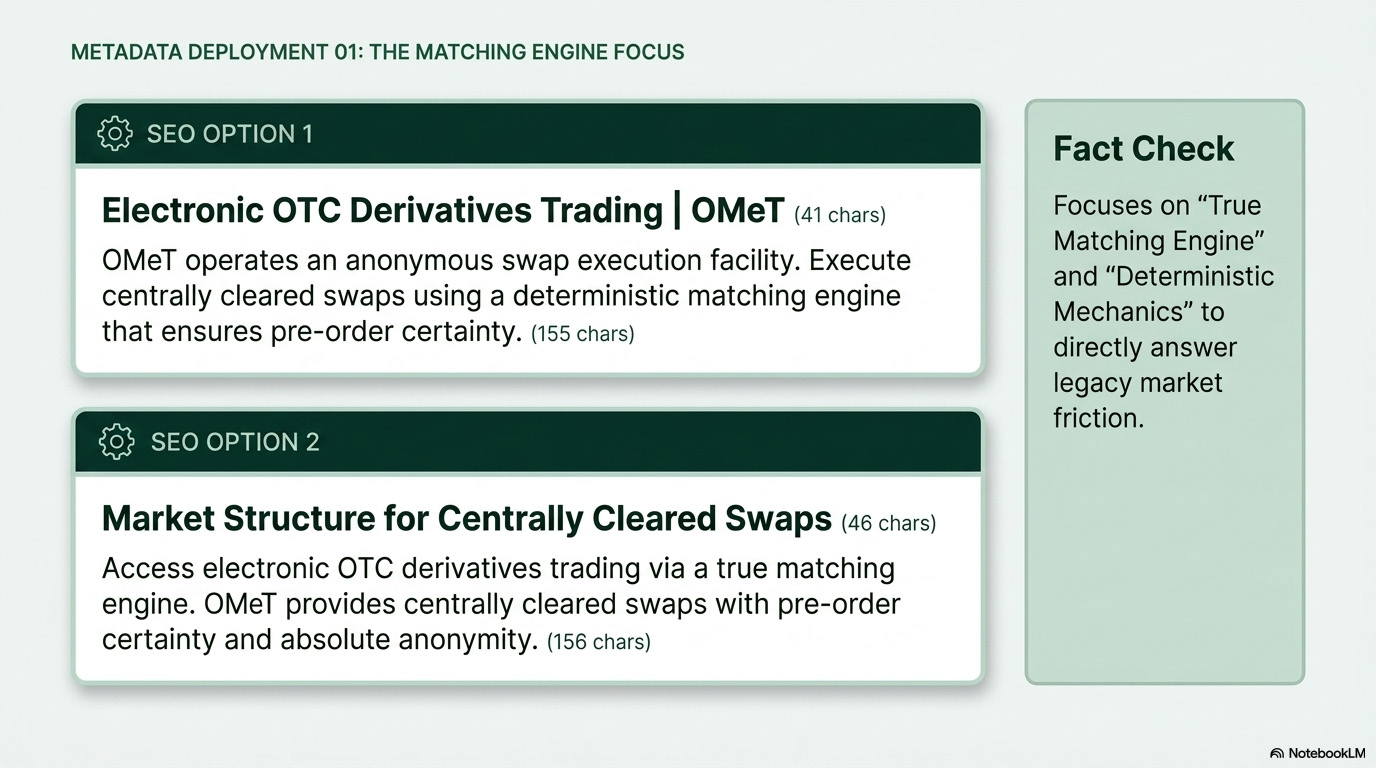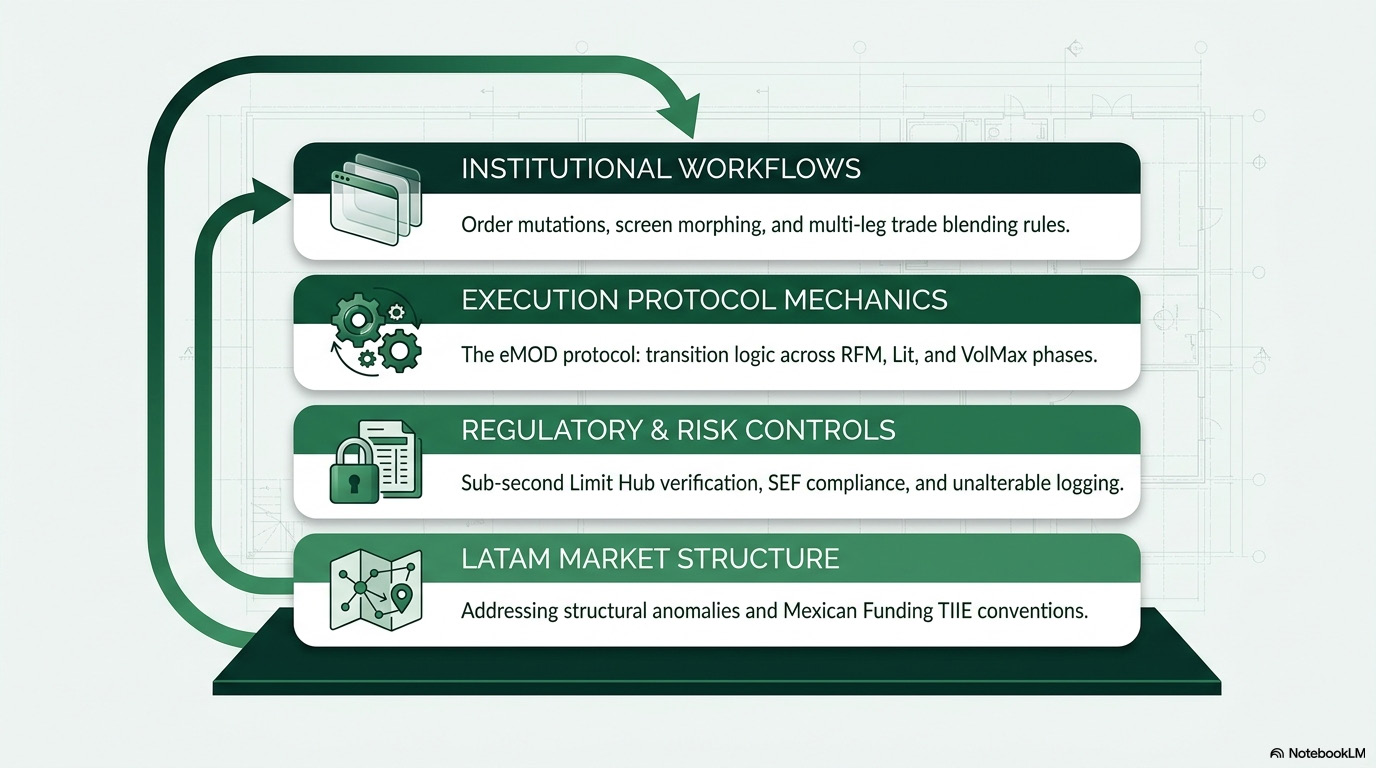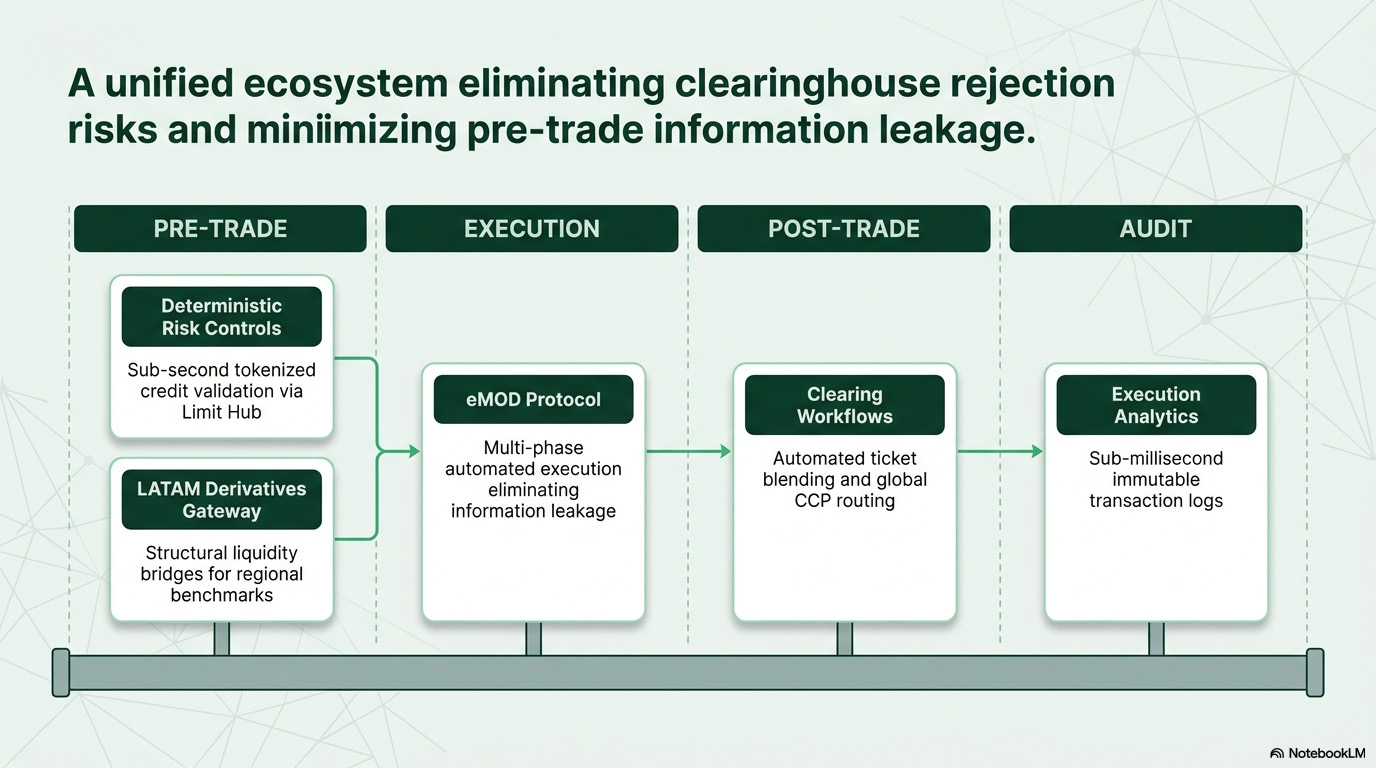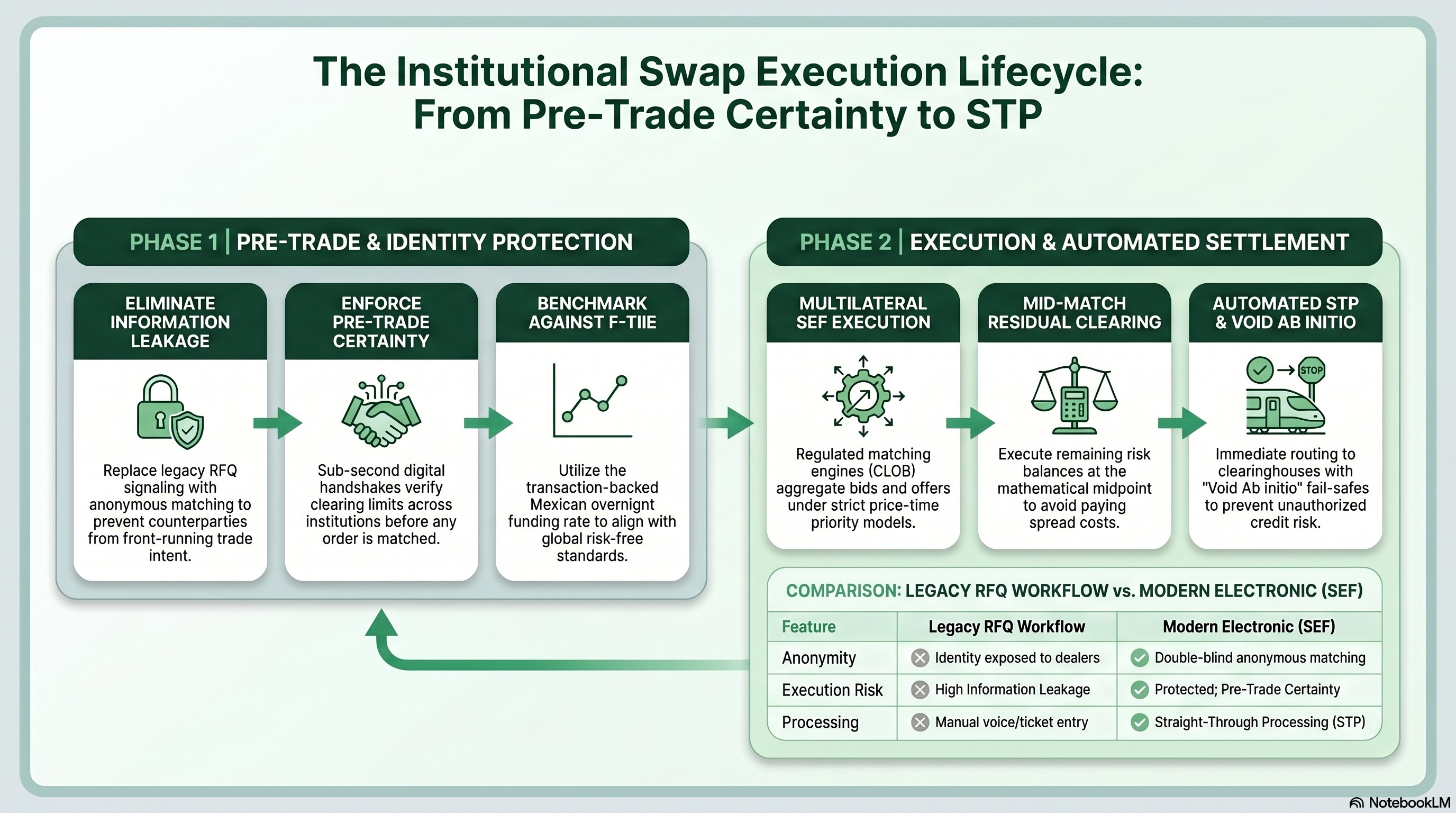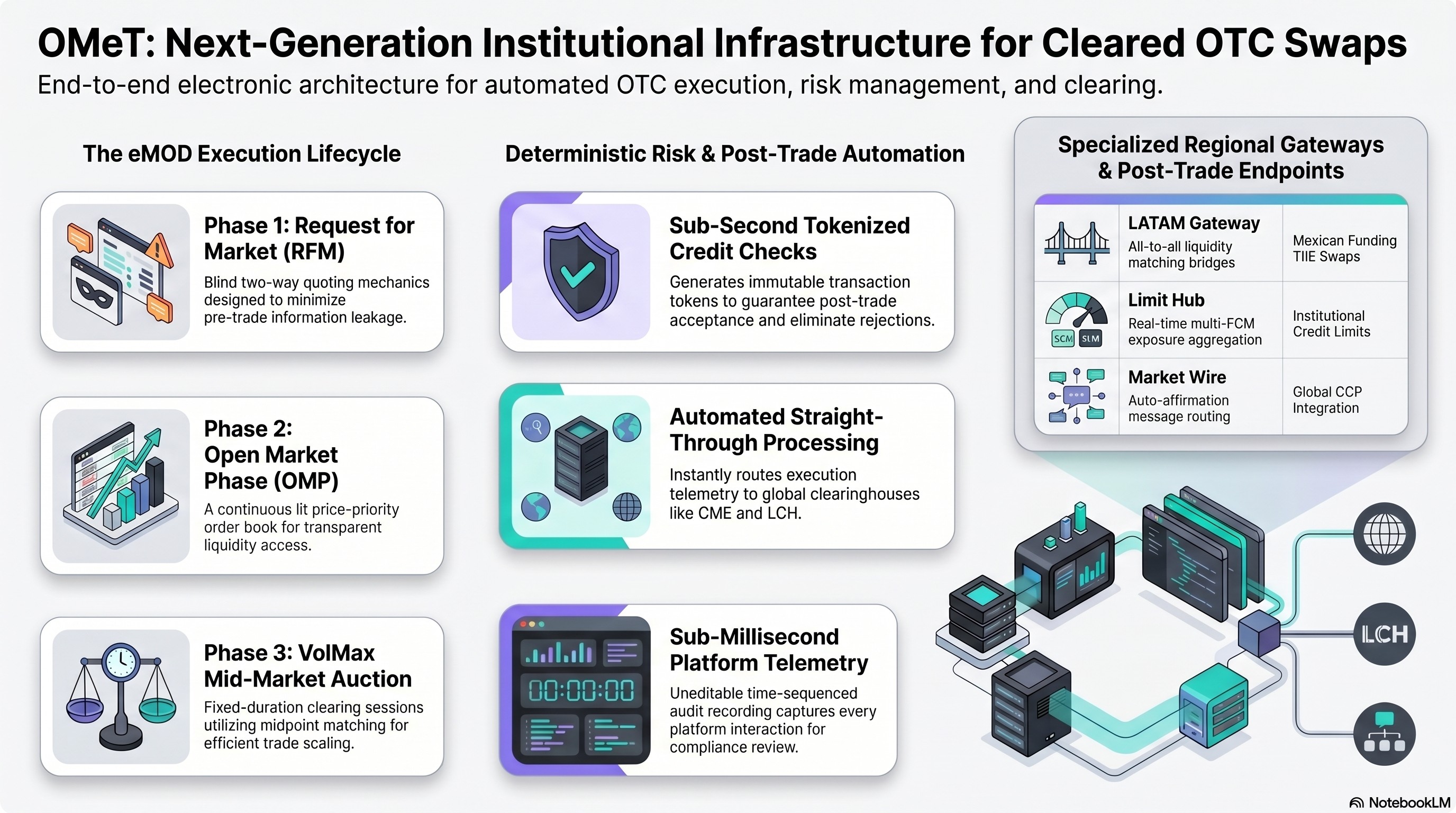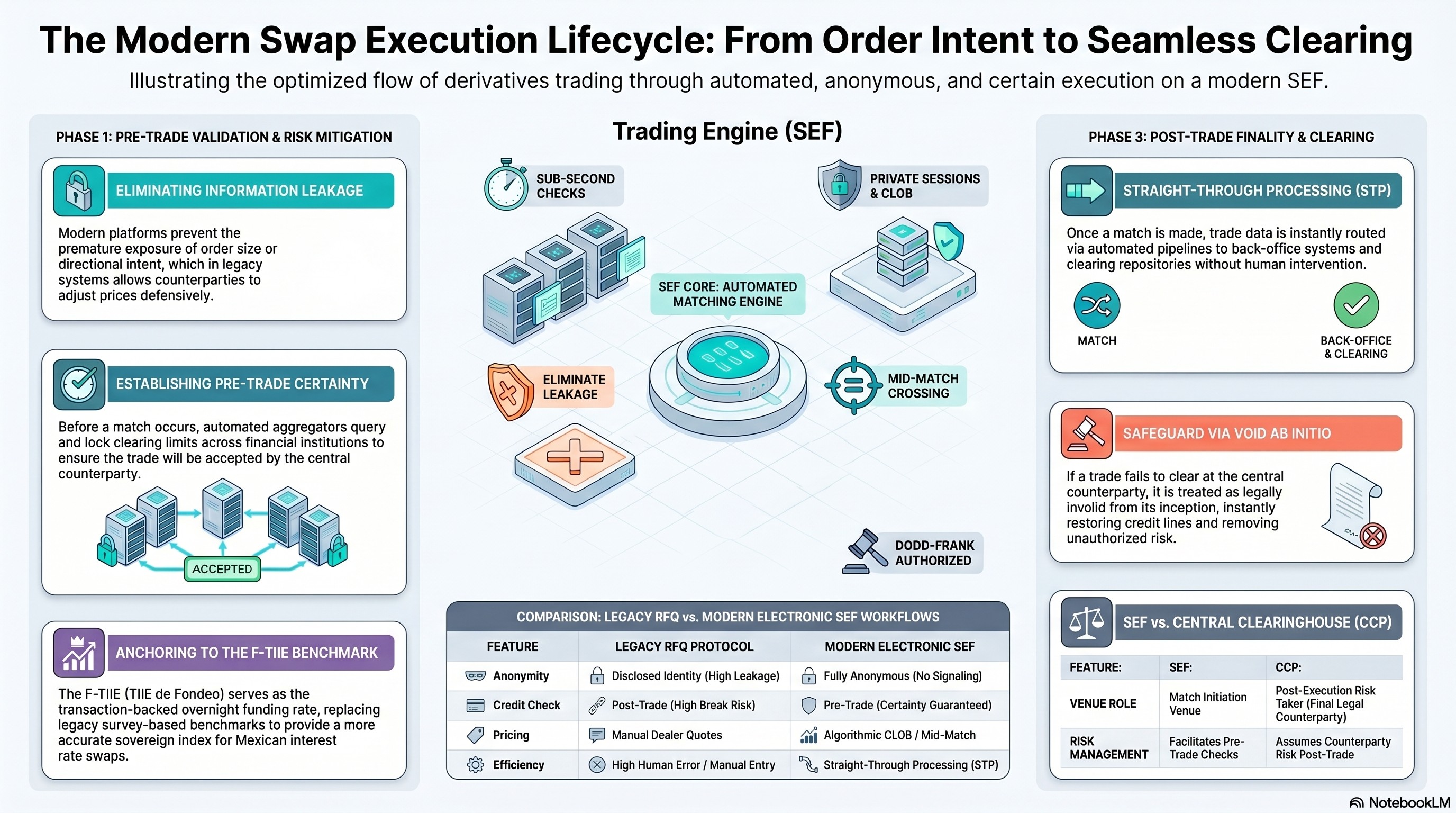
OMeT’s Statement of Interest framework can be understood as a controlled method for expressing institutional trading intent without forcing the trader into the full exposure of a legacy voice or RFQ workflow. Instead of broadcasting a complete order profile to the market, the trader signals a directional axis: the instrument, side, tenor, size range, urgency, and execution objective. This axis is not merely a message of interest; it is a structured input that allows the platform to determine whether the market should move into a responsive execution state. That logic fits OMeT’s broader positioning as a shift from fragmented, voice-driven cleared swaps trading into a structured electronic market powered by eMOD, its anonymous three-phase execution protocol: Open Request Phase, Open Market Phase, and Open Volume Matching Phase.
The value of the framework is that it separates intent formation from intent exposure. In traditional workflows, a trader often has to reveal too much to discover whether liquidity exists: identity, direction, size, timing pressure, and likely clearing path. In OMeT’s model, the Statement of Interest acts as a rules-readable signal rather than an informal market rumor. It maps the trader’s axis into execution logic, allowing the system to trigger the appropriate module only when enough compatible interest or workflow eligibility exists. This makes the signal operational rather than conversational: it becomes a structured event inside the market architecture, not a piece of information passed manually across brokers and dealers.
Once submitted, the Statement of Interest can activate responsive execution modules based on the nature of the axis. A directional indication may begin in a request phase, move into open market interaction, and, where block liquidity or residual size requires further handling, progress into a volume-matching phase. This modular design matters because different execution problems require different responses. A small, immediately executable trade may need price competition; a larger institutional order may require anonymity, controlled size discovery, and post-match workflow certainty. OMeT’s internal materials describe the platform as a deterministic execution ecosystem for cleared OTC markets, supporting execution, allocation, post-trade workflow, and market intelligence in one institutional environment.
For institutional traders, the Statement of Interest framework reframes liquidity discovery as a governed workflow rather than a negotiation trail. The trader does not simply “show interest”; they define a machine-readable axis that can be tested against market conditions, eligibility, matching rules, and downstream processing requirements. That creates a cleaner bridge between pre-trade intent and executable market response. It also supports OMeT’s broader intelligence layer: by capturing the workflow behind execution, not just the final trade, OMeT can produce a structured view of execution quality, market opportunity, and participant behavior over time.