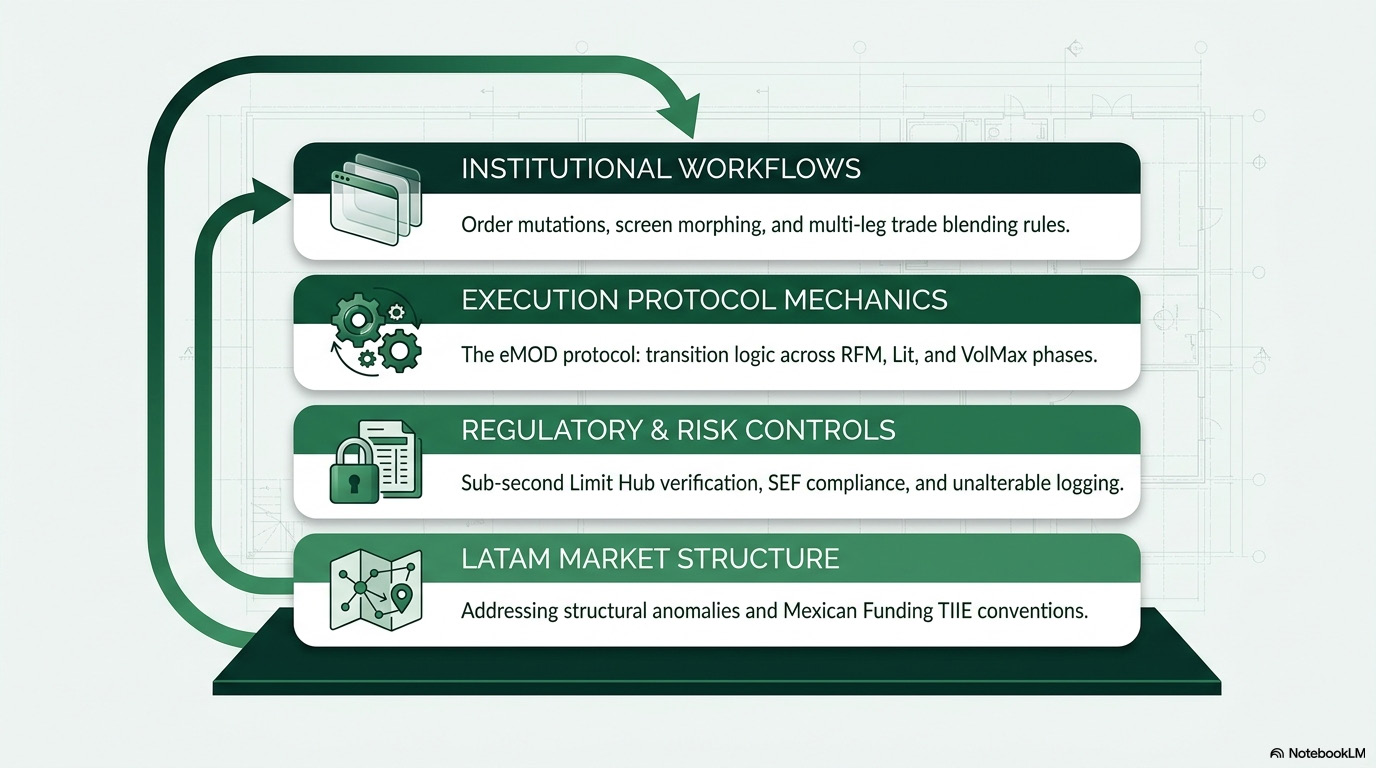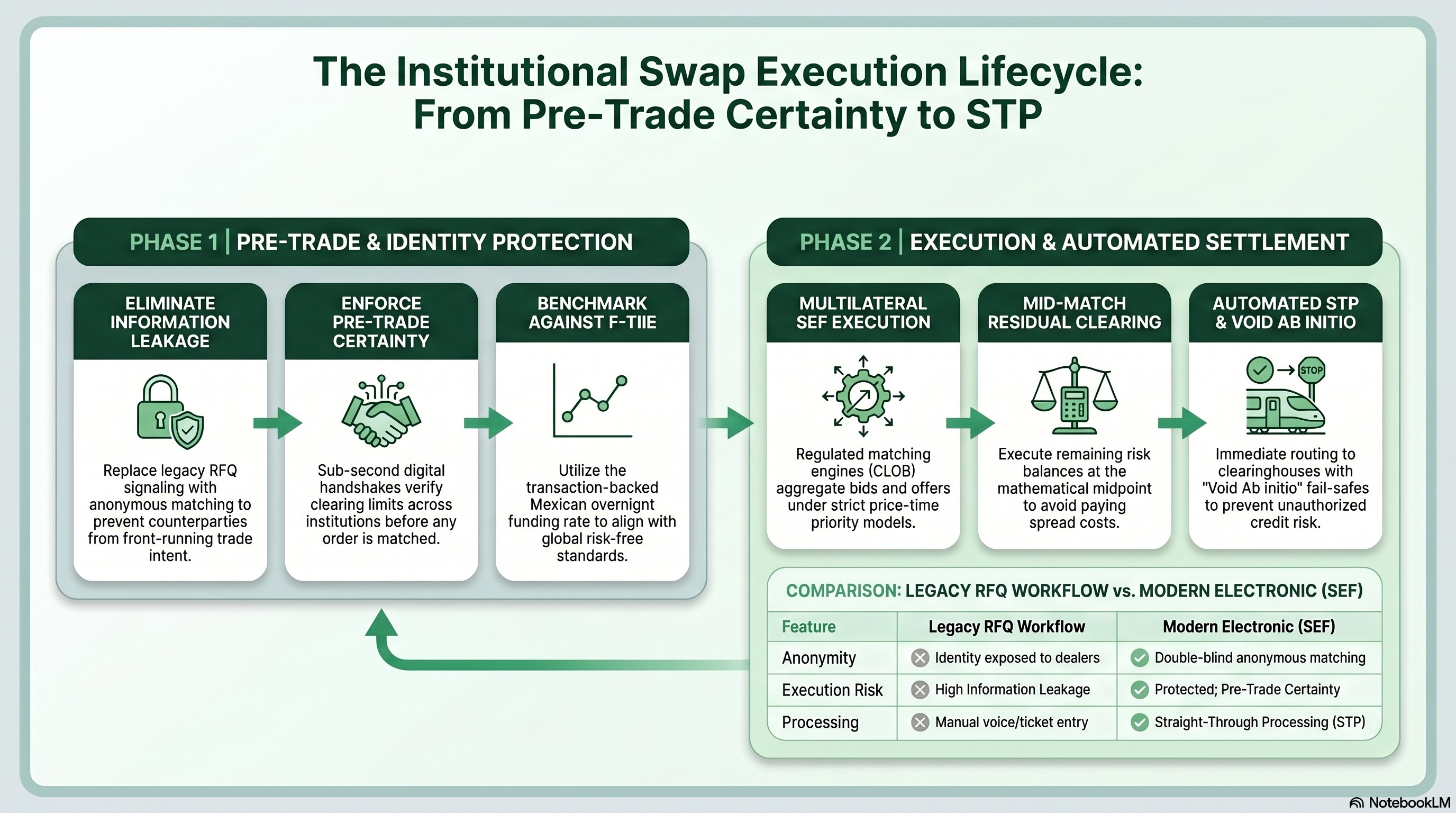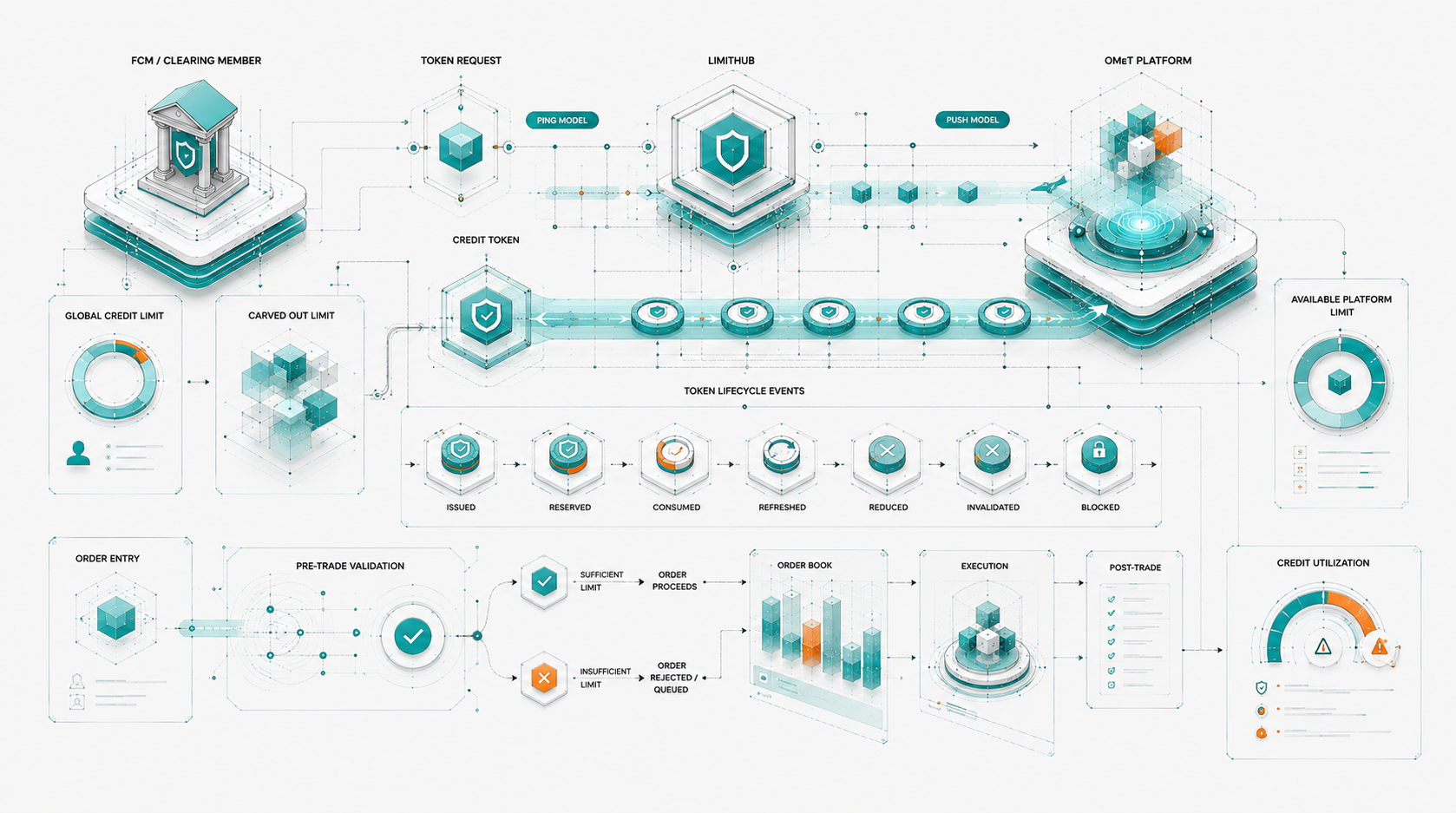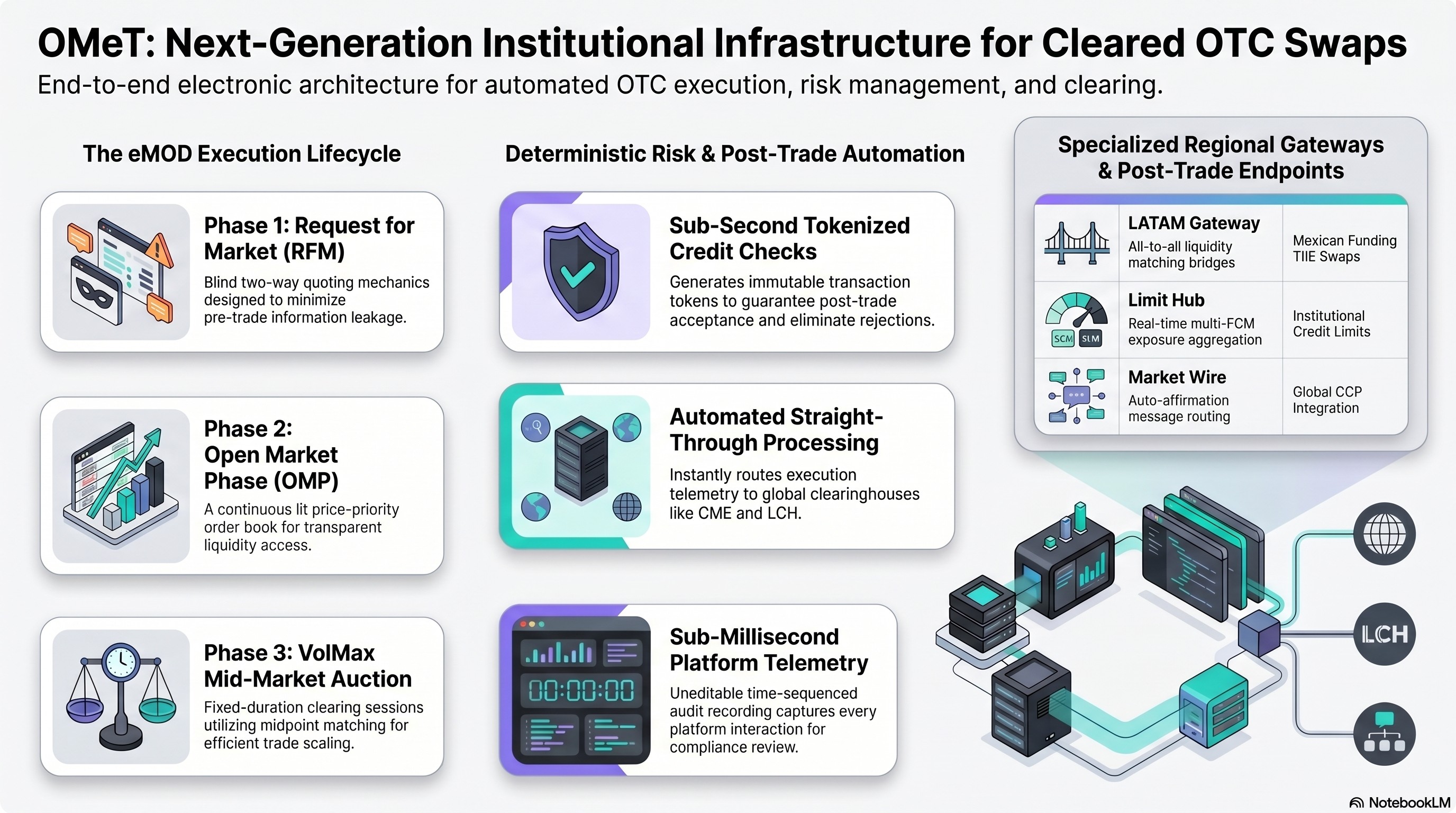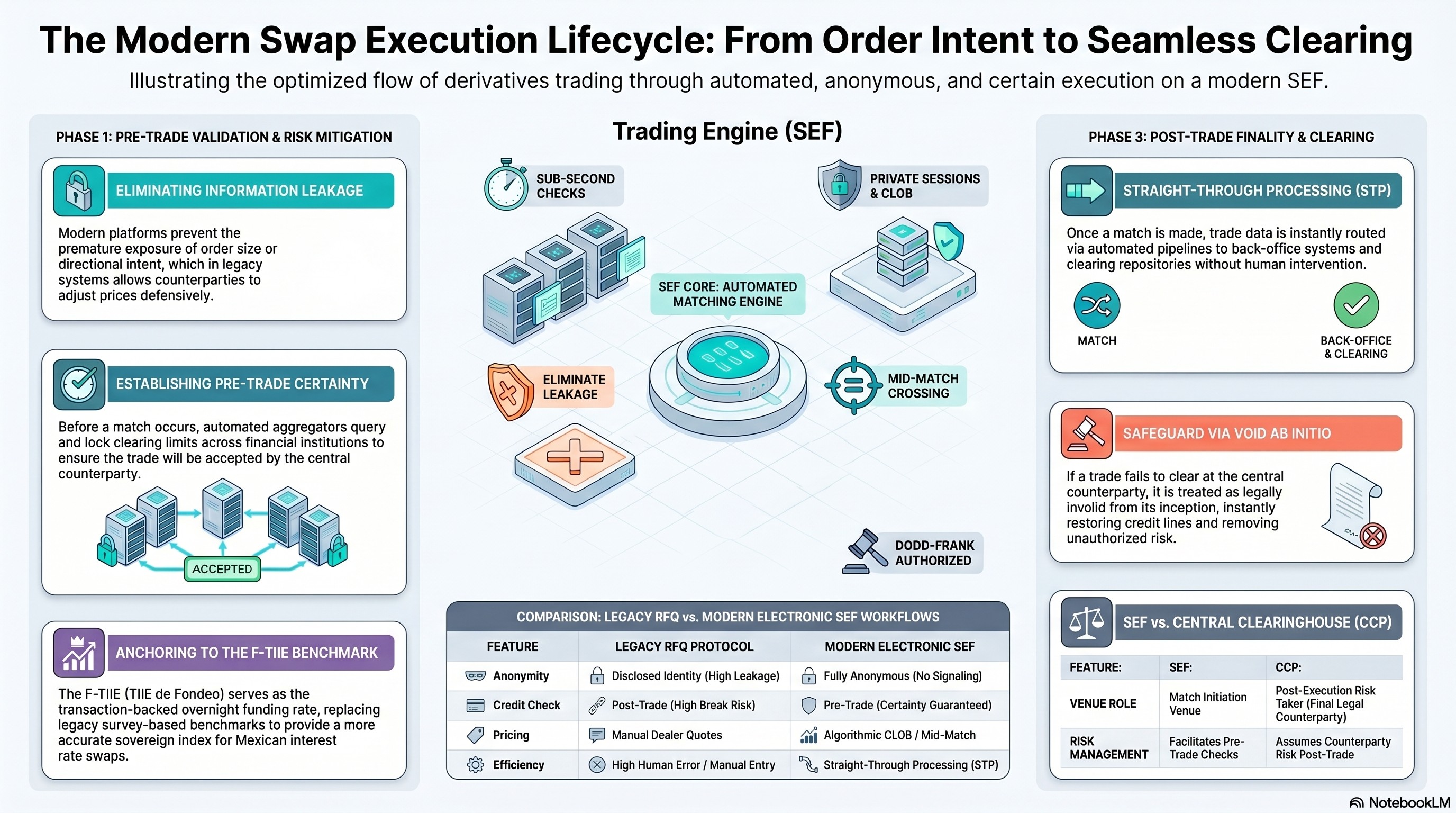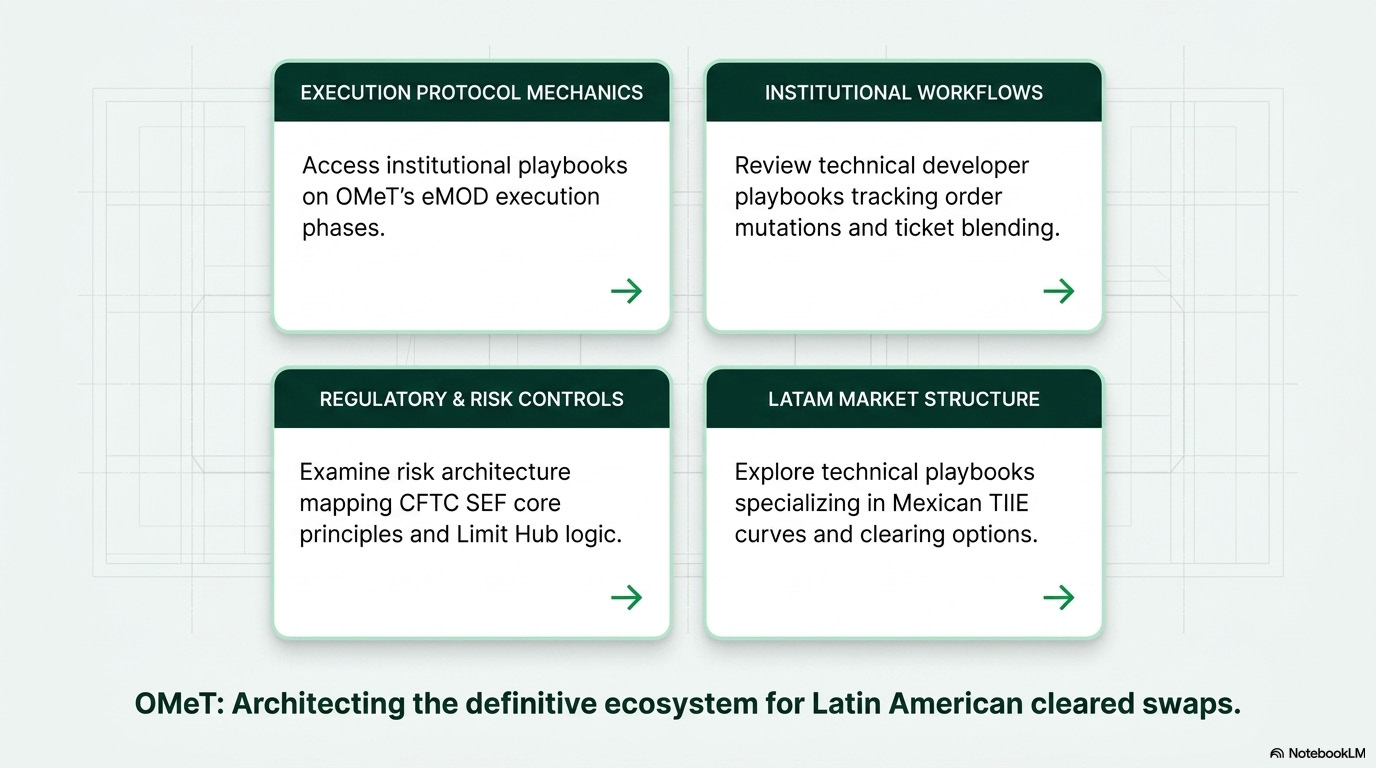
During the Open Market Phase (OMP), the OMeT trading interface enters a fully lit market state. This is the second stage of OMeT’s three-phase eMOD protocol, following the private Request for Market phase and preceding the volume-matching phase. Internal OMeT materials define OMP as the point where the session moves from private price discovery into a visible, exchange-like market, with bids and offers displayed to all qualified participants.
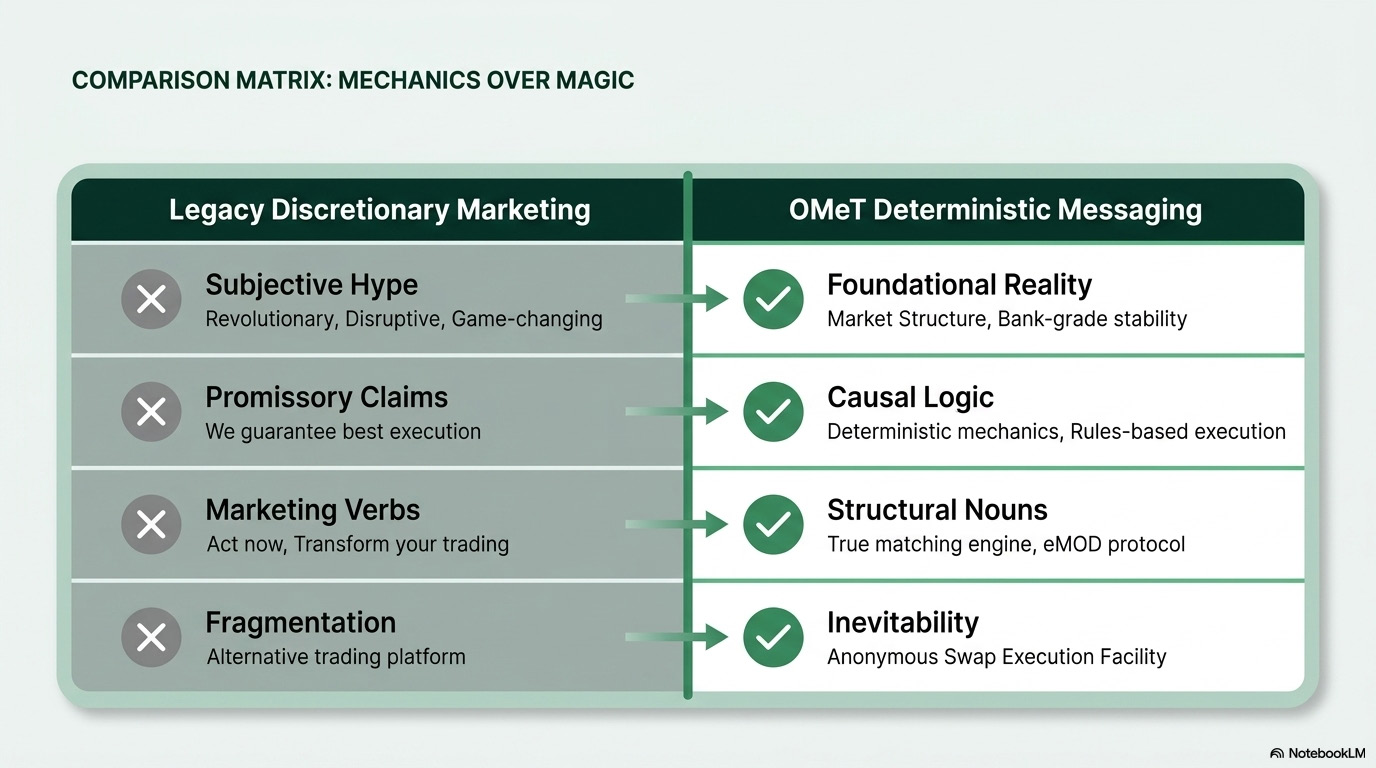
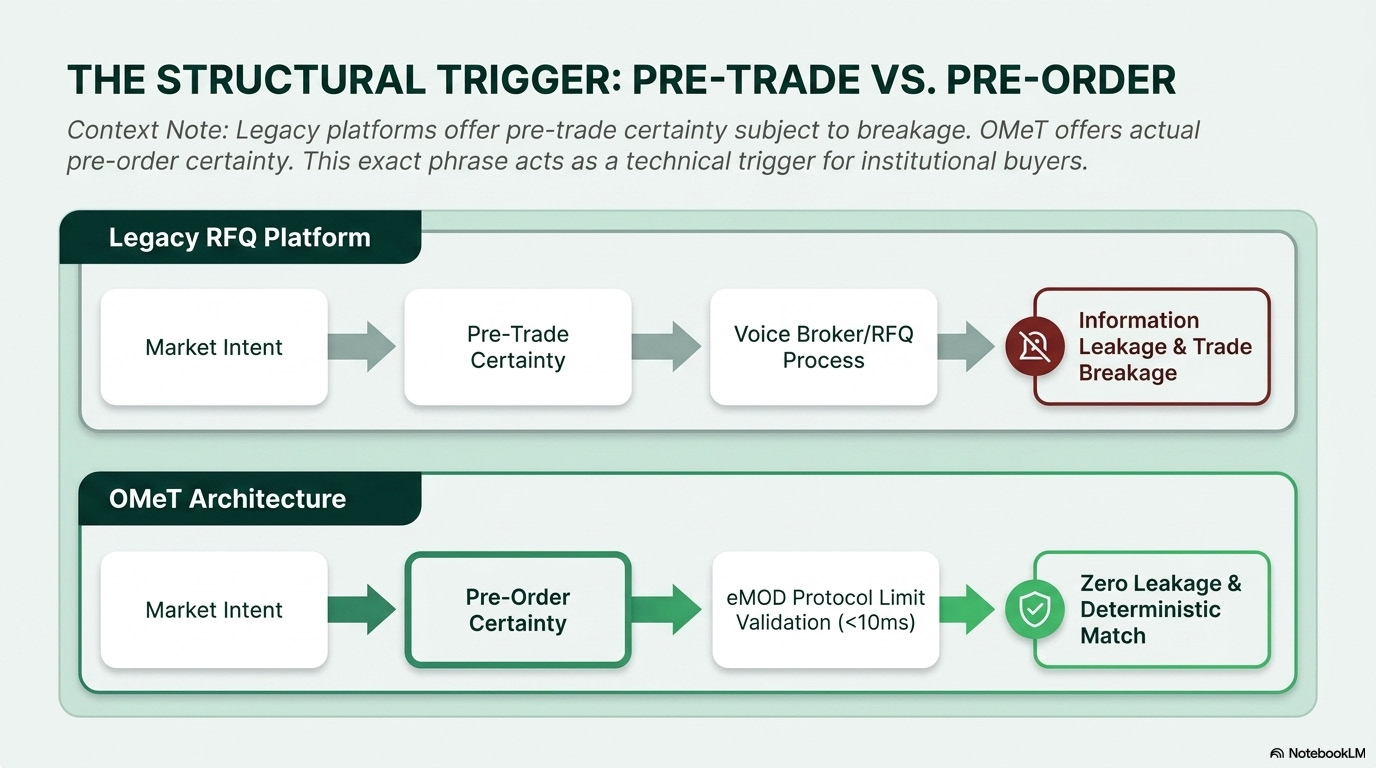
Operationally, this means the interface functions as a transparent competitive market. Bids, offers, updates, and transaction events are no longer confined to a private request workflow; they become visible across the participant set. The purpose is to allow the market to observe live pricing conditions, respond to displayed interest, and continue trading through open price formation. This creates a central-limit-order-book style environment for cleared swaps, where participants can evaluate executable market levels in real time rather than relying on fragmented voice or RFQ indications.
The importance of this condition is that transparency becomes part of the execution mechanism. In the OMP state, visible bids and offers help participants understand where liquidity is forming, whether spreads are tightening or widening, and whether residual interest from the initial request phase can attract additional response. Instead of treating transparency as a post-trade reporting feature, OMeT makes it an active element of price discovery. The interface therefore becomes not only a place to trade, but also a shared view of market intent, available liquidity, and execution momentum.
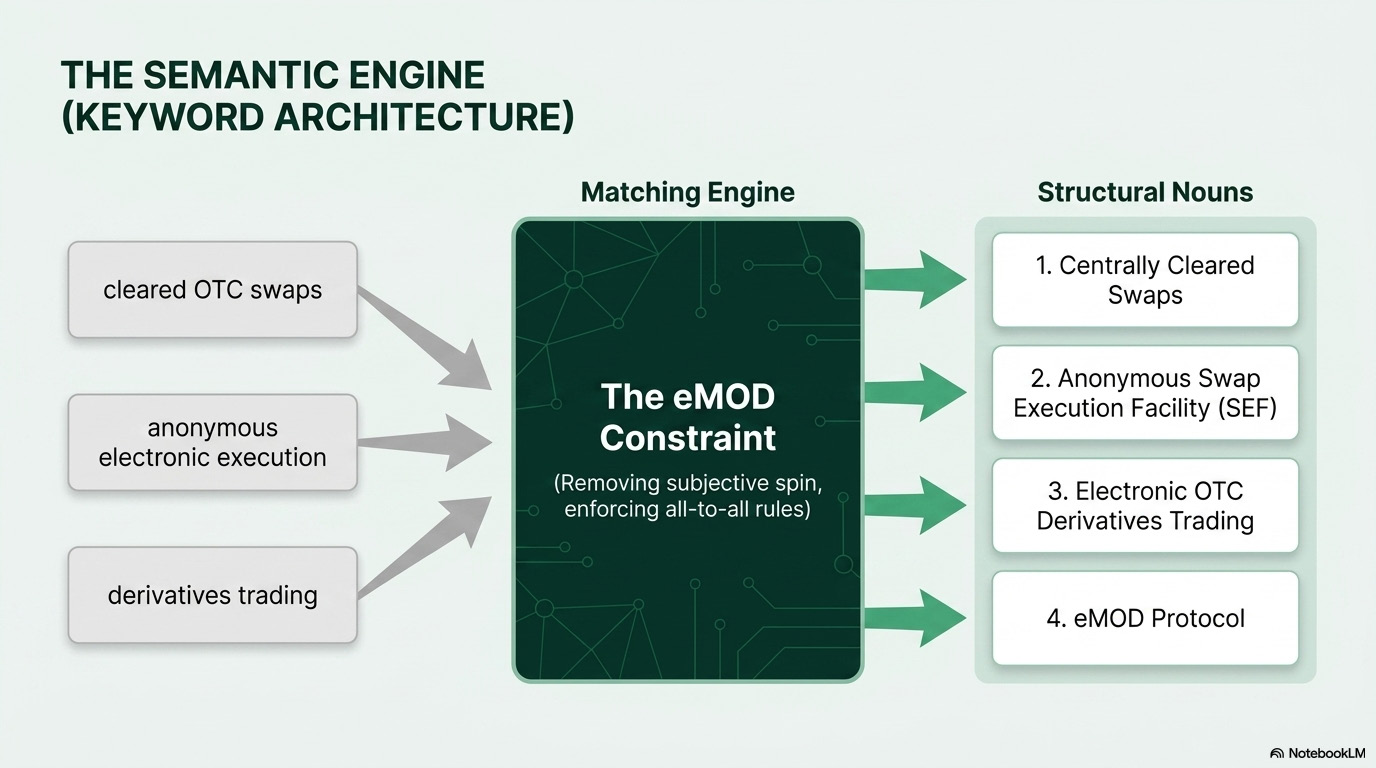
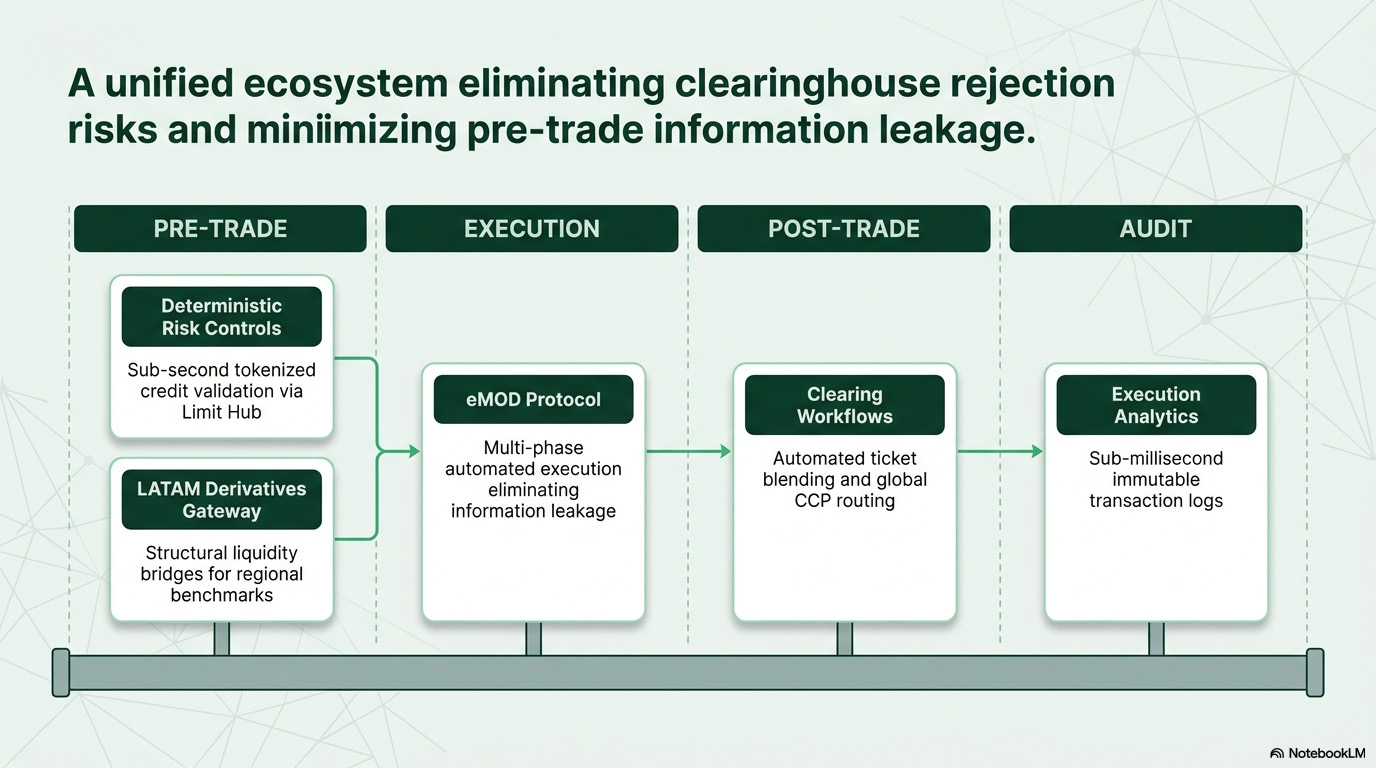
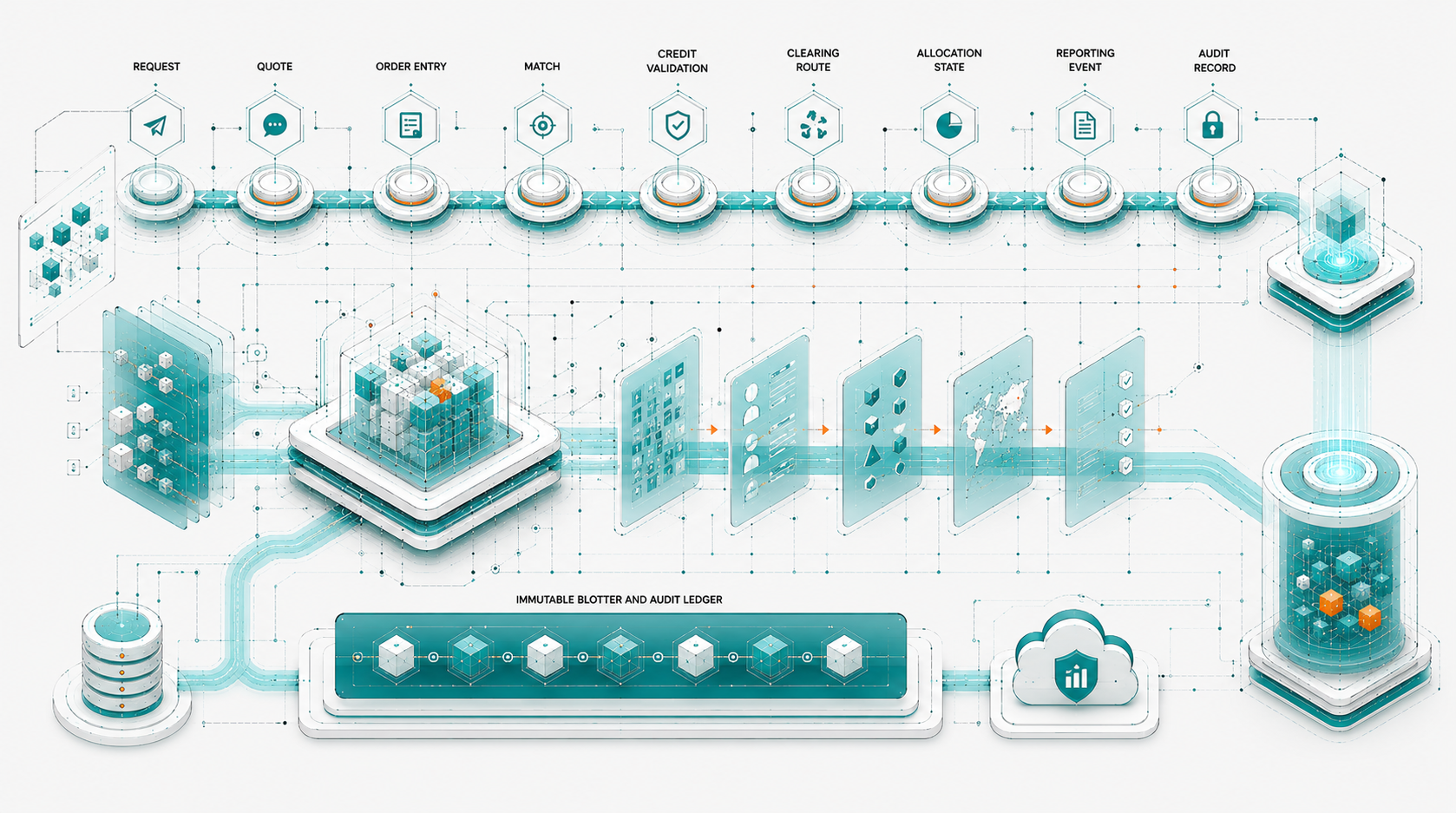
For institutional traders, OMP creates a more auditable and competitive execution environment. All qualified participants can see the relevant market events as they occur, which supports fairness, market confidence, and later review. This fits OMeT’s broader platform architecture: a rules-based exchange environment for all-to-all cleared swaps, built around execution, allocation, post-trade workflow, and market intelligence. When the market eventually loses momentum or goes stale, the protocol can transition into the next responsive module, Volume Match, to improve completion where open-market trading alone is no longer sufficient.