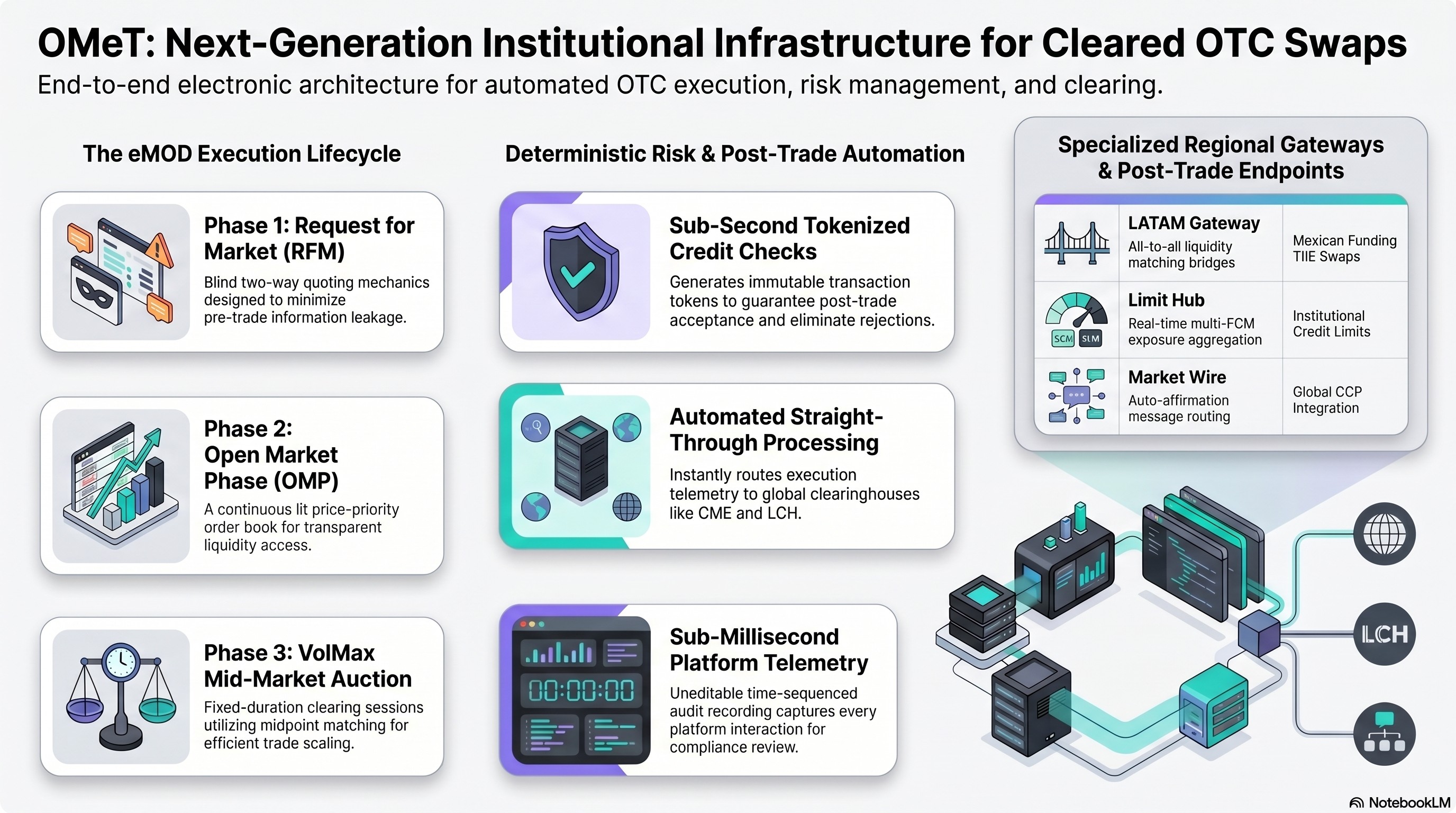
Multi-leg execution on OMeT is structured around the concept of a switch: a linked strategy composed of two swap legs that trade as one economic idea but are processed as distinct clearing components. The front end allows the user to select an initial tenor, choose a second leg, define the structure, and publish the resulting switch instrument into a preferred trading page. Internal OMeT user-guide materials note that a switch appears as two separate individual legs linked in the Trade Blotter, and that the two swaps are processed as individual legs when sent to the clearinghouse.
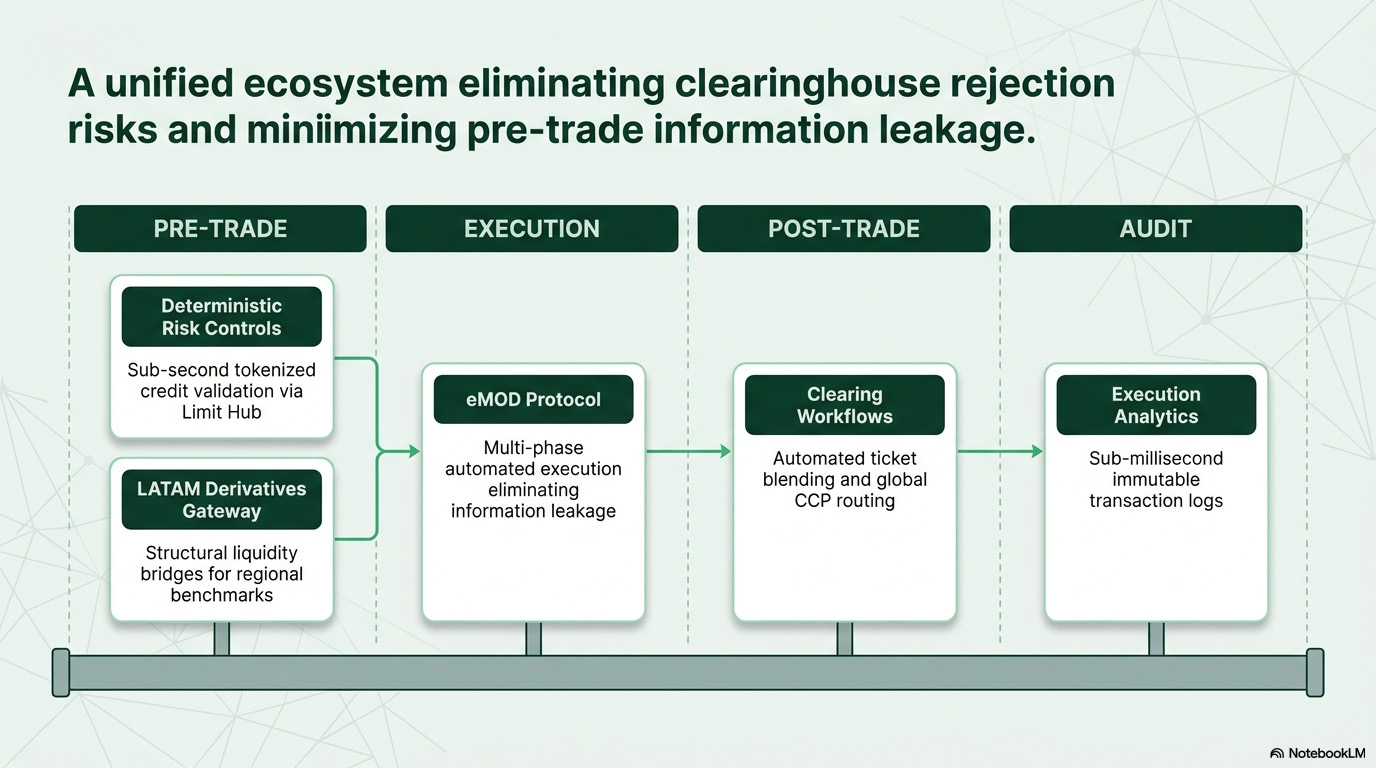
The backend logic decomposes the strategy into executable and reportable legs. That decomposition is essential because the trading desk may think in terms of a curve switch, roll, spread, or relative-value strategy, while clearing infrastructure still requires the component swaps to be represented with their own terms, notional, tenor, direction, and clearing attributes. OMeT’s broader architecture supports this type of workflow because it connects execution, allocation, processing, and market intelligence rather than treating the trade as a single isolated ticket.
OMeT supports two primary switch construction methods: notional neutral and DV01 neutral / weighted. In a notional-neutral switch, both legs carry the same notional amount, such as a 100 million peso shorter-tenor swap against a 100 million peso longer-tenor swap. In a DV01-neutral switch, the system sizes the two legs so that their interest-rate sensitivity is balanced; internal materials describe this as the default and more complex method, where the system automatically calculates the notional ratio based on DV01 calculations.
Weighted switch pricing then becomes the execution expression of that leg logic. The displayed switch level should reflect the relationship between the component legs, their weights, and the selected neutrality method, rather than a simple single-leg price. For market makers, this allows a relative-value strategy to be quoted with a cleaner view of risk; for requesters, it allows execution of a multi-leg idea without manually assembling and negotiating each component through separate voice or RFQ channels. In practical terms, OMeT’s switch protocol turns complex curve and tenor structures into governed, decomposable, clearing-aware execution objects.