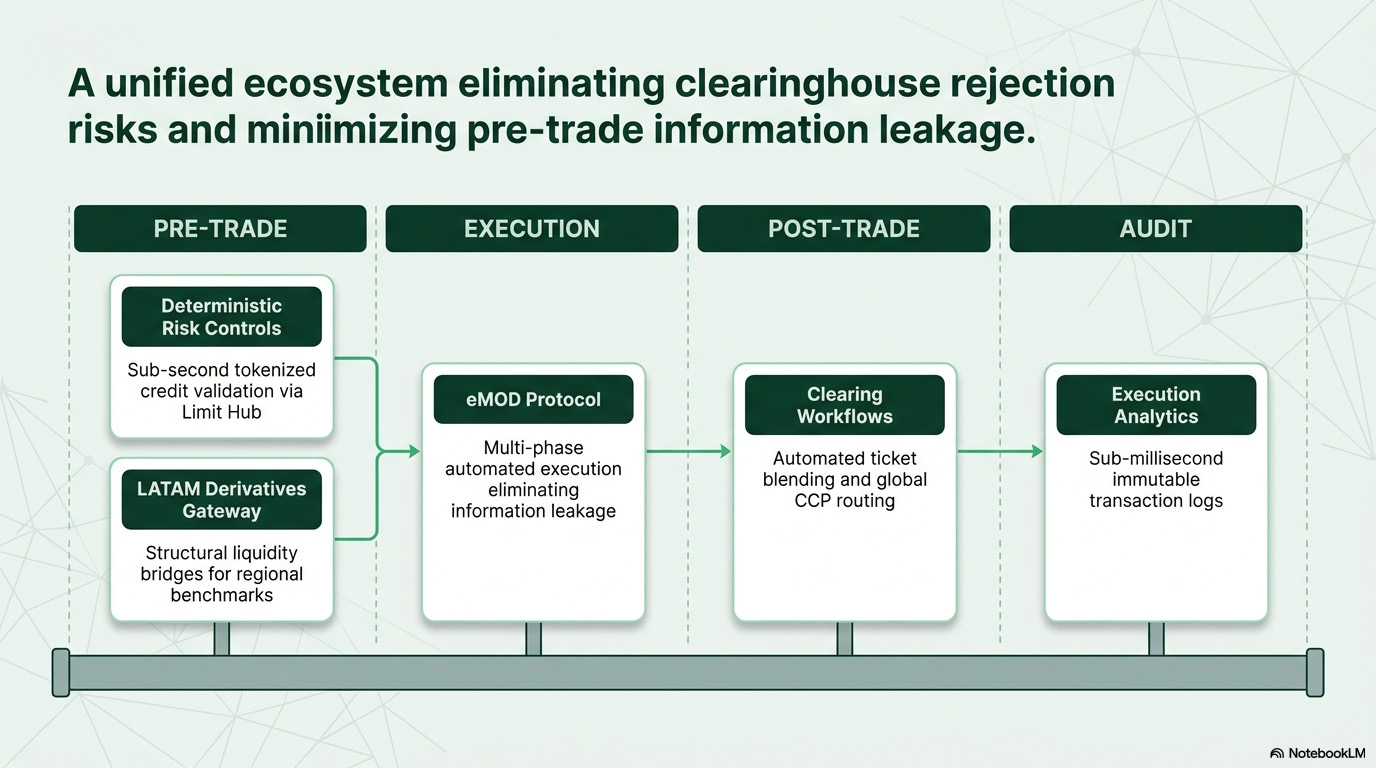
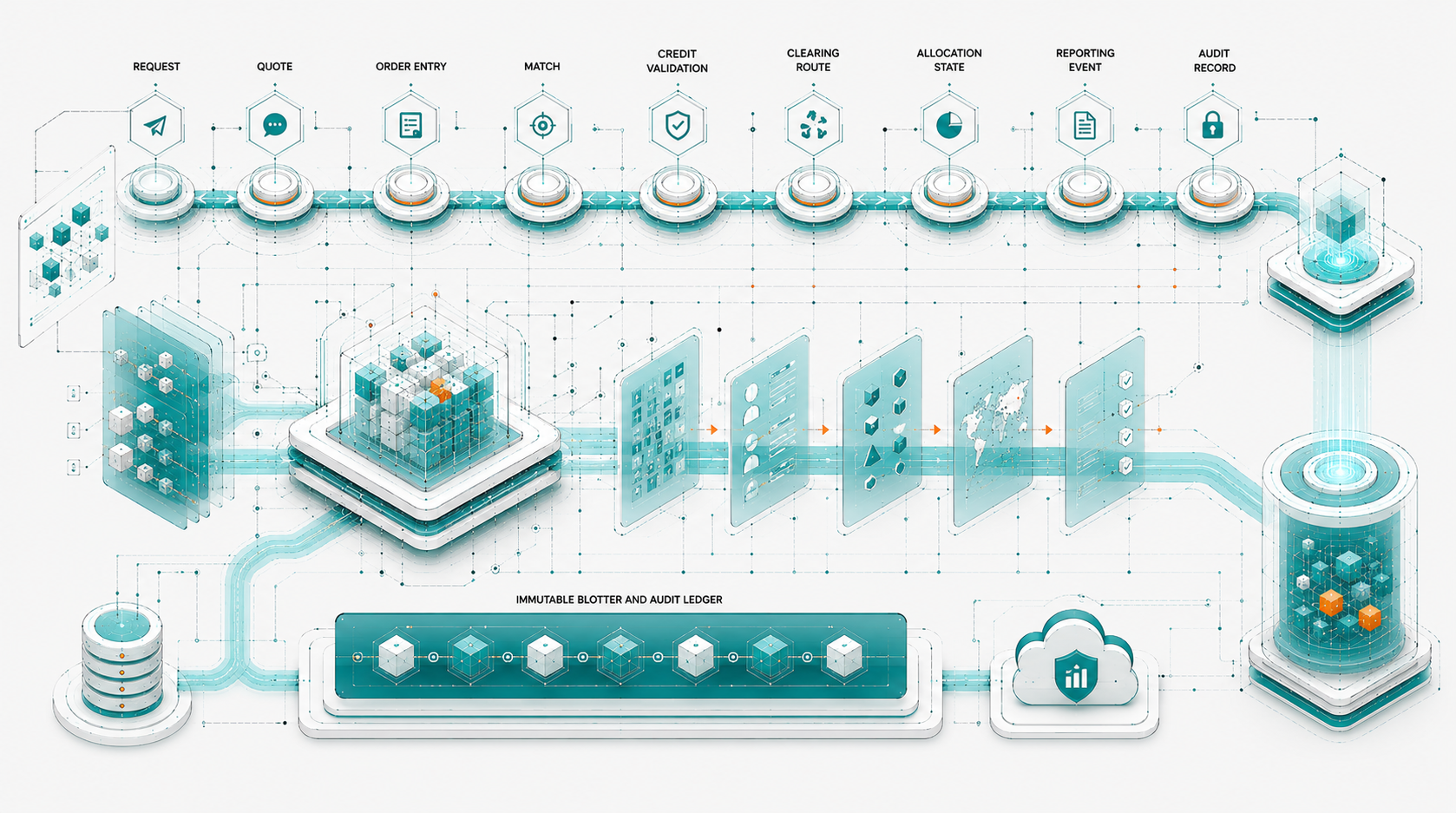
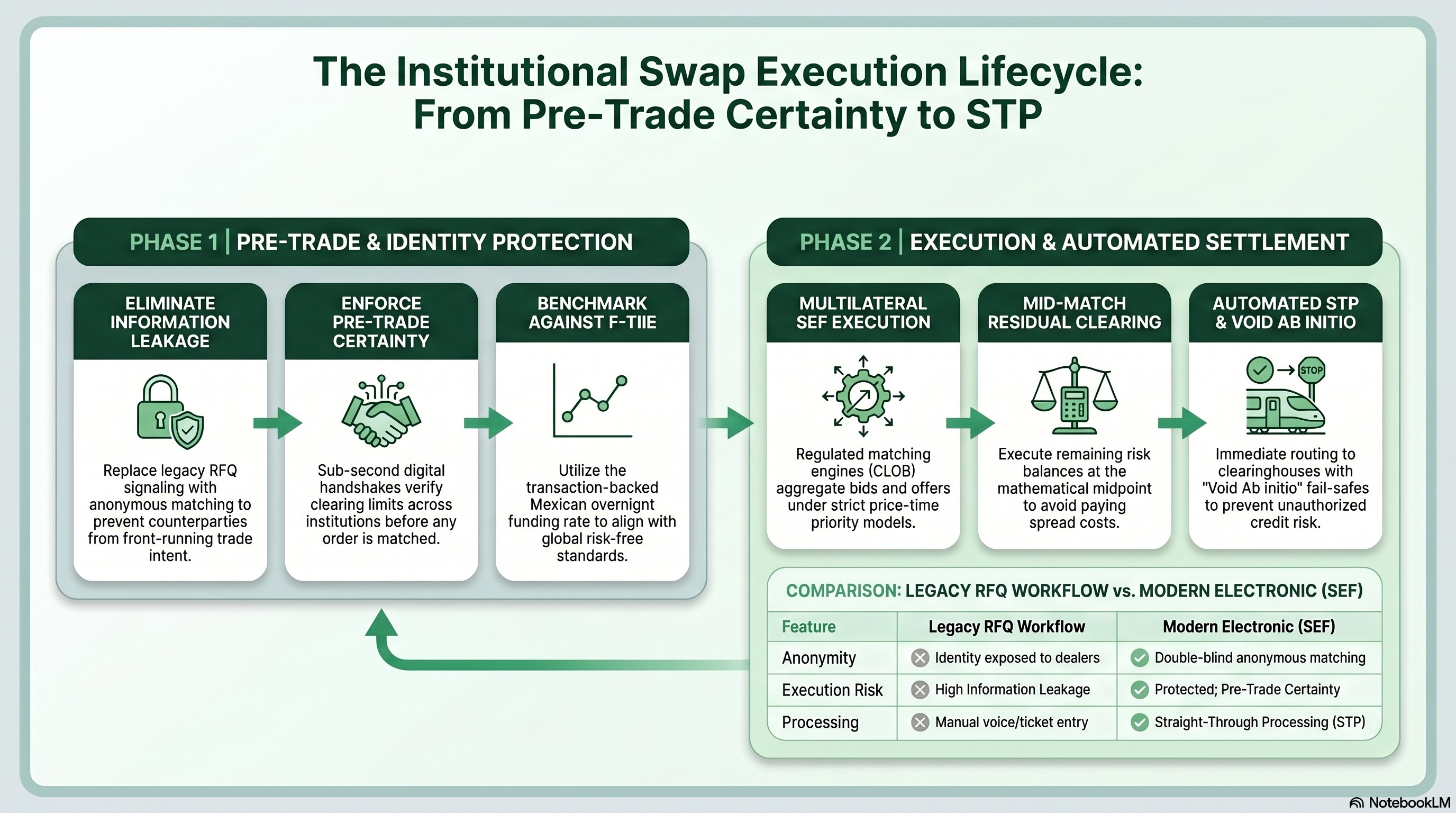
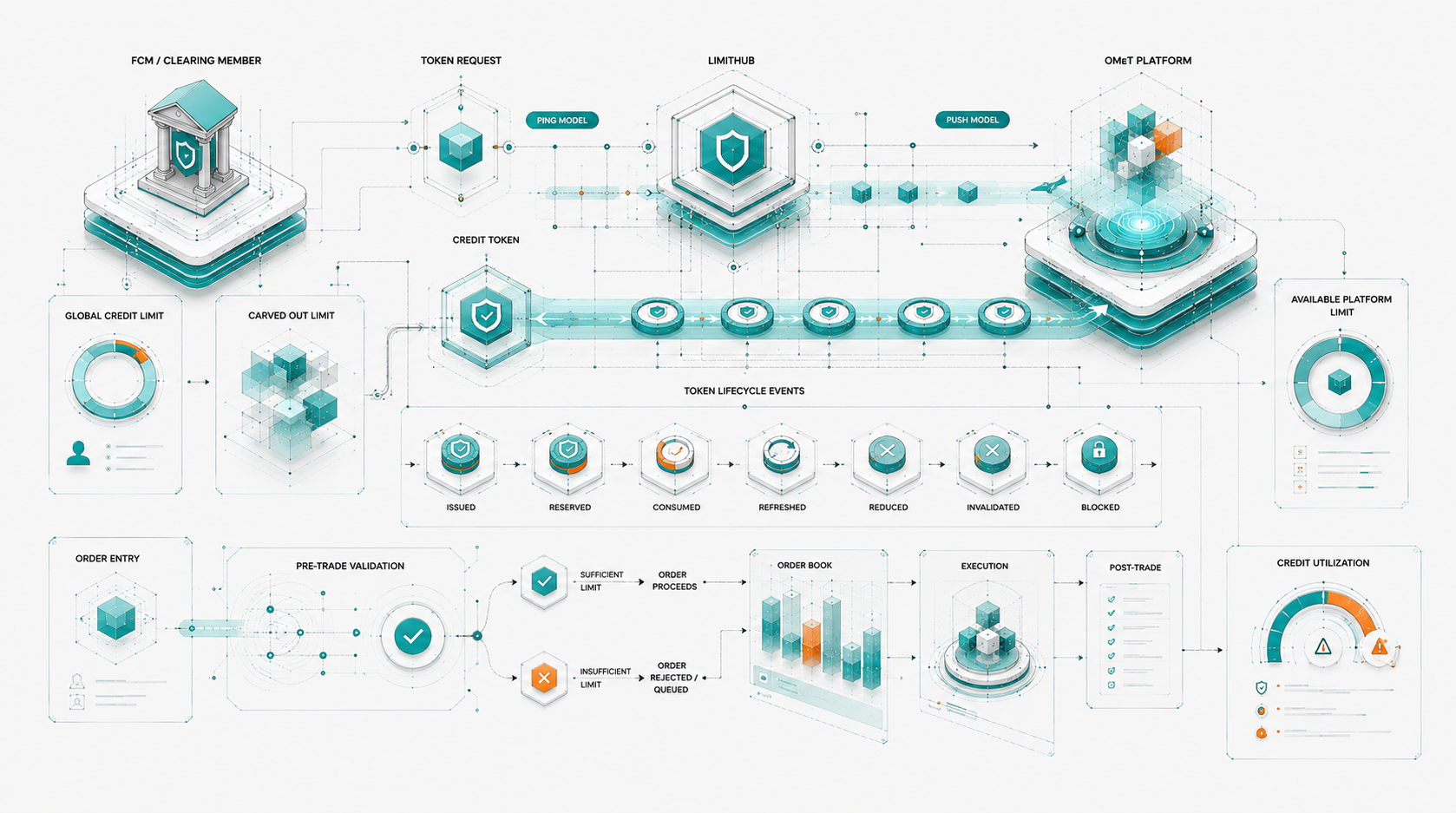
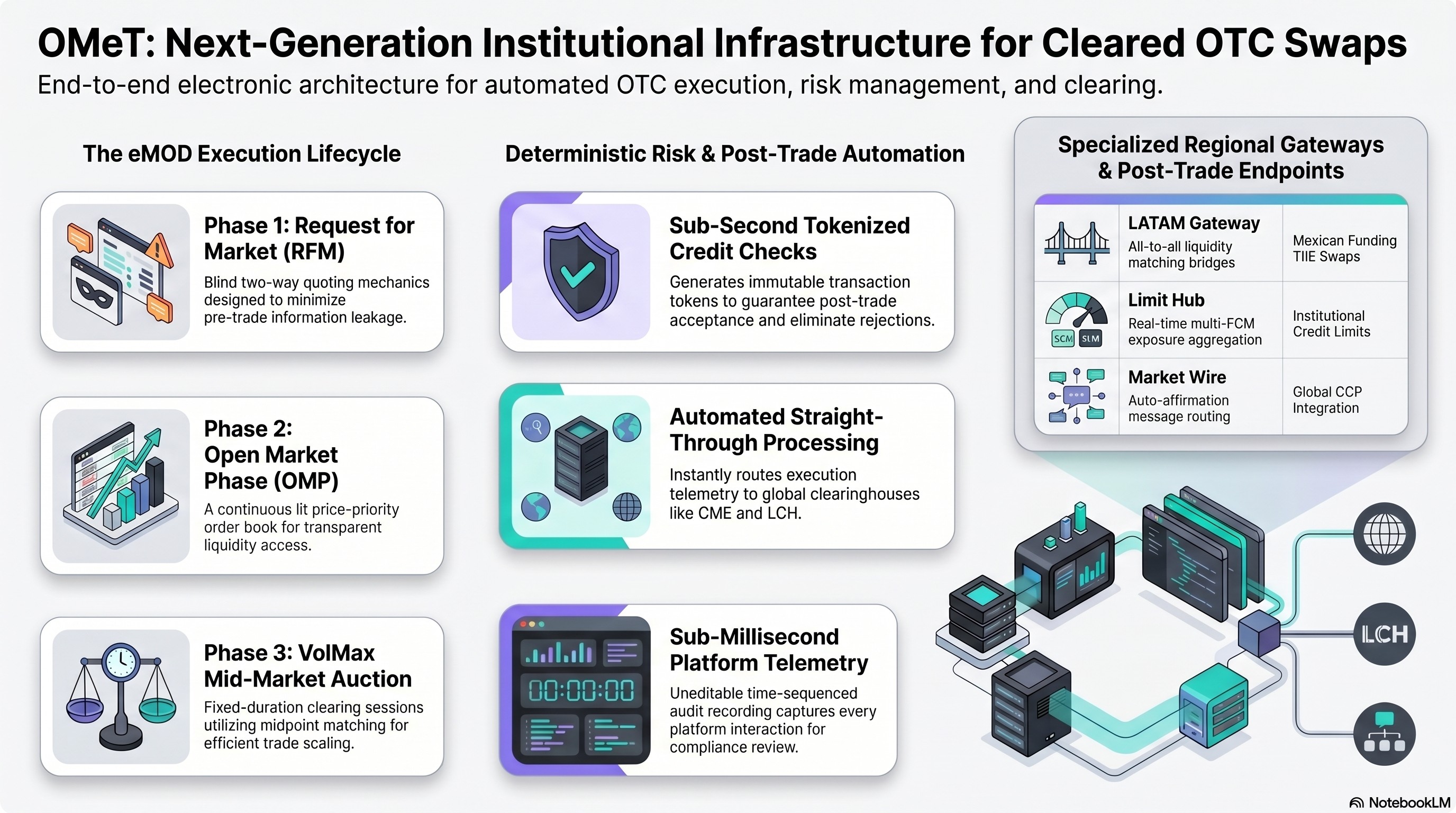
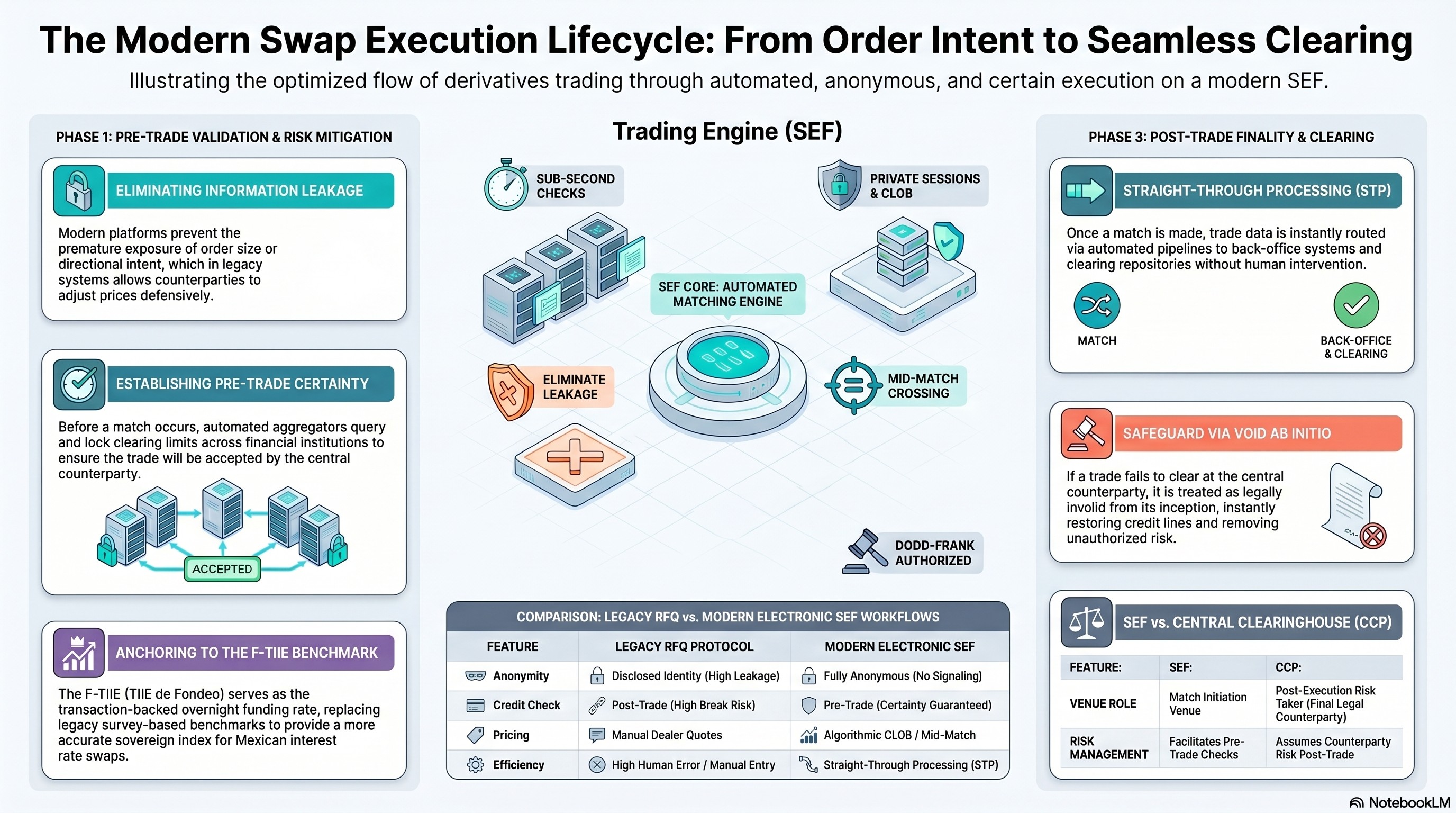
The OMeT Waterfall view is designed as the chronological record of protocol activity across the trading lifecycle. Rather than showing only final trades, it captures the sequence of interaction events that led to an execution outcome: order entry, quote response, amendment, rejection, match, phase transition, clearing workflow, and reporting state. Internal OMeT materials describe the Waterfall as part of the proof layer for immutable logging, SDR/reporting flows, and a behavioral intelligence layer that converts execution exhaust into analytics and compliance evidence.
Technically, the Waterfall acts as a high-resolution event ledger for eMOD. Each protocol interaction can be logged as a discrete event with timestamp, instrument, tenor, phase, owner or permissioned participant view, action type, details, and market session context. OMeT interface materials show the Waterfall alongside order and trade blotters, with fields such as time, tenor, phase, owner, details, action, and market session available for filtered review. For institutional compliance teams, that structure matters because it preserves not only what traded, but how the trade state evolved.
Sub-millisecond logging is valuable because many execution disputes are timing disputes. In a rules-based market, priority, amendment sequencing, order rejection, and phase expiry all depend on the order in which events occurred. The Waterfall should therefore function as the authoritative timing layer: when an order was submitted, when it was accepted or rejected, when a quote arrived, when a match occurred, and when the session transitioned. Internal testing discussions reinforce this role, noting that the Waterfall should capture attempted order entry and what happened to that order for later review.
For compliance, the design converts market activity into a reviewable evidentiary trail. Surveillance teams can use Waterfall records to map alerts to rulebook and compliance-manual obligations, while operations teams can reconcile execution, clearing, reporting, and exception states from the same sequence of logged events. Internal discussions reference ongoing work to map surveillance alerts to the rulebook and compliance manual for CFTC-facing review. In practical terms, the Waterfall view is OMeT’s institutional memory: a precise, filterable, audit-ready record of protocol interactions from market intent through post-trade accountability.