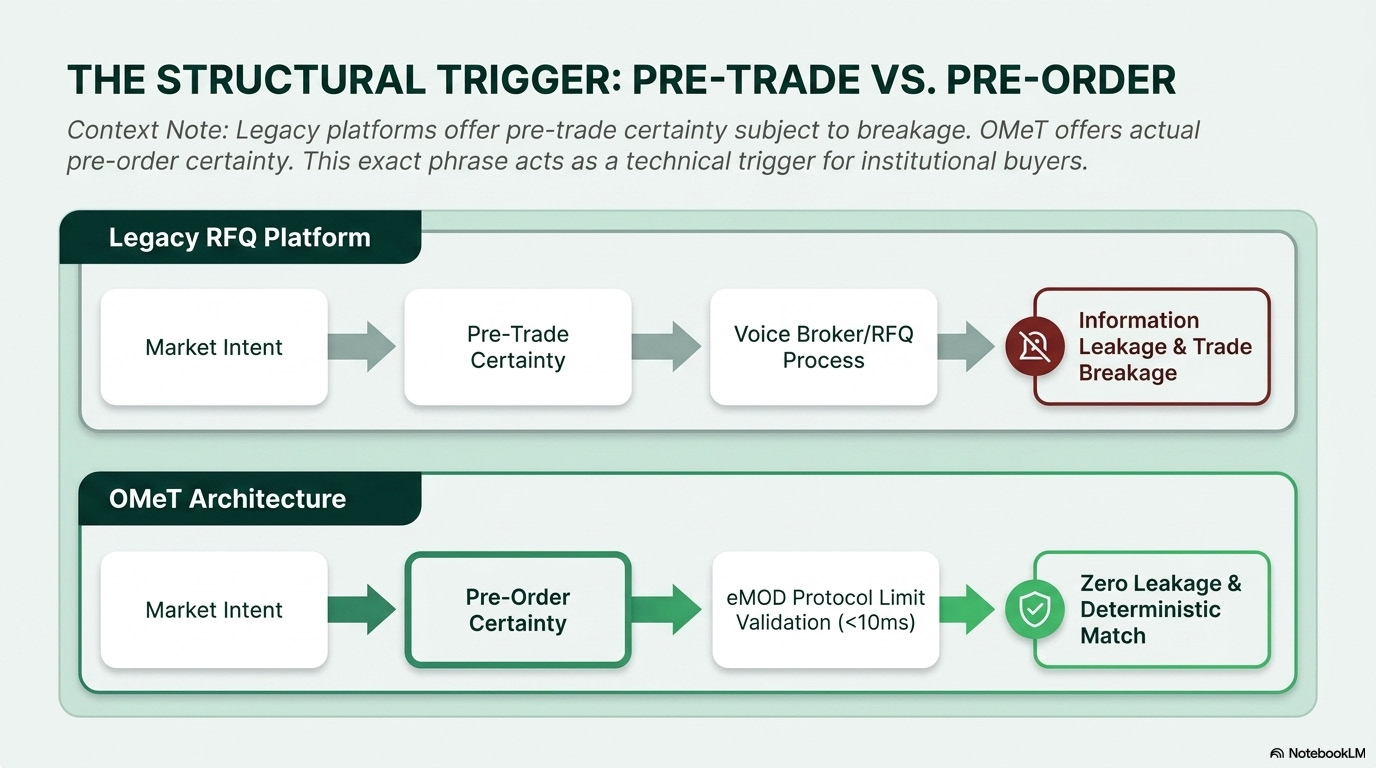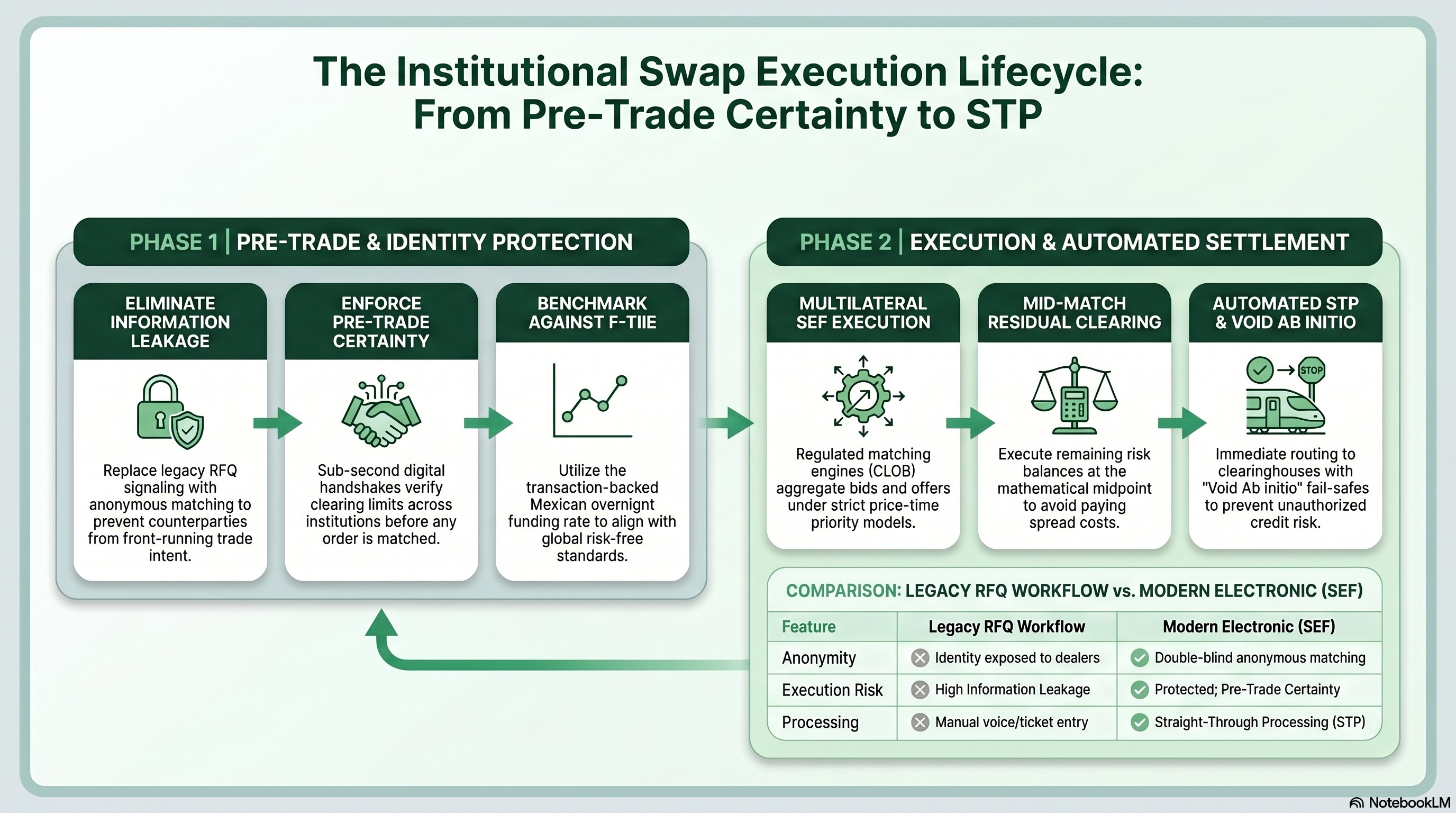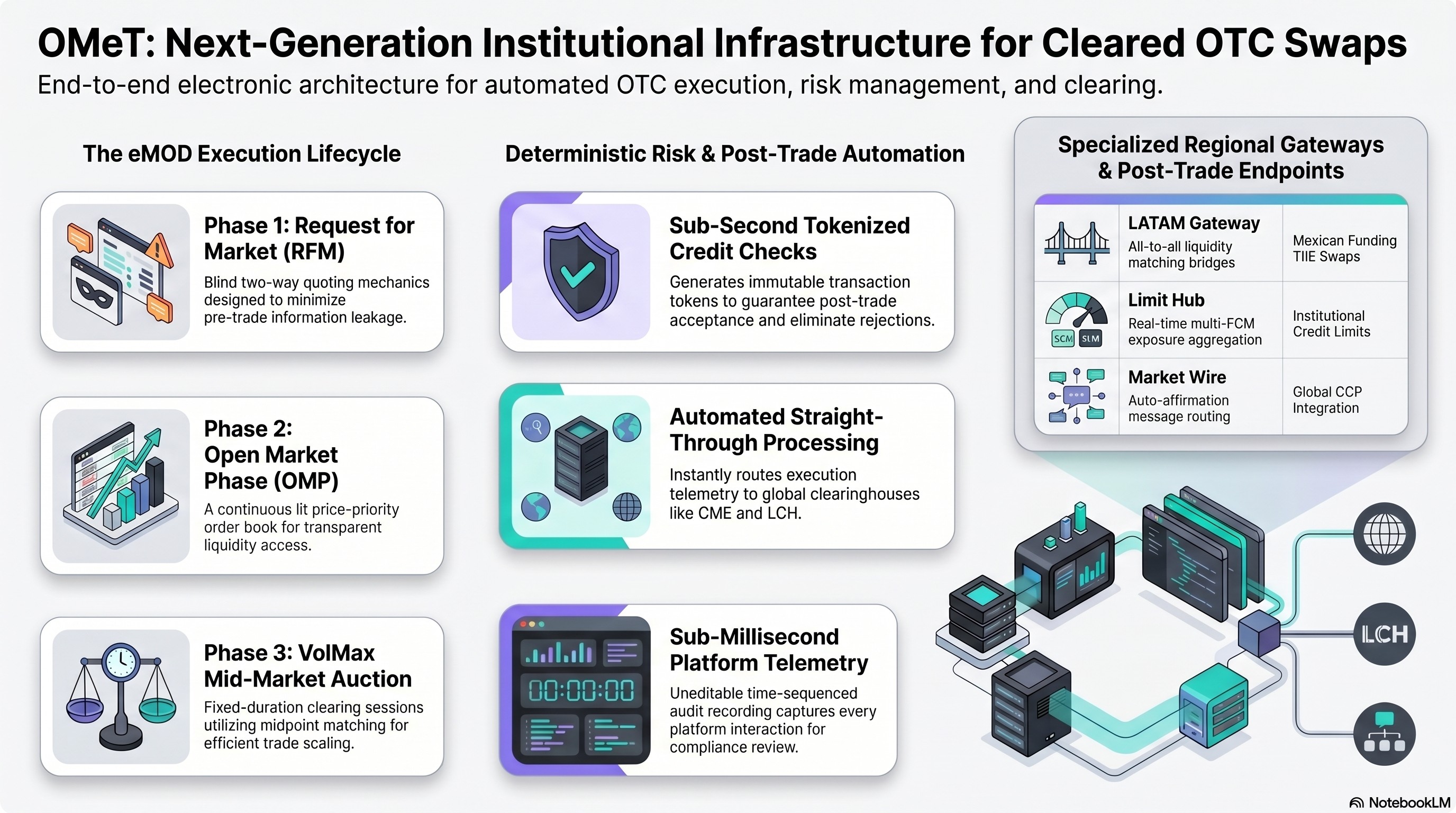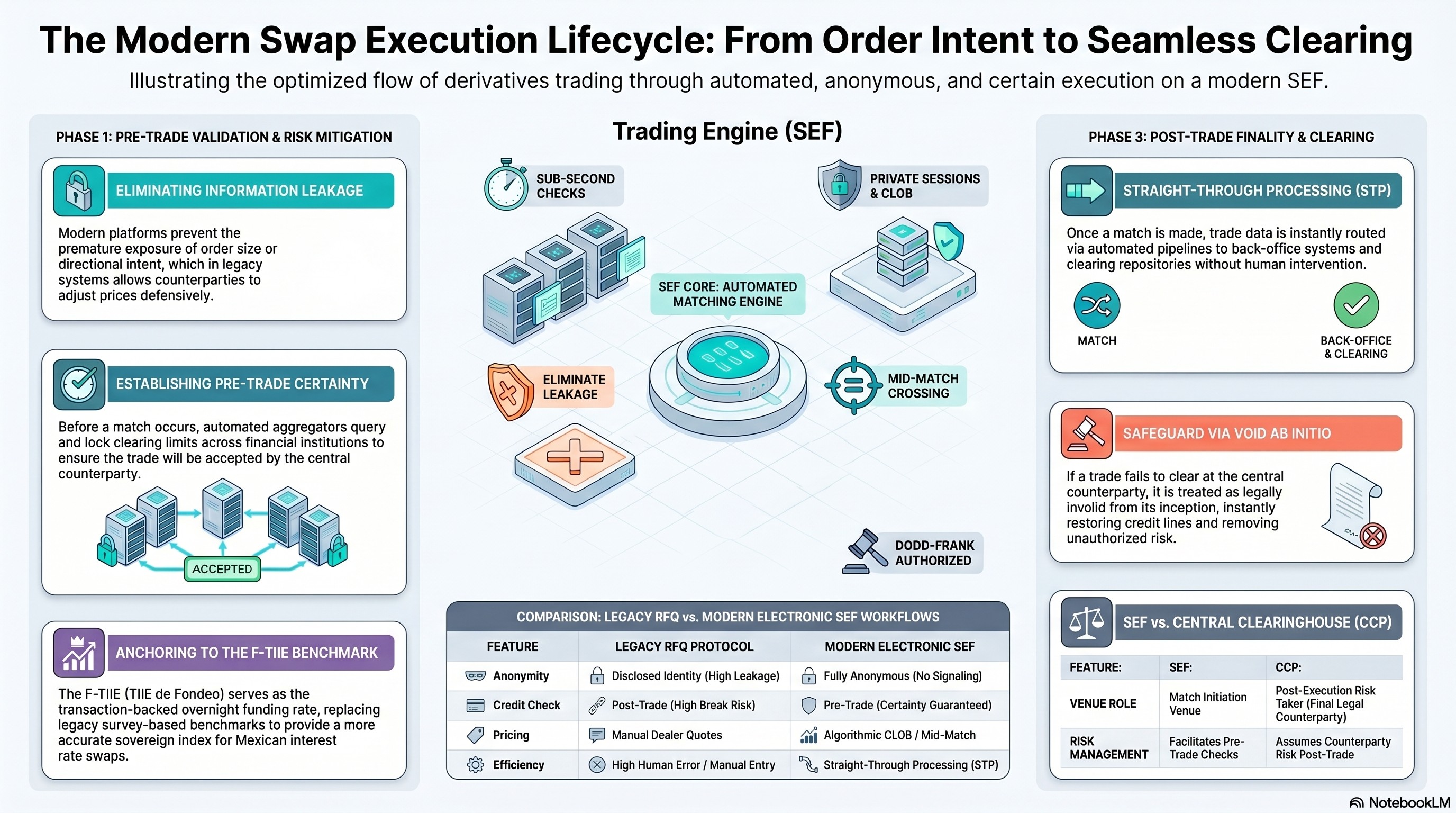
Legacy swap execution can create a gap between a trade that is economically matched and a trade that is operationally clearable. In these models, participants may agree on price and size before the clearing workflow has fully confirmed that the counterparties have sufficient credit capacity. That creates the familiar “intent to clear” problem: the market treats the trade as done, but the post-trade infrastructure may later reject it because credit, limit, or clearing constraints were not validated early enough.
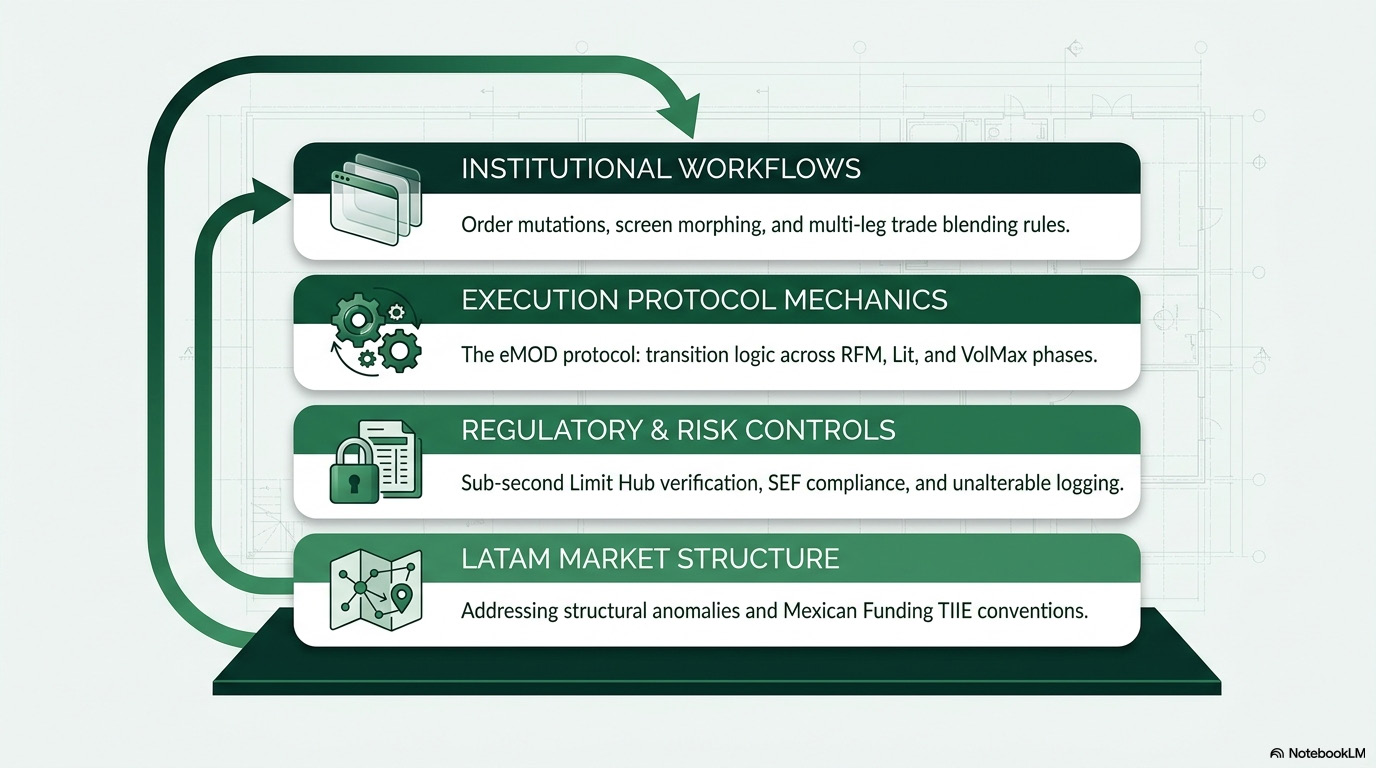
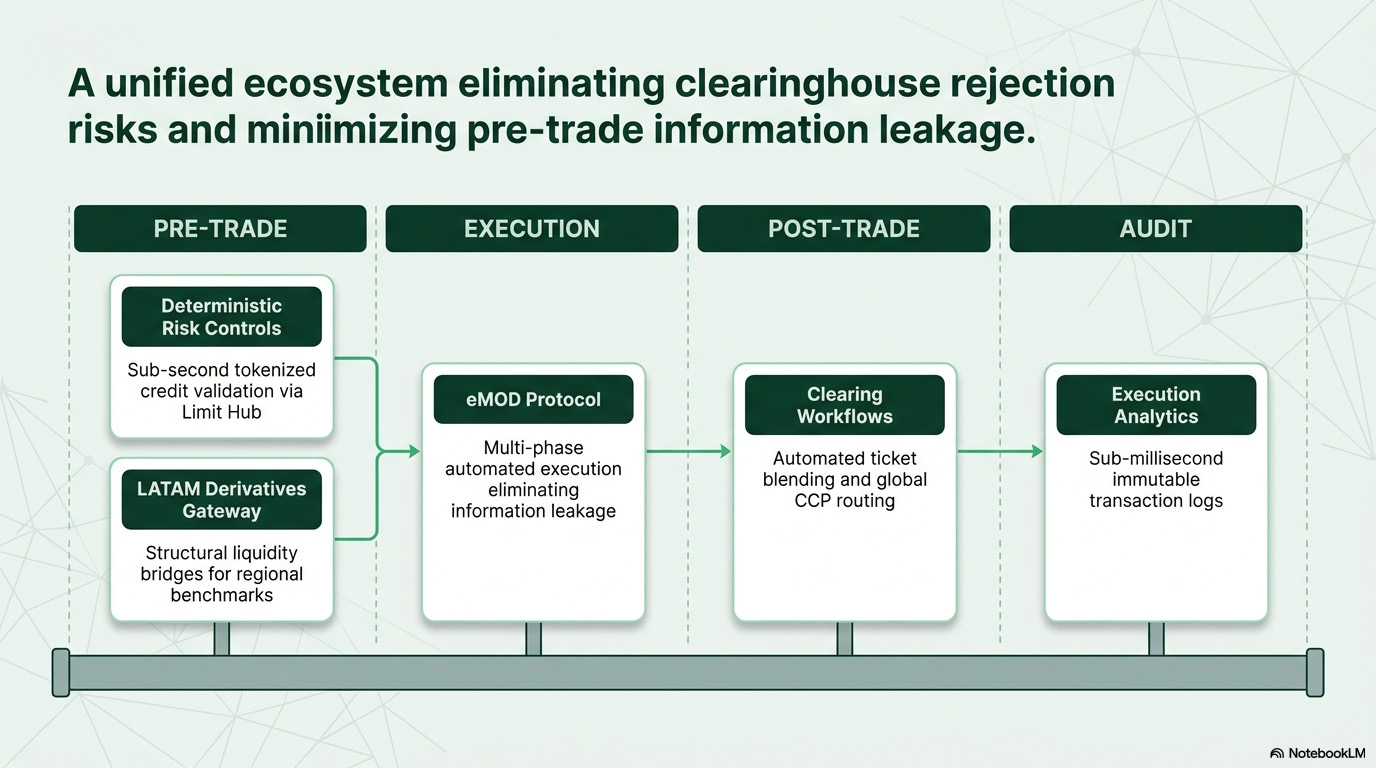
OMeT’s framework addresses this by moving clearing certainty closer to the point of execution. Internal materials describe eMOD as a protocol designed to create “a more reliable path from intent to cleared execution,” while also integrating execution and clearing into a connected workflow that narrows the gap between trade execution and post-trade processing. In practical terms, the objective is to prevent the trading system from matching interest that cannot survive the downstream clearing process.
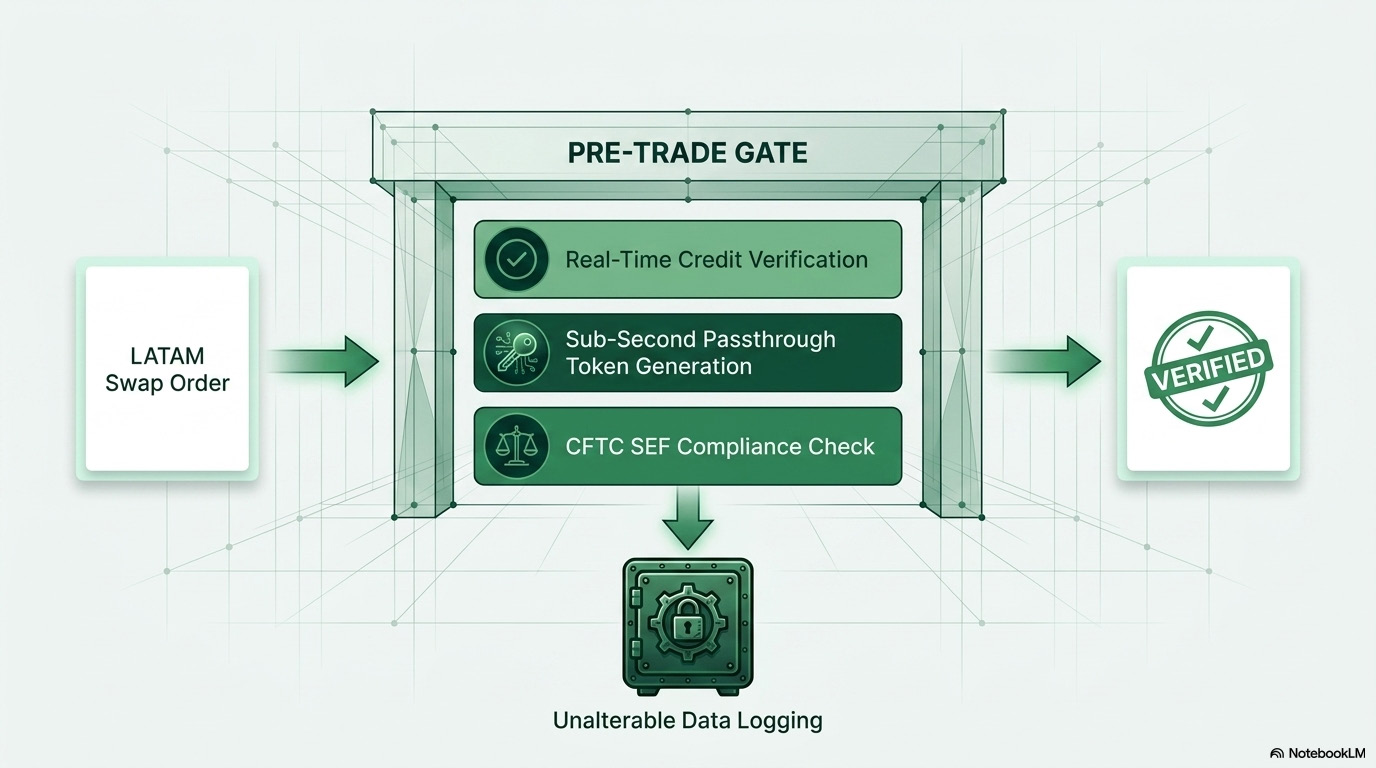
The tokenized limit protocol is the mechanical control layer. OMeT materials describe an end-to-end process where LimitHub checks limits with the FCM, the FCM confirms the limit to LimitHub, and LimitHub provides OMeT with a limit token. That token functions as pre-trade evidence that the execution is within approved clearing capacity. Rather than relying on a post-match credit review, the platform can condition execution on validated limit availability before the trade is allowed to proceed.
The result is a cleaner operating model for cleared OTC derivatives. When clearing eligibility is validated before execution, the market avoids the operational damage of matched-but-rejected trades, manual repair workflows, and complex break addendums. This supports OMeT’s broader “From Intent to Clearing” architecture, which presents the trade lifecycle as a deterministic sequence across trade, allocation, waterfall, clearing, and intelligence. For institutional participants, the value is not only speed; it is confidence that an executed trade has been structured to clear.