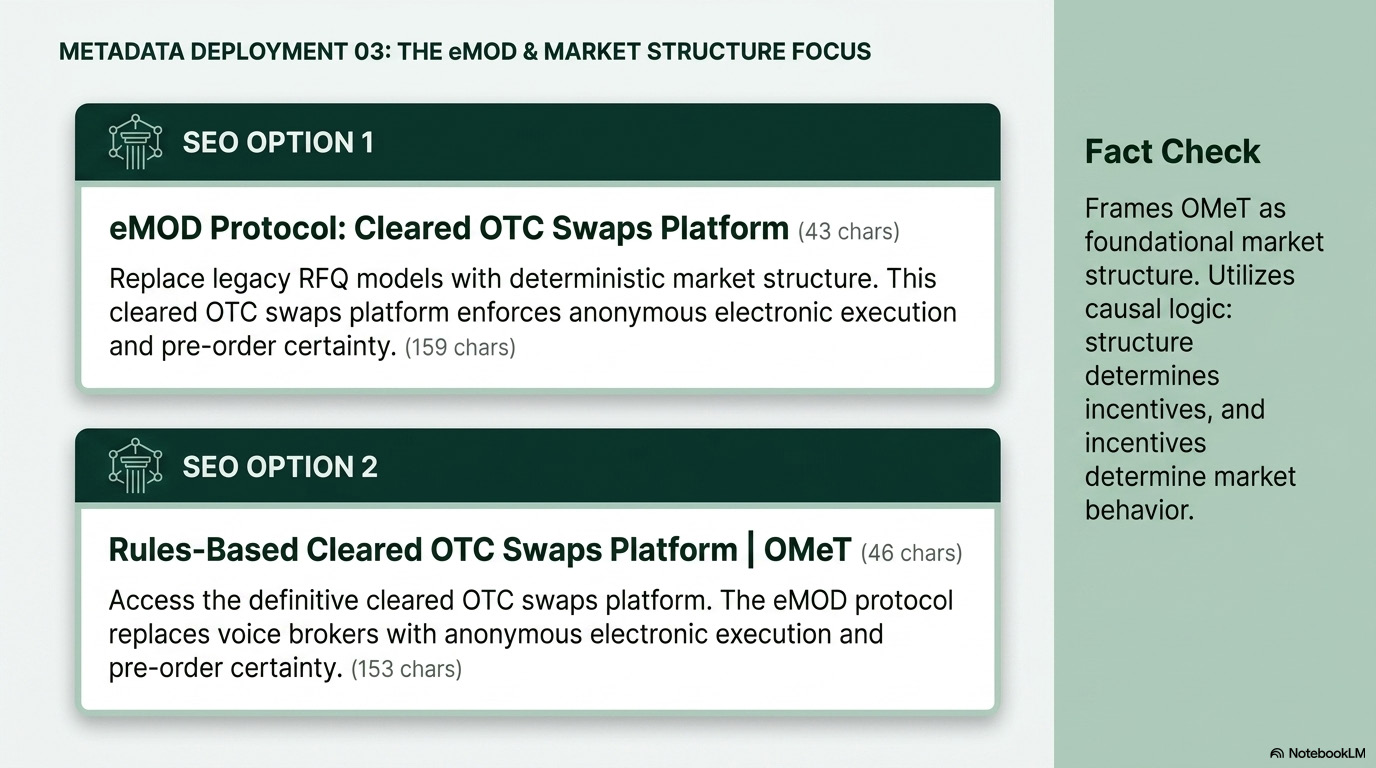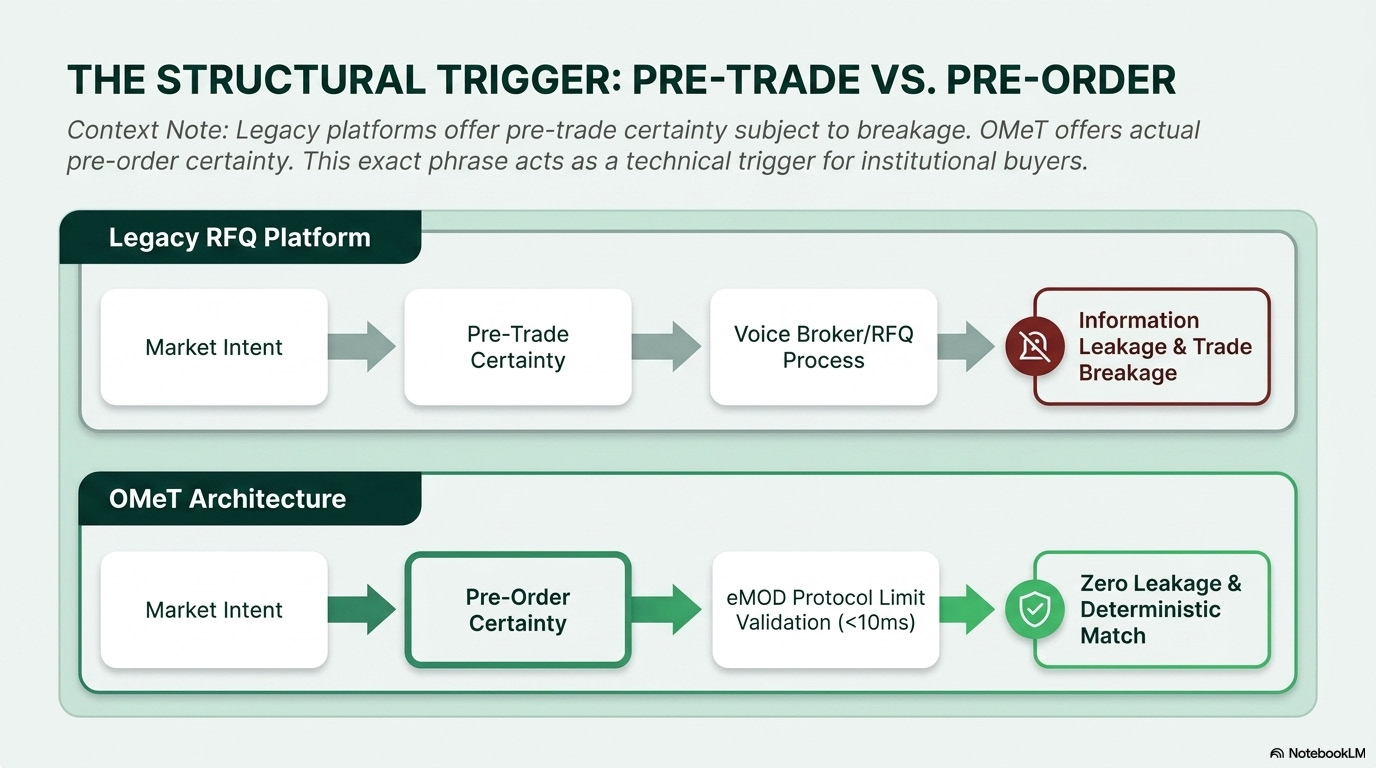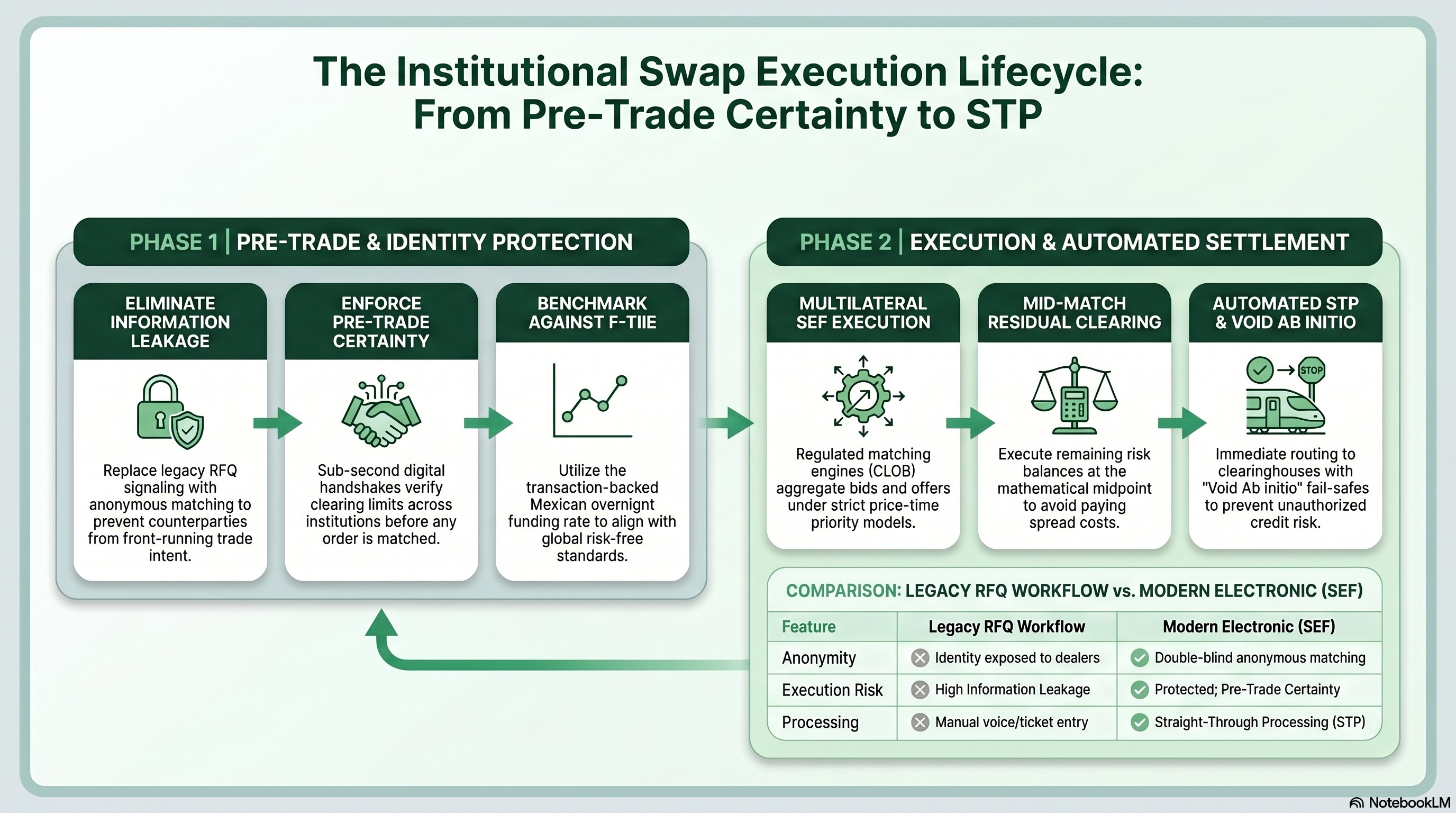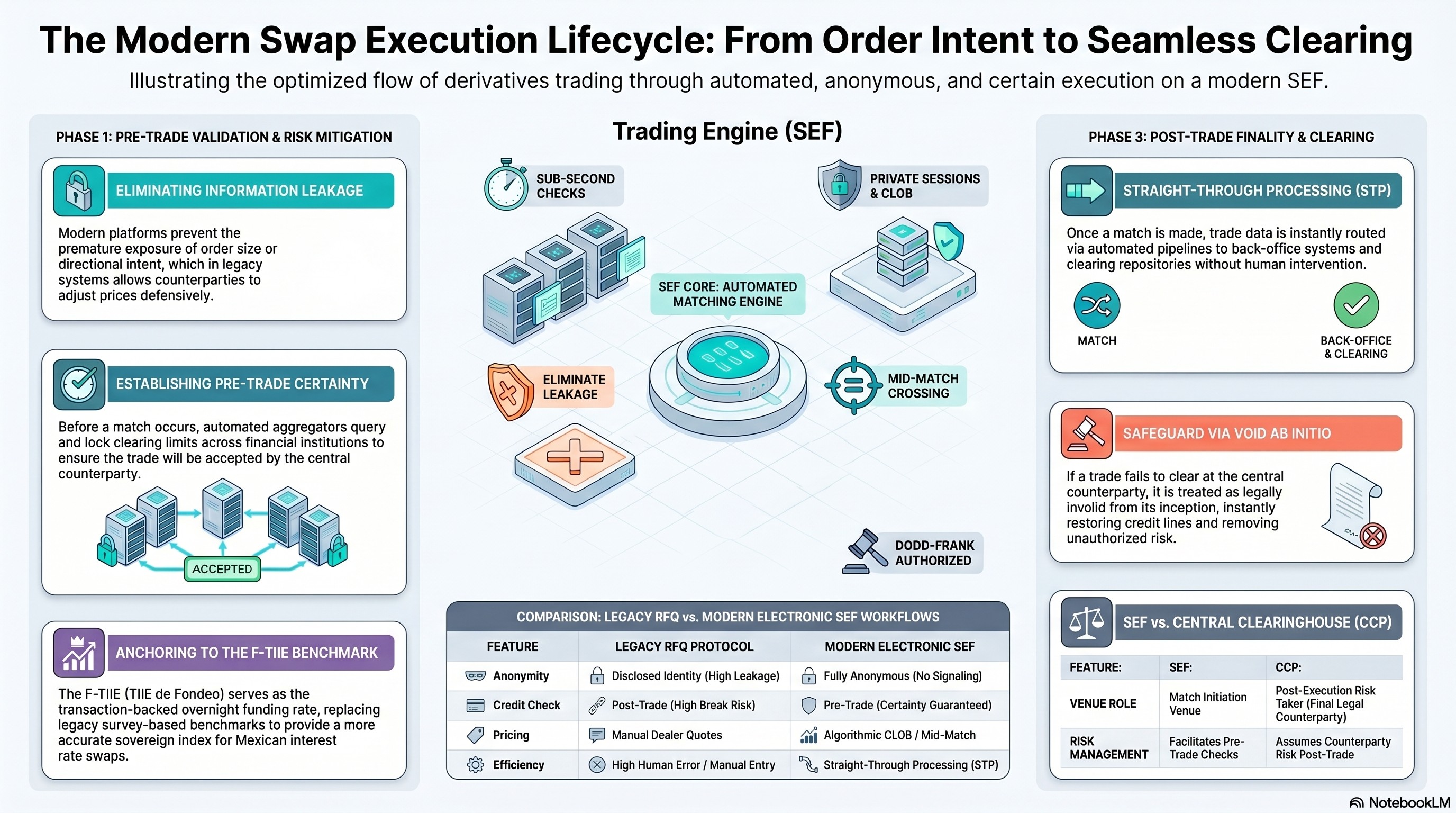
Traditional RFQ protocols often treat liquidity discovery as a rigid, single-session event. A requester asks for a market, dealers respond, and the workflow either results in a trade or expires. In discontinuous OTC derivatives markets, that structure can leave a high percentage of requests unresolved because liquidity may not appear in the right form, at the right size, or within the narrow RFQ window. The result is not only failed execution; it is a fragmented process where residual risk must be reintroduced through another manual or semi-electronic workflow.
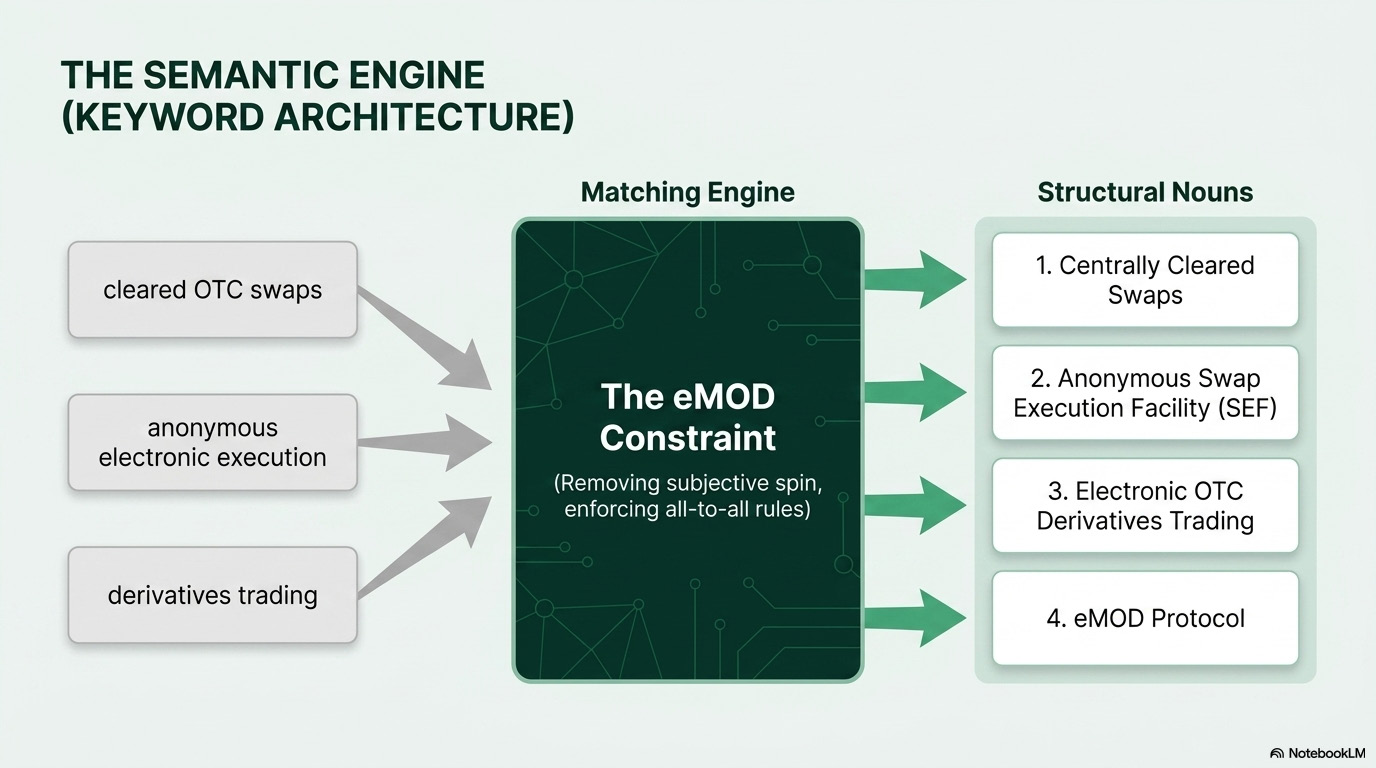
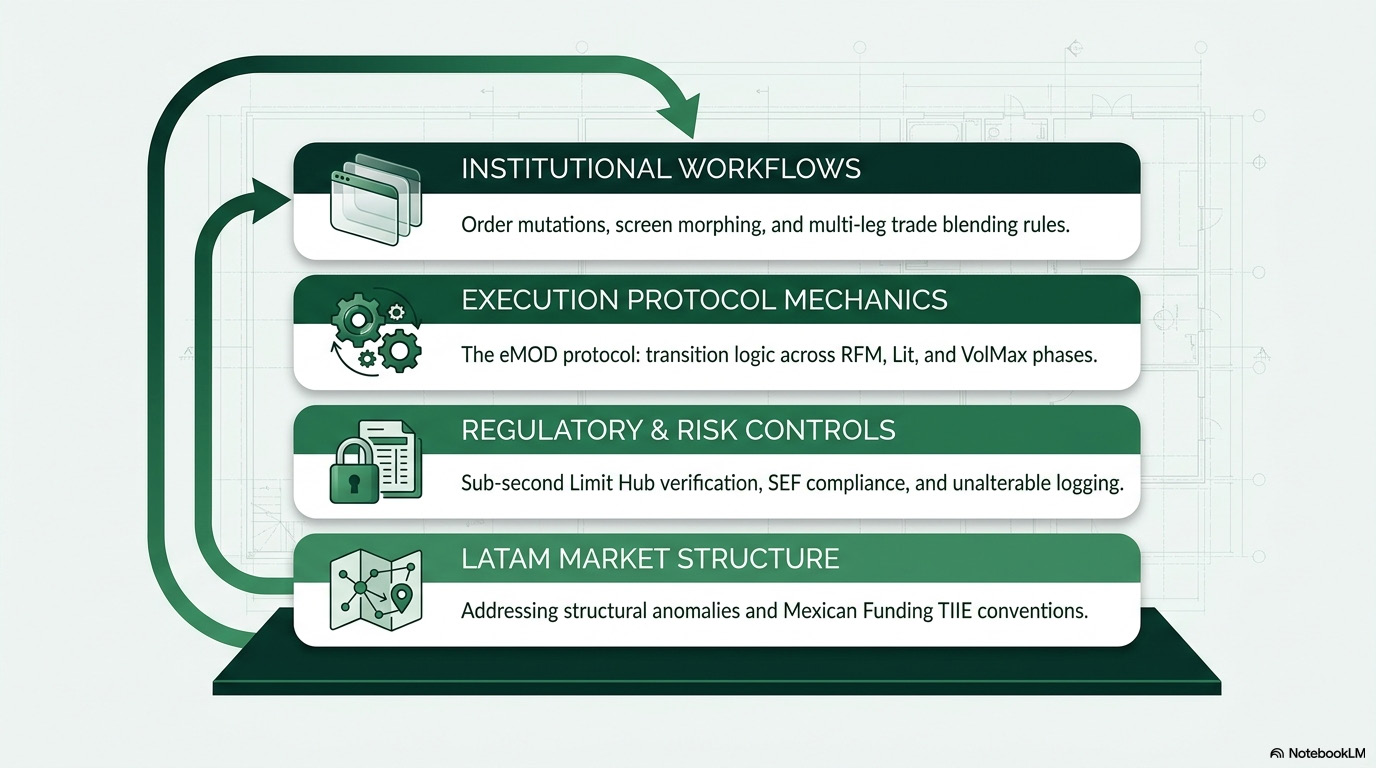
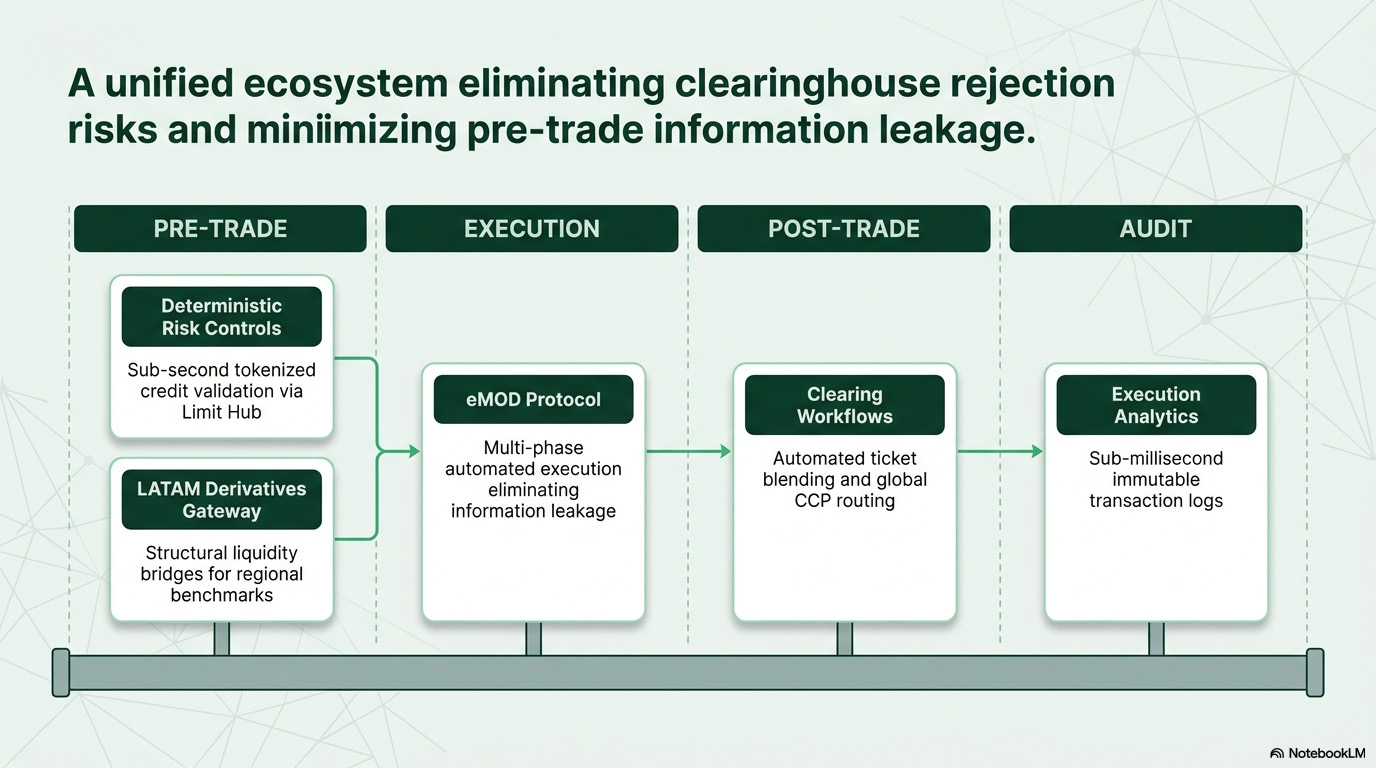
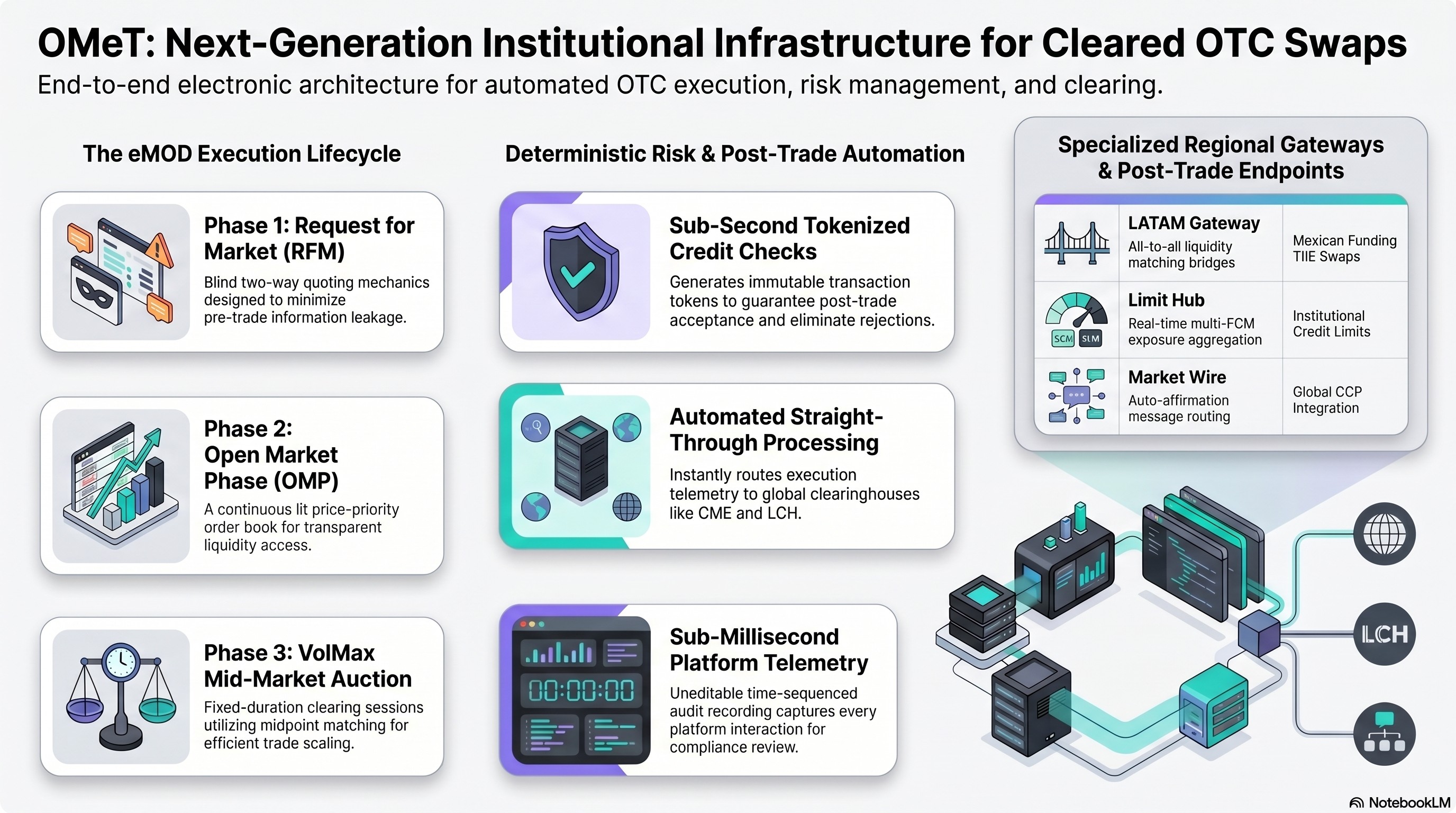
OMeT’s eMOD framework is designed as a continuous liquidity lifecycle rather than a one-shot RFQ event. Internal OMeT materials describe eMOD as an anonymous three-phase execution protocol for cleared swaps, moving through the Open Request Phase, Open Market Phase, and Open Volume Matching Phase. That sequence allows the market to keep working after the first discovery attempt, rather than forcing the requester to restart the process when the first phase does not fully complete the trade.
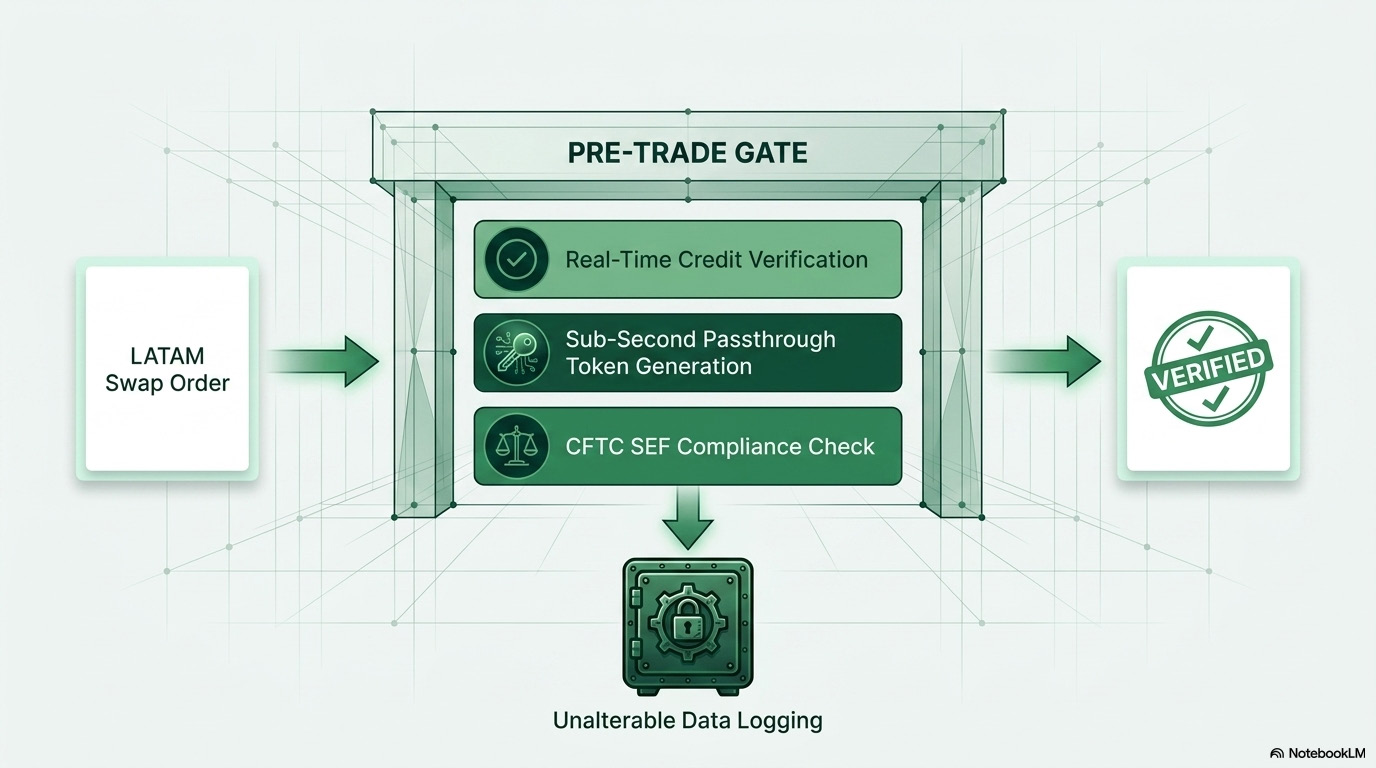
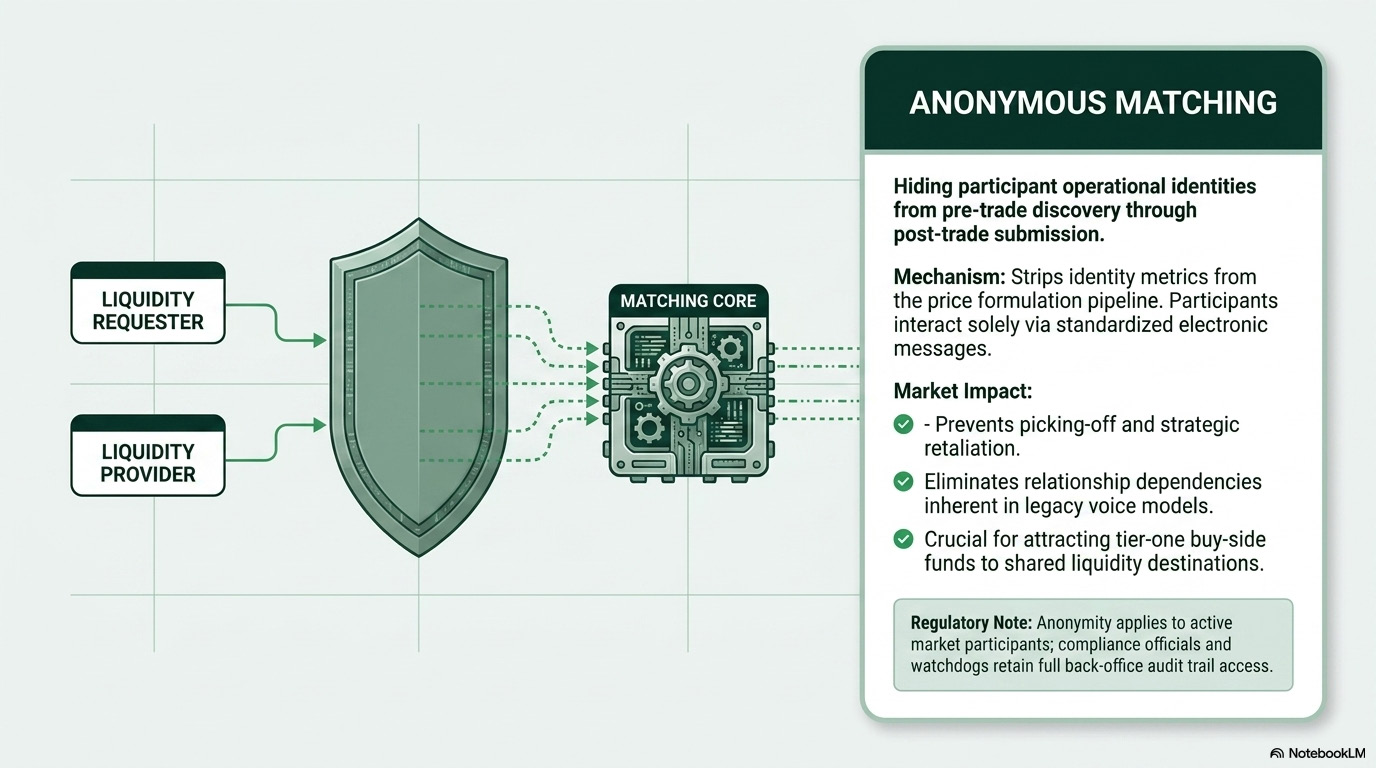
The first phase provides controlled, dark-pool-style price discovery. In RFM / Open Request, the liquidity requester remains anonymous, full intended size is used for platform validation but not disclosed to participants, and eligible liquidity providers respond with quotes. If the trade is only partially satisfied, the workflow can progress into OMP, the lit phase, where bids and offers become visible to qualified participants in a more transparent order-book environment. Internal materials describe OMP as a lit market where bids and offers are known and visible to participants, in contrast to the dark-pool nature of RFM.
The final phase, VolMax, addresses the residual-liquidity problem that conventional RFQ systems typically leave behind. When the visible market loses momentum, the protocol can move into midpoint matching so remaining interest has one more structured opportunity to cross. OMeT materials characterize eMOD as built for discontinuous OTC derivatives markets and explicitly distinguish it from traditional RFQs by using three phases that maintain a continuous trading process rather than ending once the initial trade attempt is done. In practical terms, eMOD converts failed or partial RFQ outcomes into a managed progression: dark negotiation, lit competition, and midpoint completion.