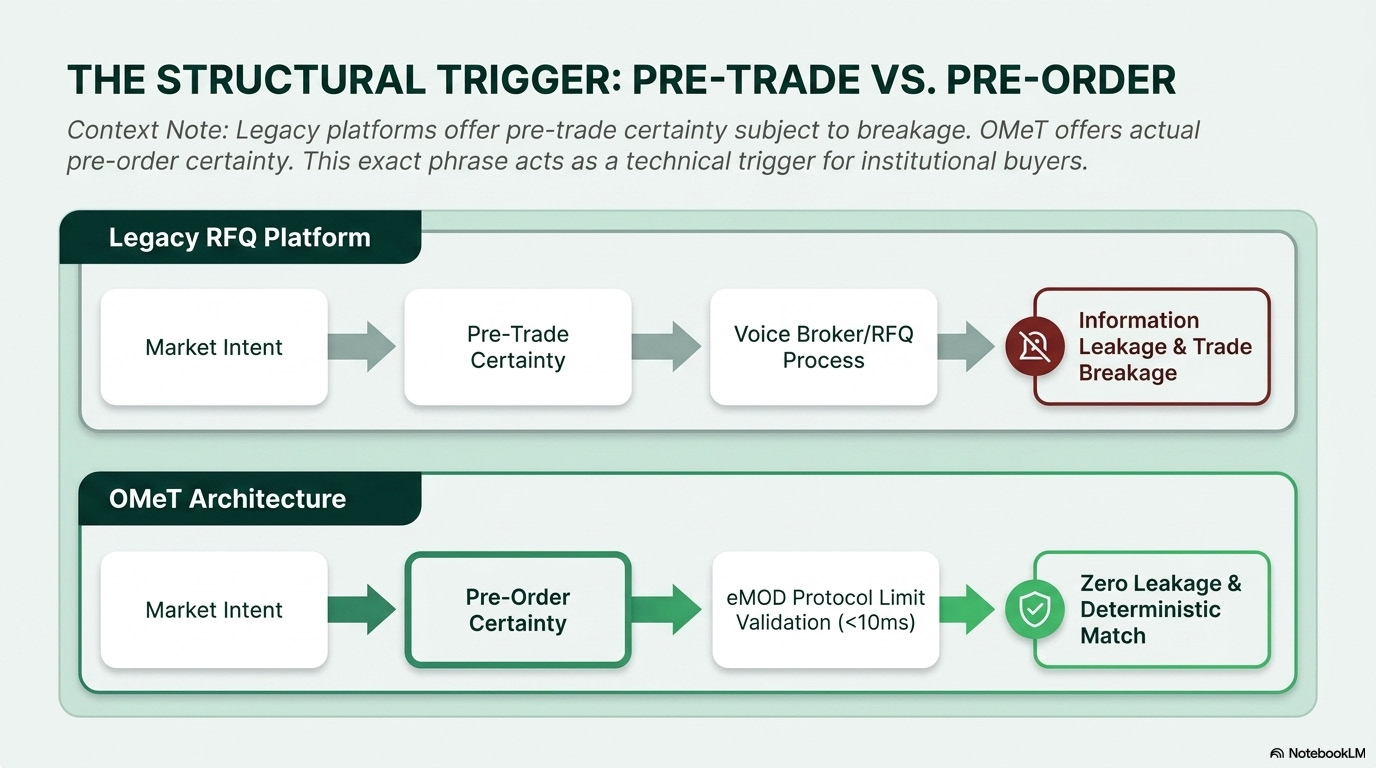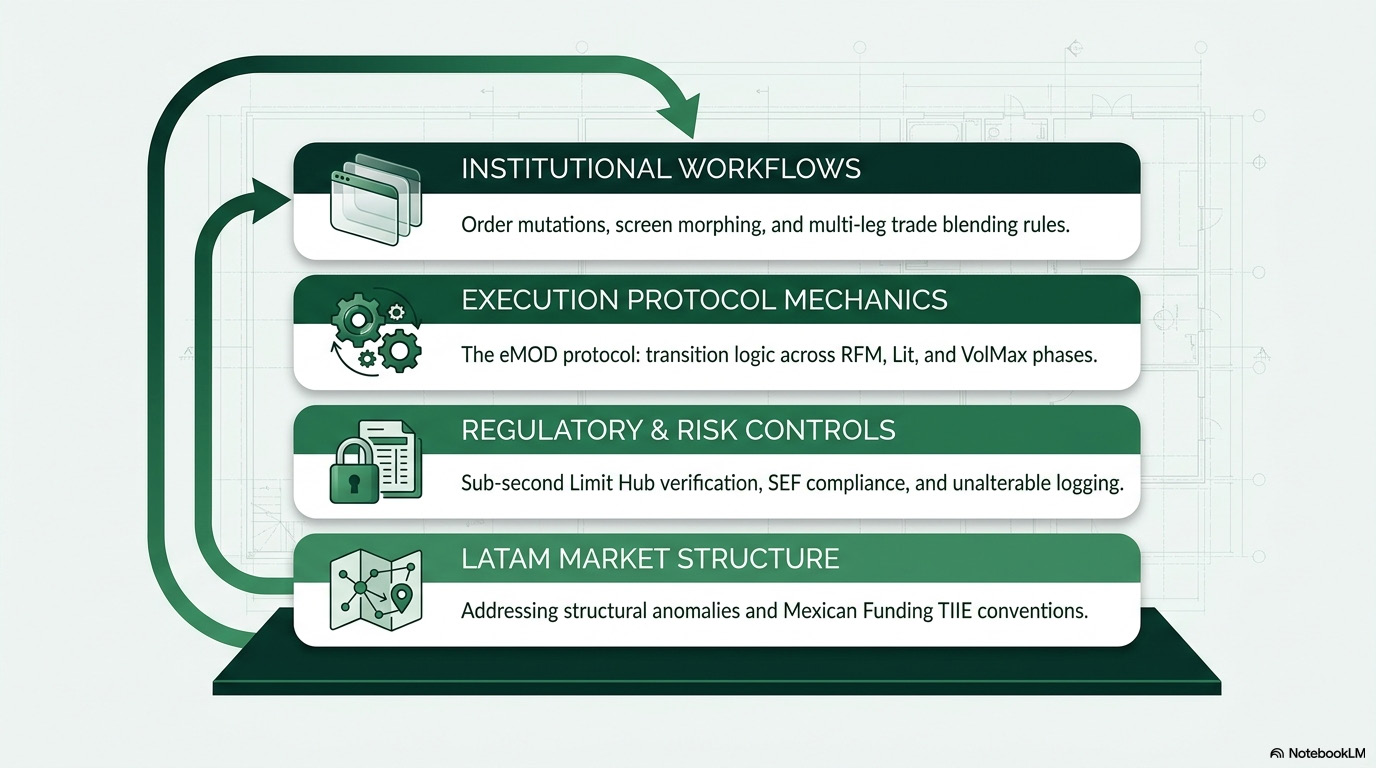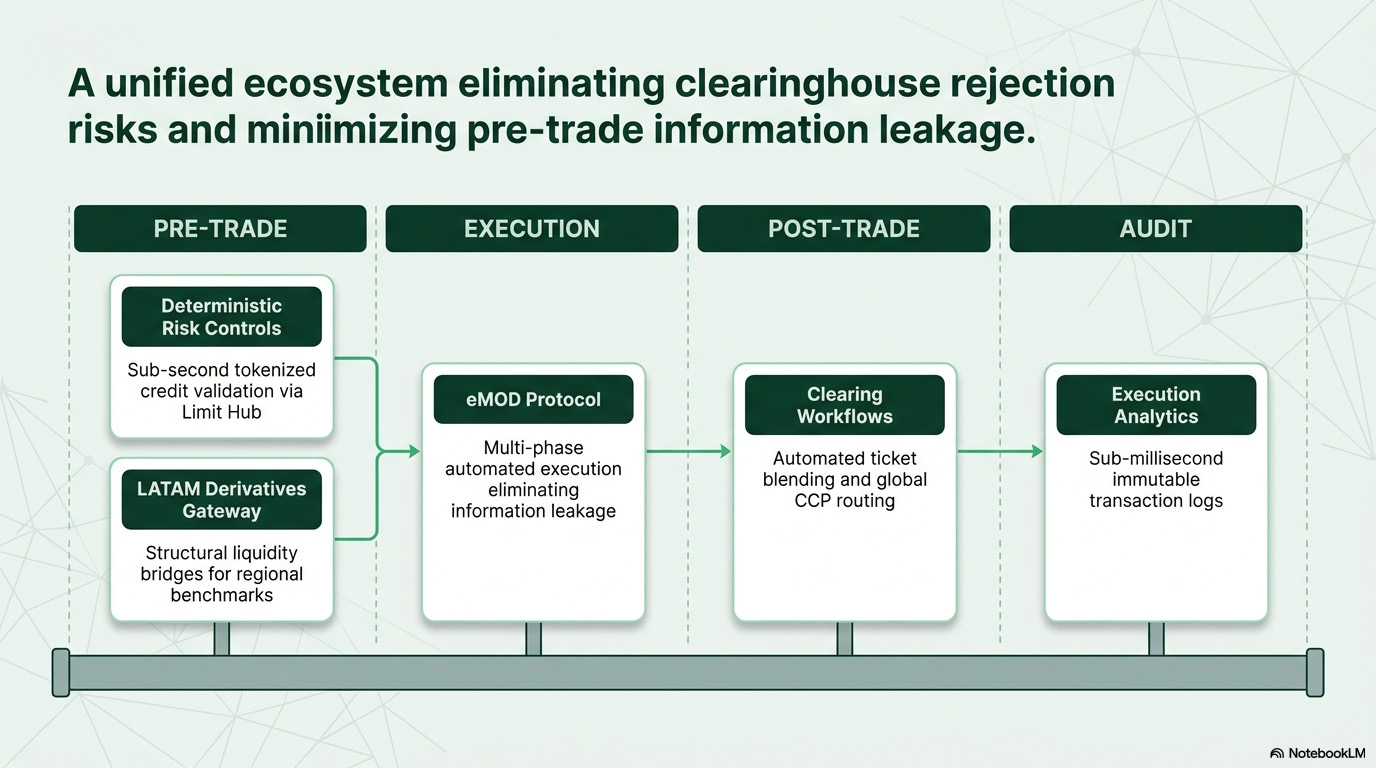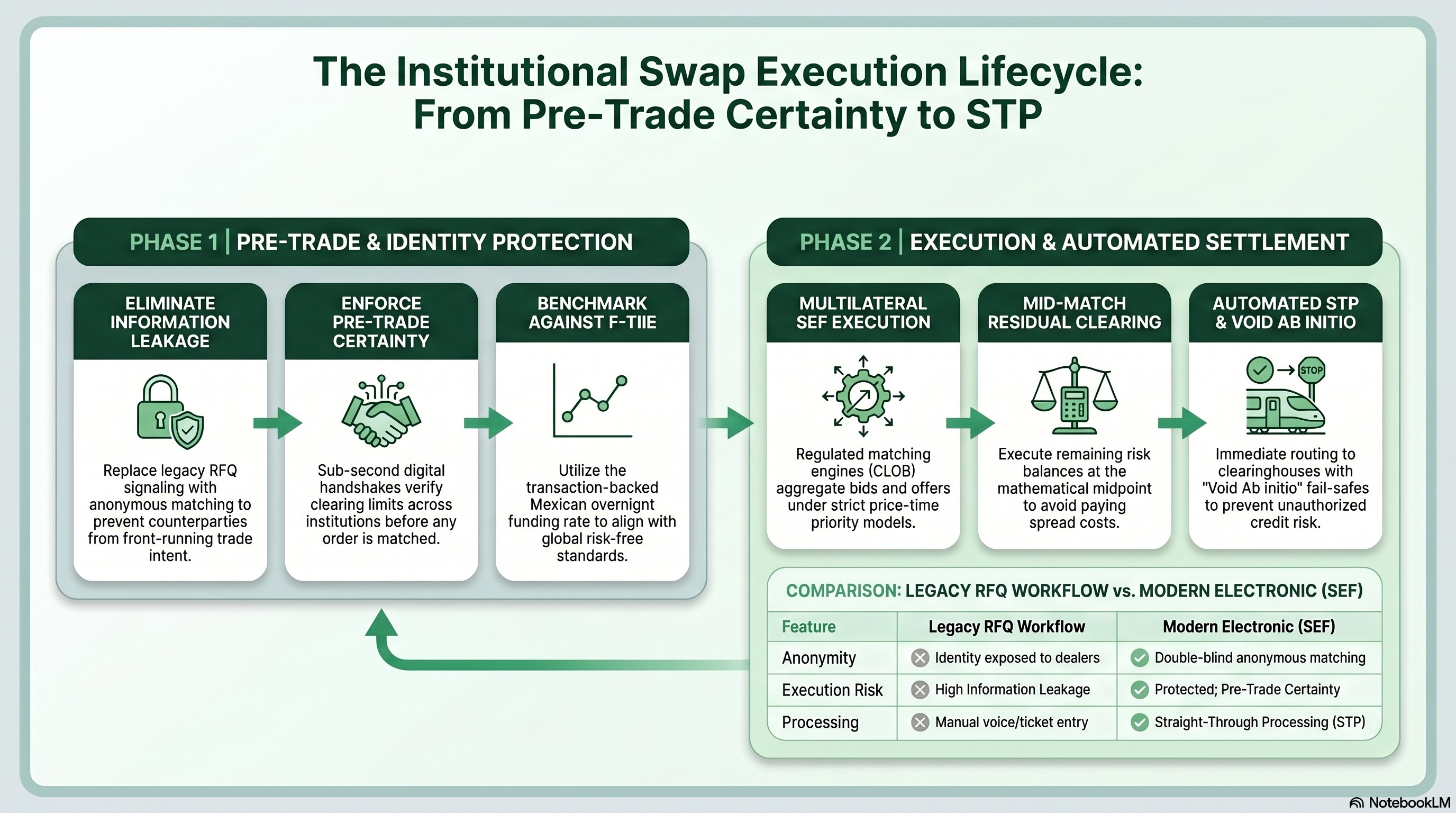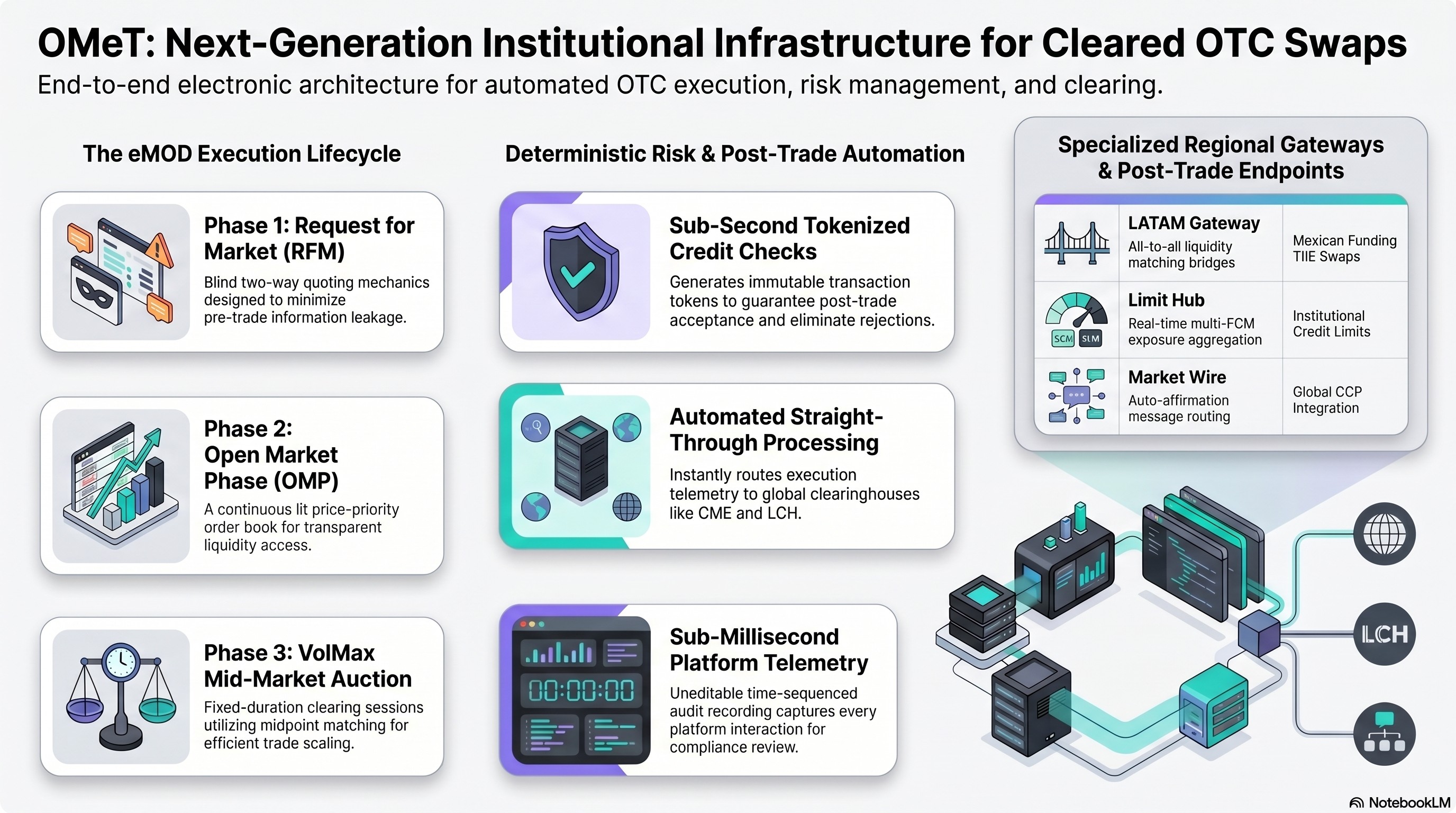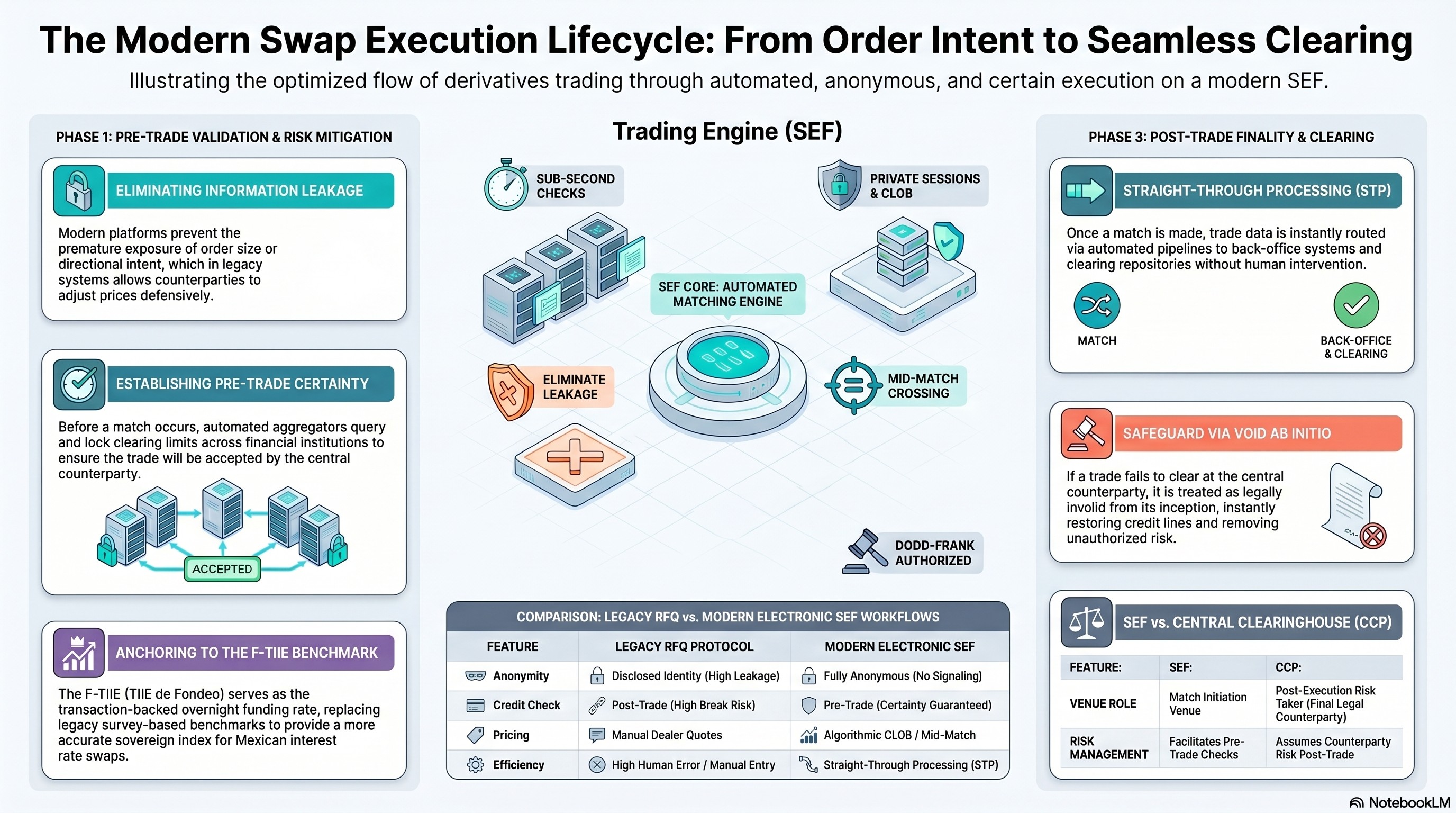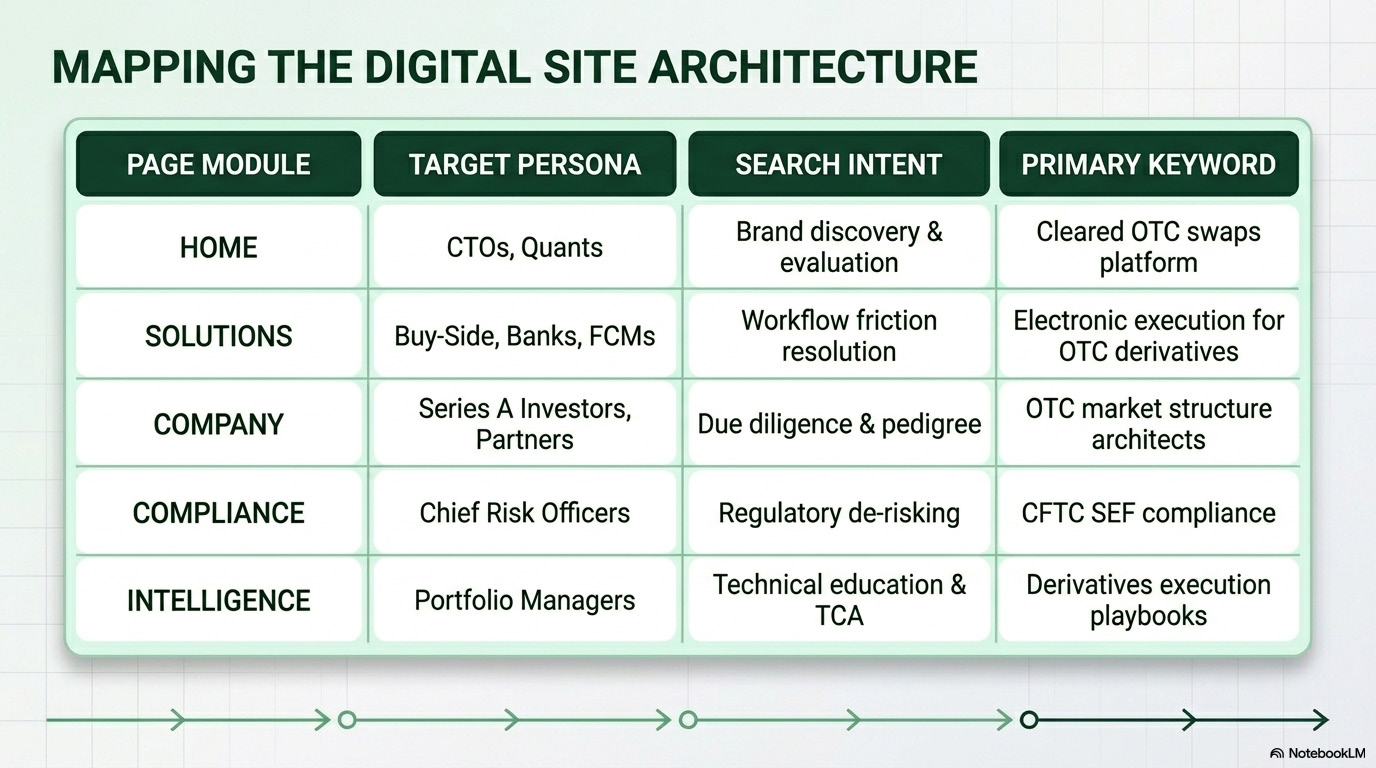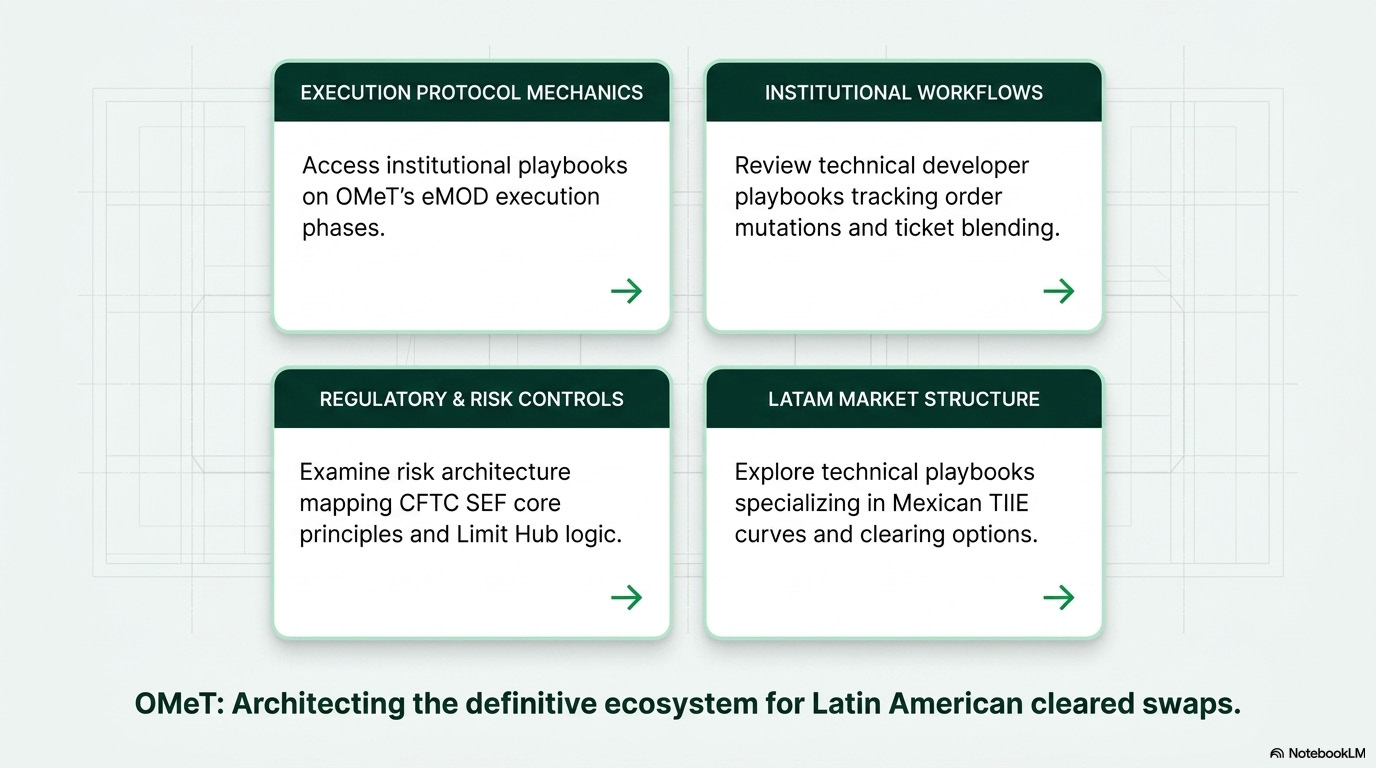
The interface adaptation pattern is modular rather than cosmetic. A Mexican TIIE screen, a Brazilian rates screen, or another Latin American cleared swap workflow should not require a new platform architecture; it should require localized configuration of instruments, tenors, clearing routes, holidays, account structures, credit-limit logic, and reporting outputs. OMeT’s internal materials describe the platform as a deterministic execution ecosystem for cleared OTC markets, supporting execution, allocation, post-trade workflow, and market intelligence in one institutional environment. That gives the regional playbook a repeatable base: keep the workflow architecture stable, then localize the rulebook inputs.
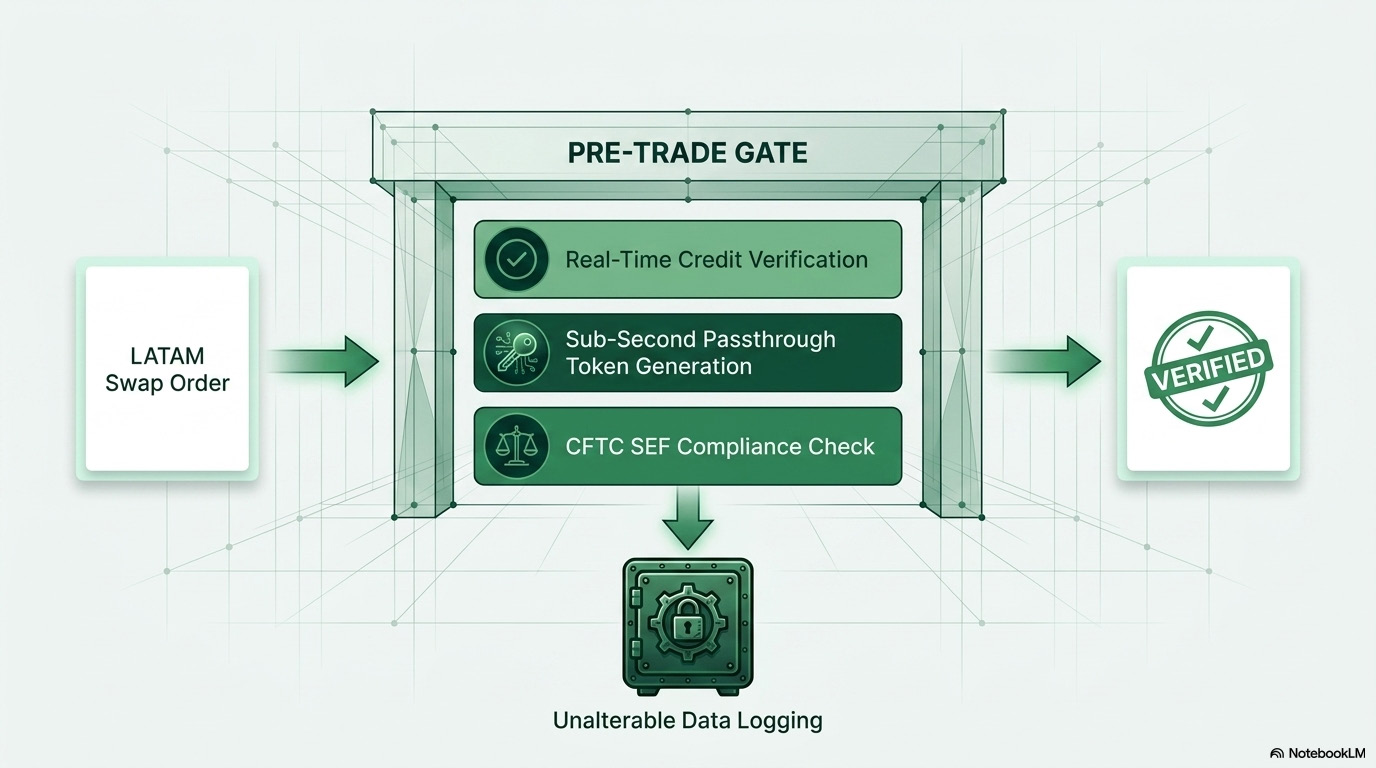
Localized clearing rulebooks become the main implementation surface. Each market may differ in eligible products, clearinghouse access, FCM or self-clearing arrangements, account hierarchy, regulatory expectations, and post-trade routing. OMeT discussions already reflect this type of onboarding logic: limits may be established through client negotiation, FCM push models, or self-clearing member workflows, with clearing limits tied to onboarding and account configuration. In a regional expansion model, those controls become jurisdiction-specific templates rather than one-off operational exceptions.
The strategic result is a scalable LATAM operating model: OMeT can enter a local cleared swap market by mapping the domestic rulebook into a known execution, credit, clearing, and data framework. The platform’s ecosystem positioning supports that approach because OMeT is designed to sit across execution, allocation, and clearing partners rather than operate as a disconnected front-end screen. Internal company materials emphasize interoperability across execution, allocation, and ecosystem partners that enable distribution and clearing. For regional expansion, that means the interface can adapt to local rules while the institutional control architecture remains consistent.