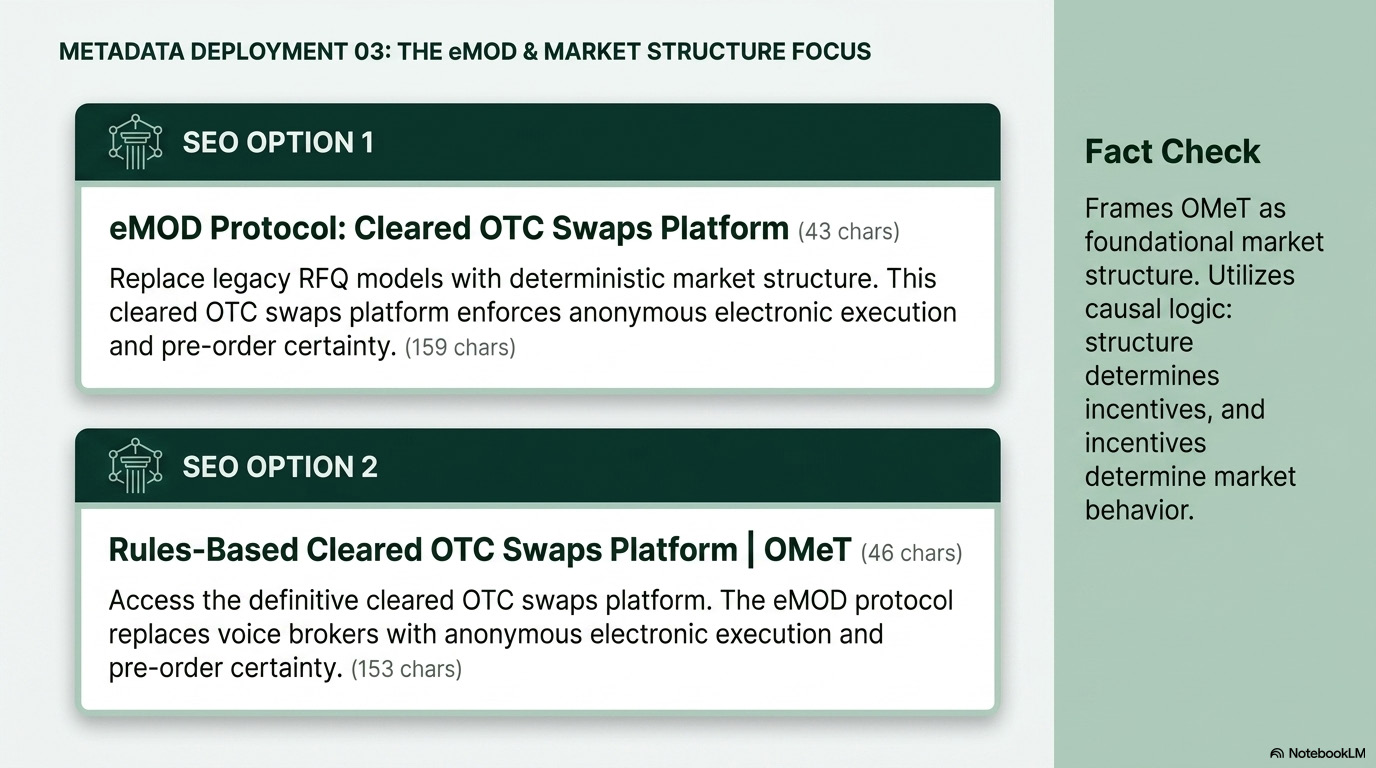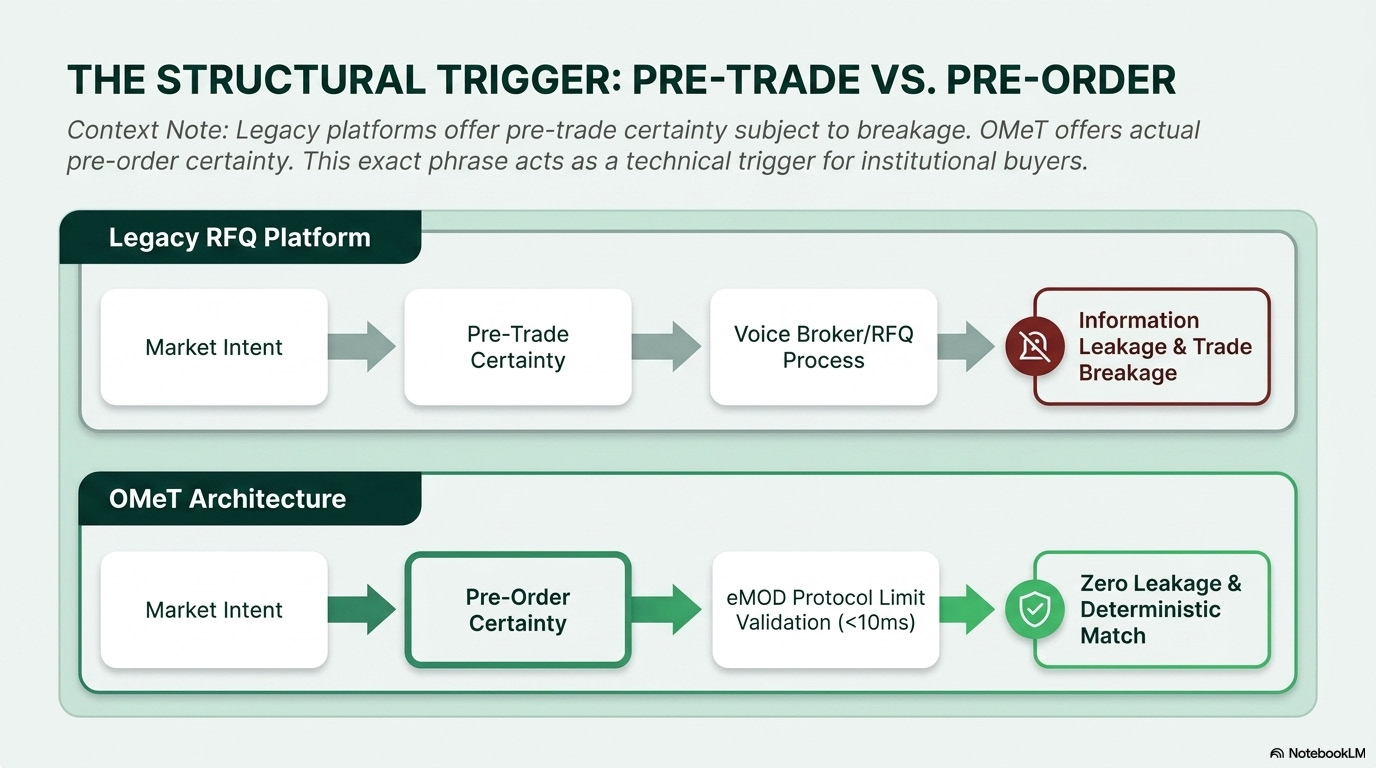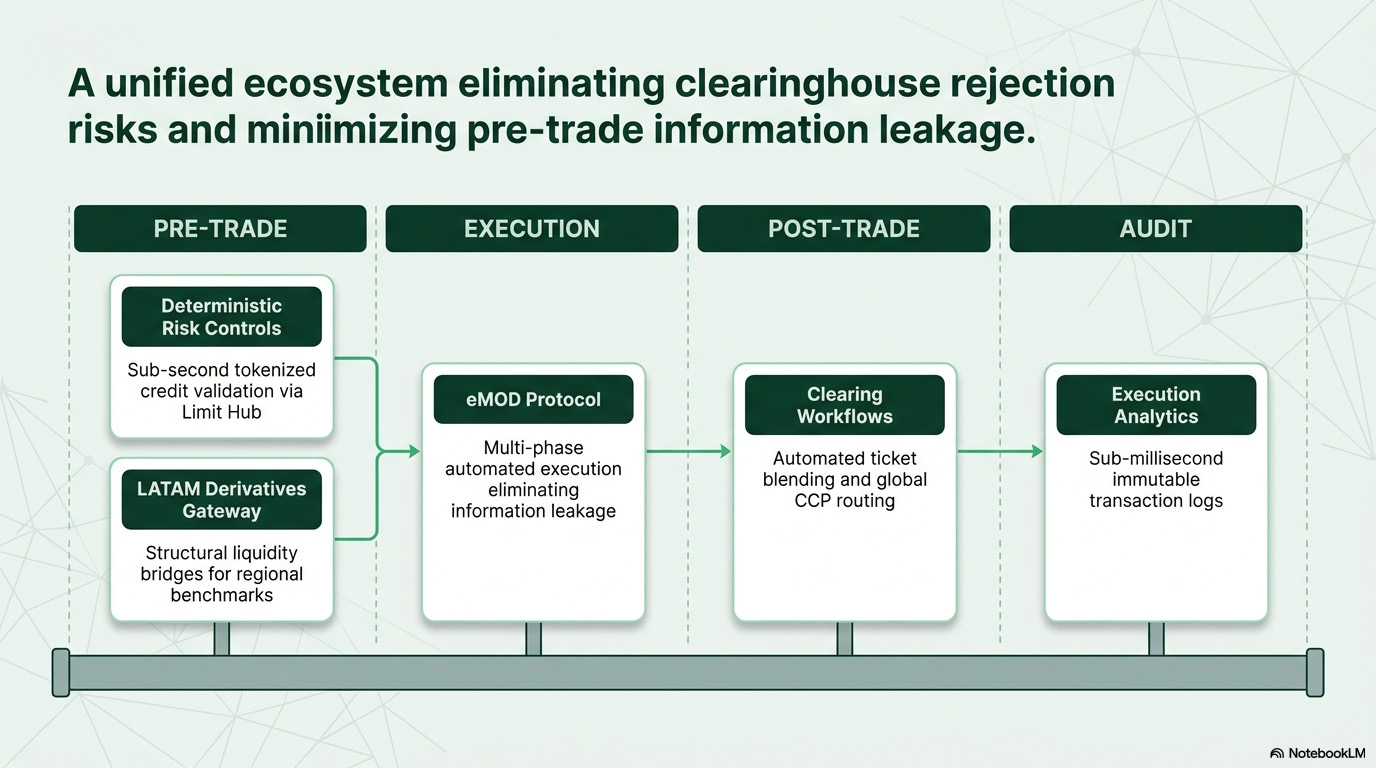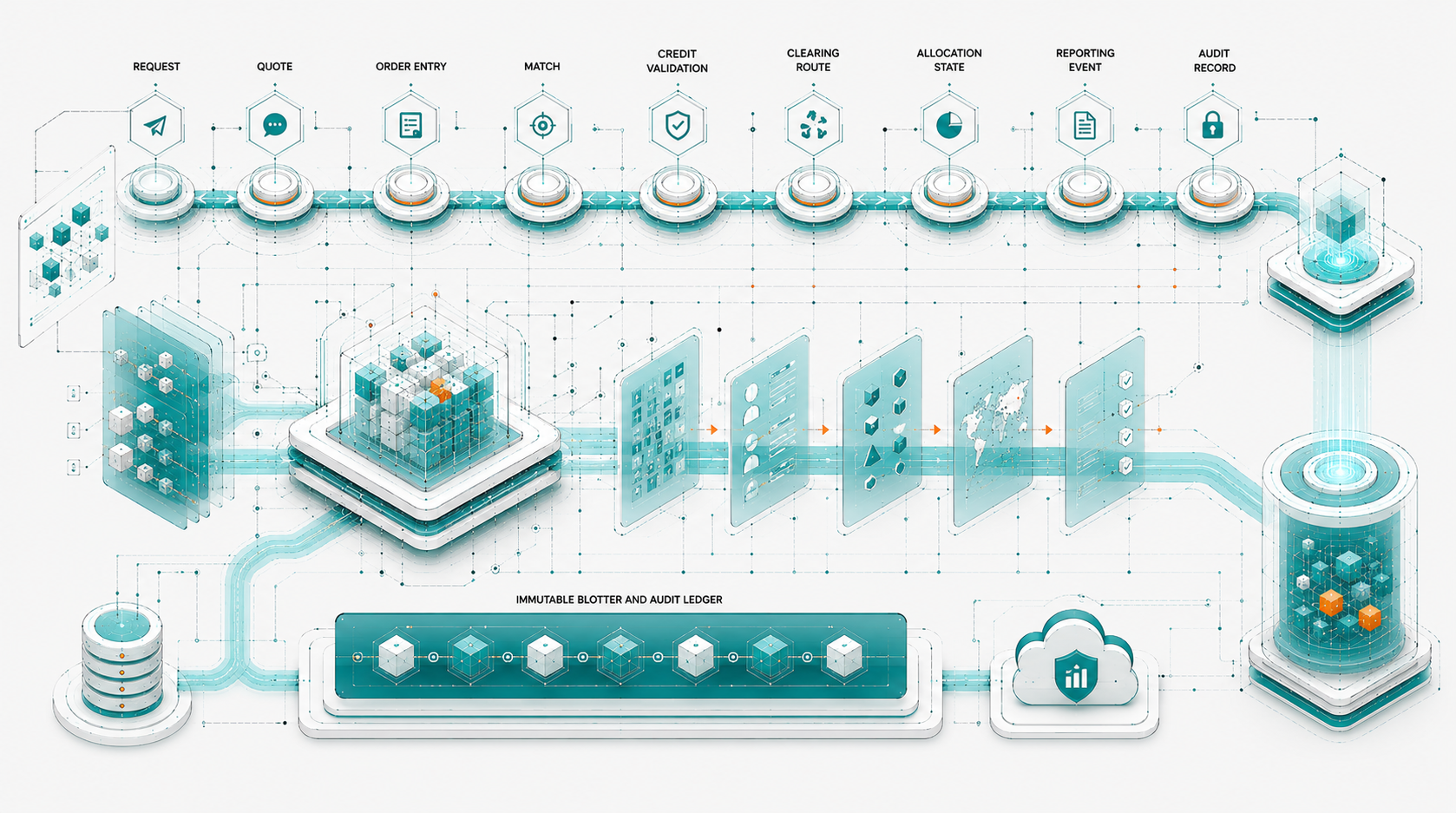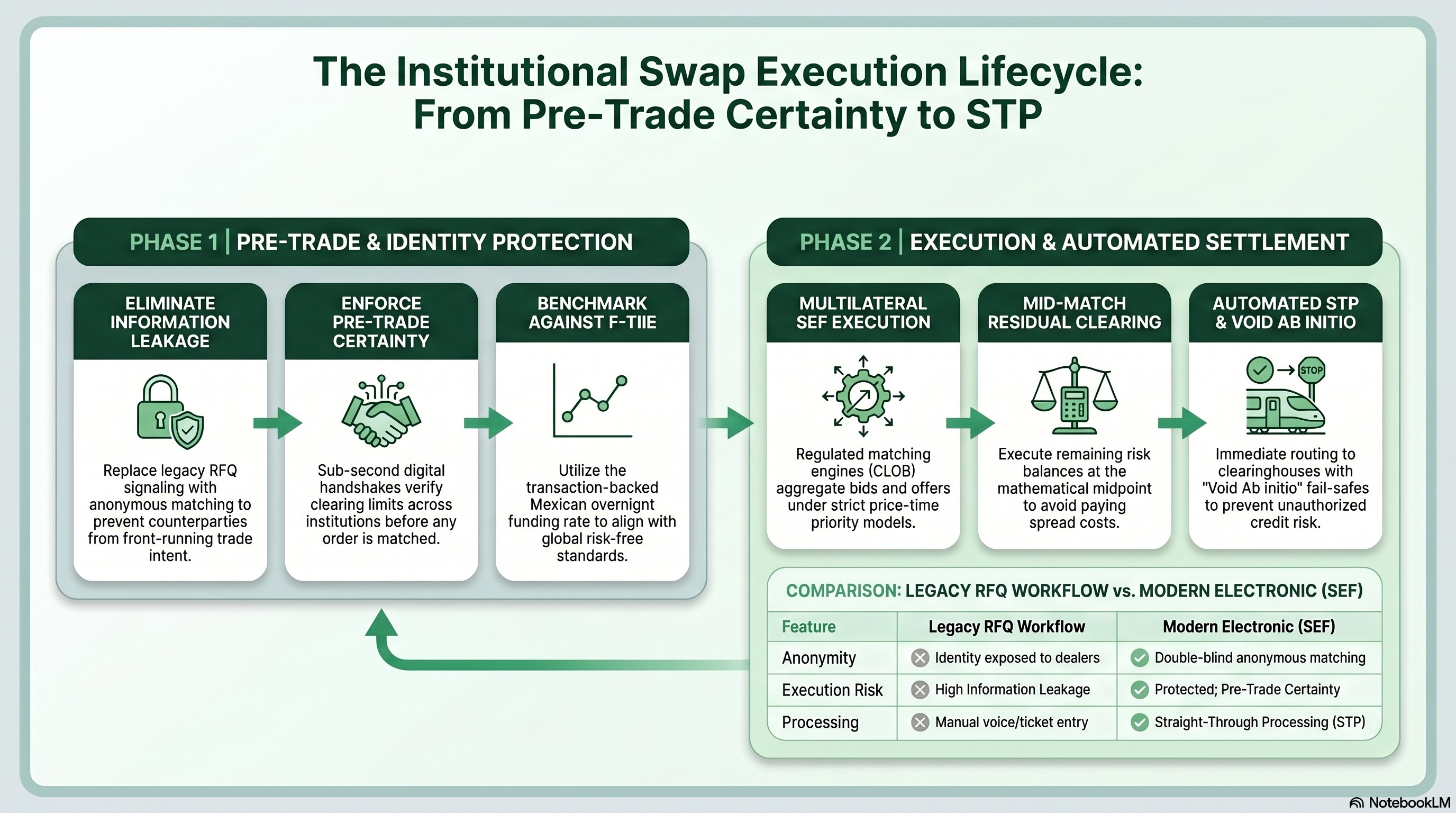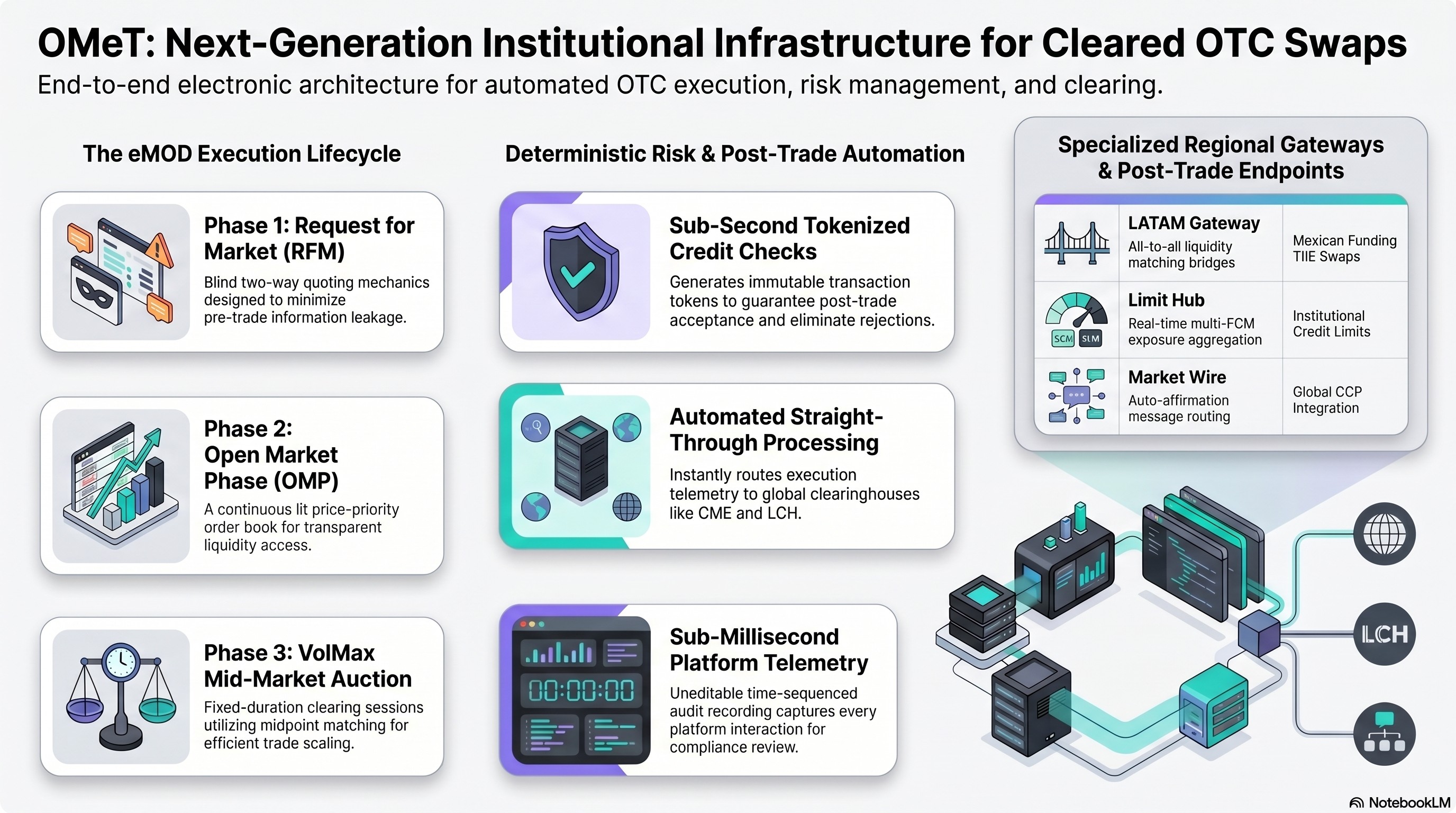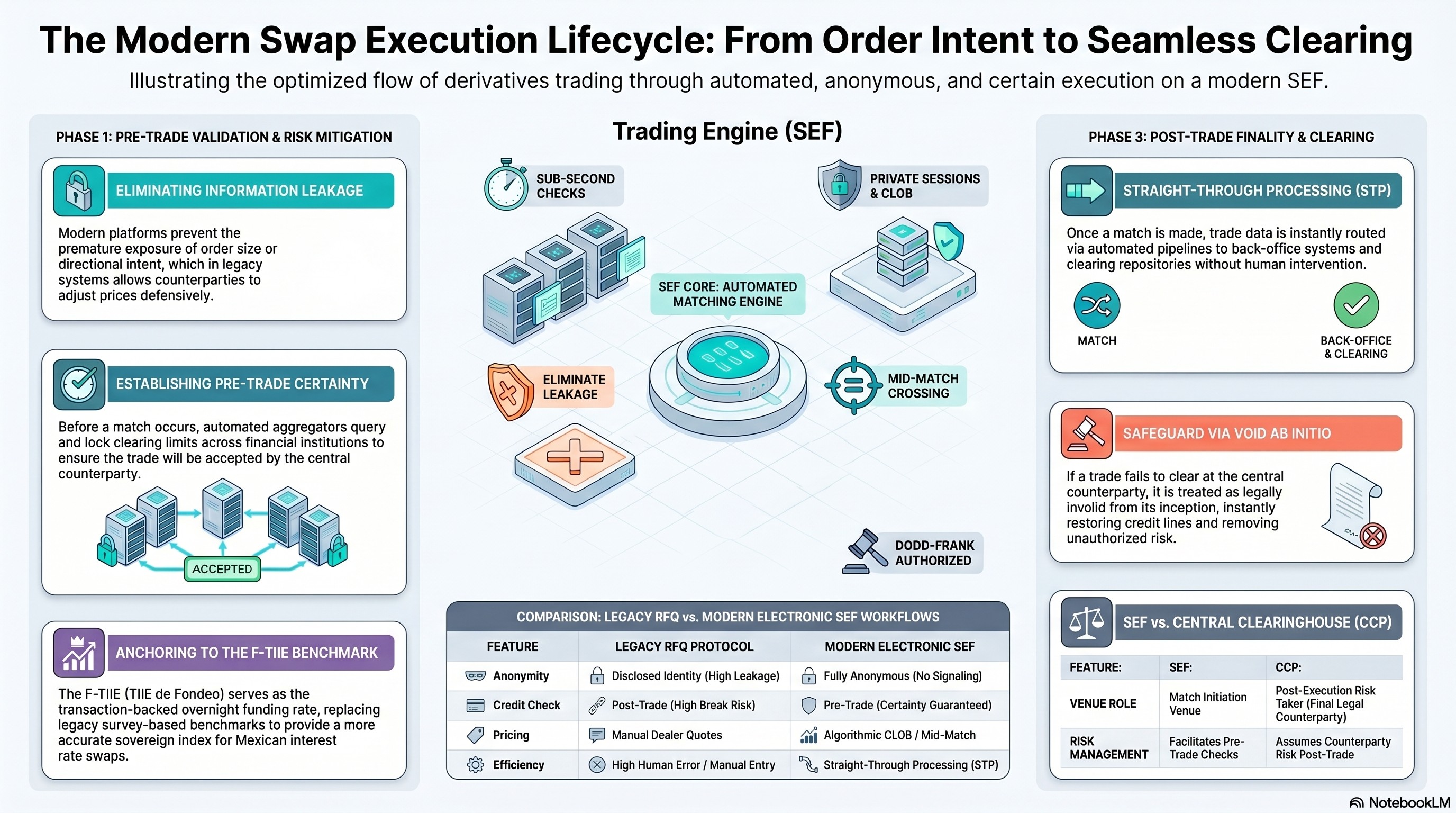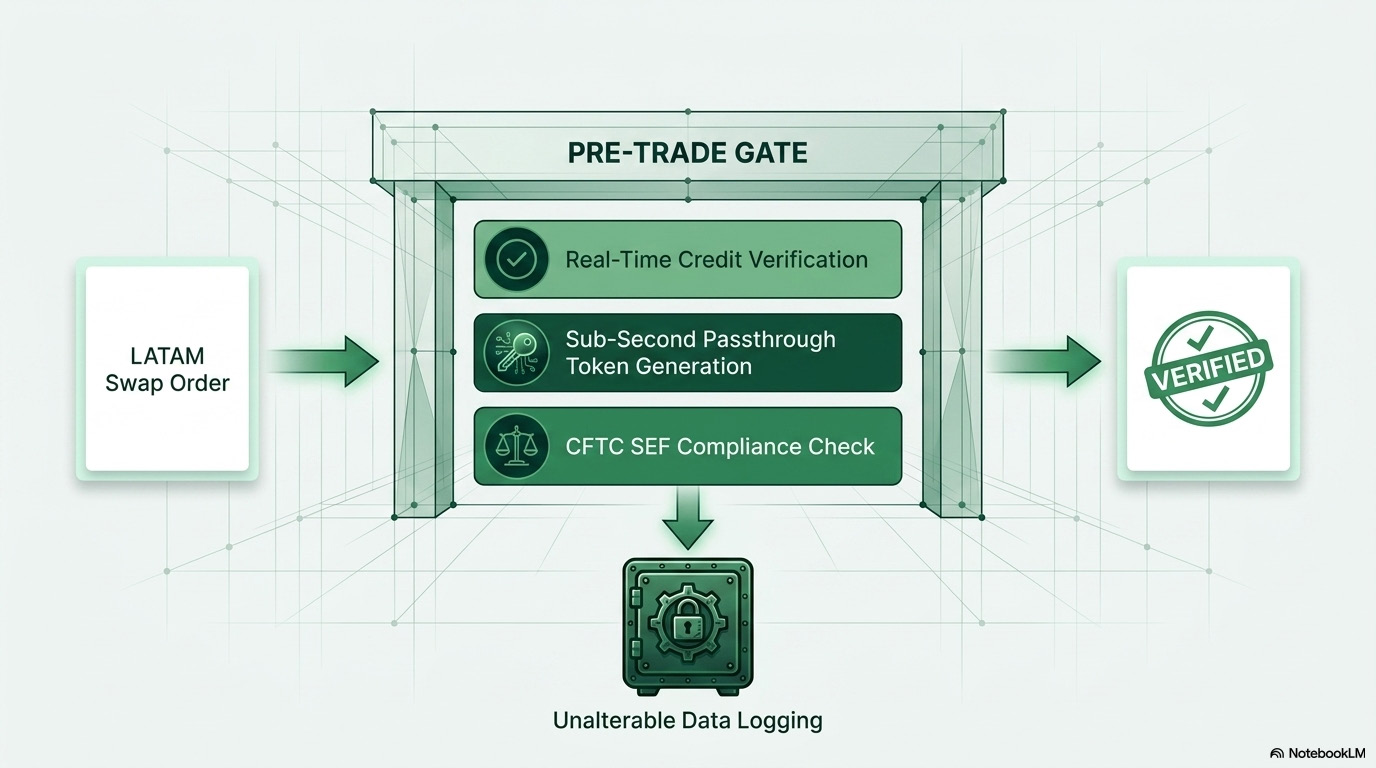
Credit token generation on OMeT is the control layer that turns clearing capacity into an executable pre-trade permission. Before an order can safely interact with the market, the platform must know whether the participant has available credit capacity through its FCM, self-clearing arrangement, or clearing workflow. Internal materials describe OMeT as providing anonymous, rules-based execution infrastructure for cleared OTC derivatives with pre-trade credit validation and structured records.
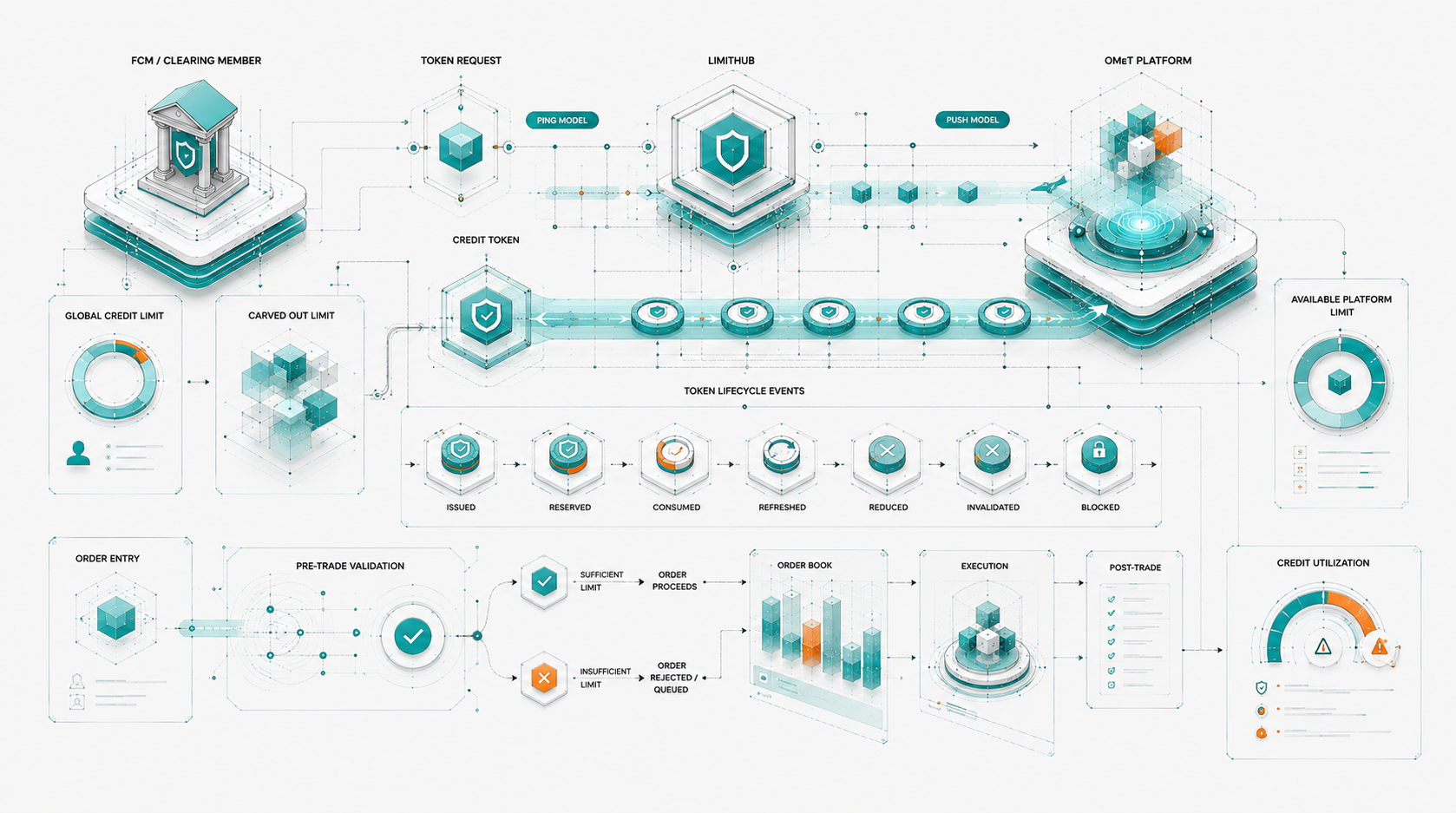
The token workflow can operate through two related models: ping and push. In the ping model, OMeT pings LimitHub, which then checks with the FCM for a trade-specific limit token; internal materials describe that token as “use it or lose it,” designed to provide pre-trade certainty. In the push model, LimitHub or the FCM pushes a carved-out block limit to OMeT, representing part of the client’s broader global limit, and OMeT manages orders against that available platform limit.
Dynamic risk token lifecycle events begin when available credit changes. A token or pushed limit is not a static entitlement forever; it can be consumed, refreshed, reduced, invalidated, queued, or blocked depending on execution activity and FCM updates. Internal discussions note that an upsize request must have enough DV01 limit to proceed, and that refreshed limits from the clearing member can change available capacity after execution. This makes the lifecycle event-driven: order entry requests capacity, execution consumes or reserves it, refresh messages alter availability, and threshold events trigger warnings or rejections.
The practical value is sub-second operational certainty and cleaner risk control. OMeT’s user-profile logic includes credit-limit visibility and threshold behavior, including alerts when utilization approaches a critical level and instructions to contact the FCM for a top-up before trading is interrupted. For institutional desks, the result is a pre-trade system that does more than check a box: it converts FCM-approved capacity into actionable execution permission, tracks that permission through the trade lifecycle, and prevents orders from progressing when the risk token or available limit no longer supports the proposed trade.