The Request for Quote protocol has historically dominated first-generation electronic derivatives networks. Under standard RFQ workflows, a participant starts a private session targeting specific market makers, forcing the dealers to quote prices. This setup restricts multi-lateral liquidity by separating participants into isolated trading interactions.
A common error is equating electronic RFQ with true exchange-style electronic trading. Traditional RFQ networks simply digitize old bilateral voice telephone channels, whereas modern matching engines merge multiple interests into a single prioritized framework.
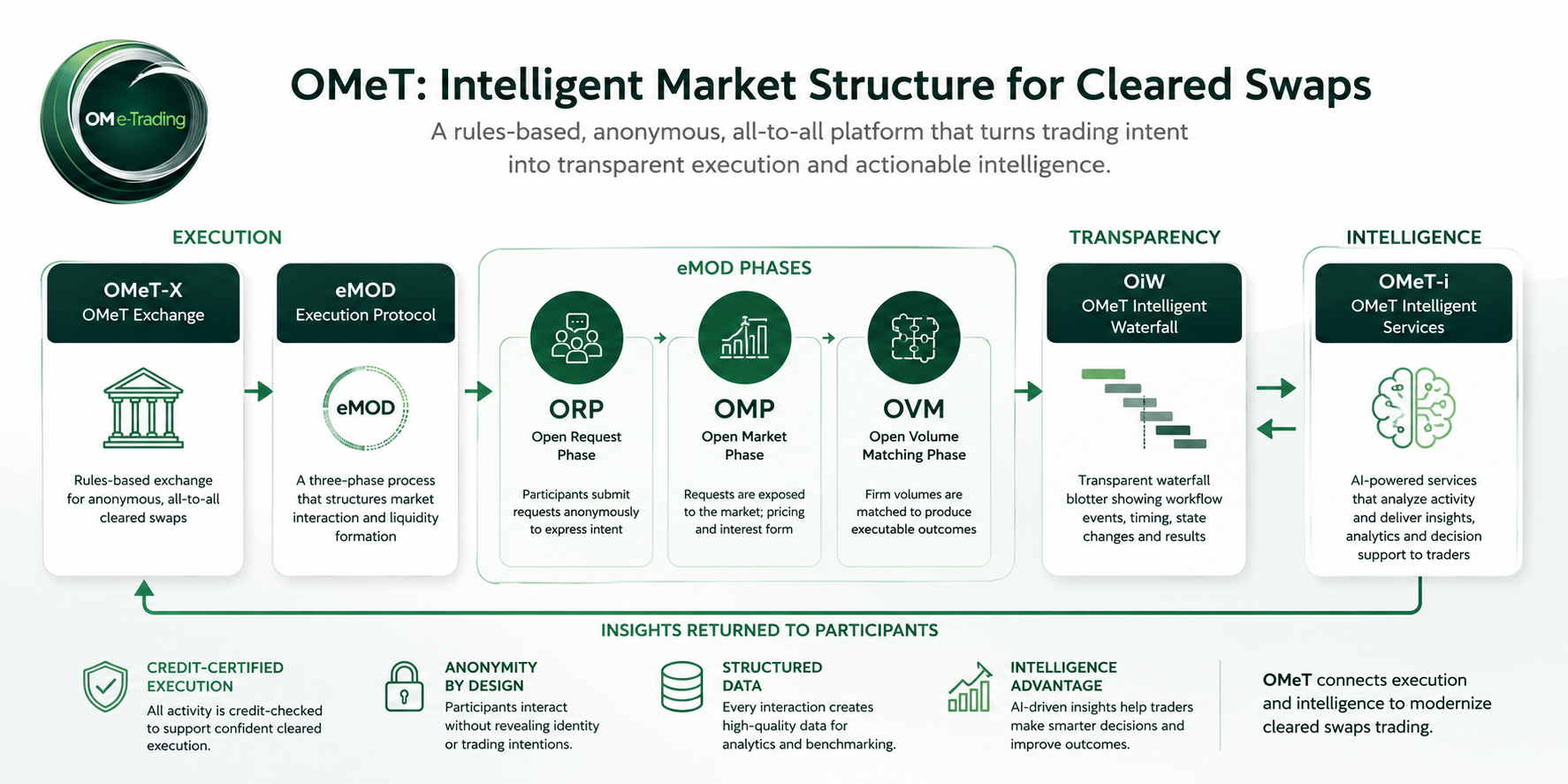
Seeking to escape the information leakage of legacy RFQ setups, the swap desk transitioned its execution onto an eMOD platform.
The Request for Quote protocol has historically dominated first-generation electronic derivatives networks. Under standard RFQ workflows, a participant starts a private session targeting specific market makers, forcing the dealers to quote prices. This setup restricts multi-lateral liquidity by separating participants into isolated trading interactions.
Recognizing the 80% failure rate typical of rigid, non-anonymous RFQ structures highlights the urgent market need for evolving protocols. Moving beyond standard point-to-point RFQ parameters allows modern marketplaces to implement continuous engines that preserve client anonymity and reduce costs.